Showing posts with label harassment. Show all posts

Friday, September 29, 2023

AASWomen Newsletter for September 29, 2023

AAS Committee on the Status of Women           
Issue of September 29, 2023
eds: Jeremy Bailin, Nicolle Zellner, Sethanne Howard, and Hannah Jang-Condell

[We hope you all are taking care of yourselves and each other. --eds.]

This week's issues:

1. NASA's Hubble Fellowship Program
2. NSF supports the Council of Graduate Schools in efforts to broaden participation in the nation’s technology workforce
3. Astronomers push back on new IAU harassment polic
4. Natural Inspiration   
5. How to Submit to the AASWomen Newsletter
6. How to Subscribe or Unsubscribe to the AASWomen Newsletter
7. Access to Past Issues of the AASWomen Newsletter

An online version of this newsletter will be available at http://womeninastronomy.blogspot.com/ at 3:00 PM ET every Friday.

Friday, September 1, 2023

AASWomen Newsletter for September 1, 2023

AAS Committee on the Status of Women
Issue of September 1, 2023
eds: Jeremy Bailin, Nicolle Zellner, Sethanne Howard, and Hannah Jang-Condell

[We hope you all are taking care of yourselves and each other. --eds.]

This week's issues:

1. Career Profile: A Peripatetic Astronomer
2. A history of anti-racism in science
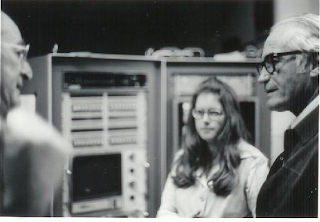
Sethanne Howard with Leo Goldberg and Senator Goldwater
Sethanne Howard with
Leo Goldberg and Senator Goldwater 
3. Women working in Antarctica say they were left to fend for themselves against sexual harassers 
4. Gender disparities limit chances for women PhD students training to be new inventors, says new research 
5. They Remembered the Lost Women of the Manhattan Project So That None of Us Would Forget
6. Invisible women: Gender representation in high school science courses across Australia
7. How to Submit to the AASWomen Newsletter
8. How to Subscribe or Unsubscribe to the AASWomen Newsletter
9. Access to Past Issues of the AASWomen Newsletter

An online version of this newsletter will be available at http://womeninastronomy.blogspot.com/ at 3:00 PM ET every Friday.

Thursday, May 26, 2022

#ItHappensInSTEM

Written by Dayna Thompson and Simona Mei
Dayna Thompson (left) and Simona Mei (right) are the project lead and coordinator, respectively, of #ItHappensInSTEM, a project that arose from a sub-group within International Astronomical Union’s Working Group on Astronomy for Equity and Inclusion. Credit: Ball State University and Université de Paris. 
In any community, there is unfortunately the chance for discrimination, bullying, and harassment. This is why the International Astronomical Union’s Working Group on Astronomy for Equity and Inclusion is collecting stories and instances from the Science, Technology, Engineering, and Mathematics (STEM) community surrounding diversity, equity, and inclusion. It is their hope that by speaking up about how #ItHappensInSTEM, they can promote awareness and help bring about structural change.

Anyone who is part of the STEM community is encouraged to fill out and share the anonymous submission form. People can also share their stories on social media using #ItHappensInSTEM; however, only information shared directly to the form will be used to create the resulting project documents as the project team is committed to respecting the anonymity of individuals and institutions.

The form is set up so that it lists definitions of terms related to diversity, equity, and inclusion, such as cultural appropriation and bullying. It then asks people to provide a relevant instance in a STEM organization or situation that relates to that term. “Sometimes, people are unsure how exactly the STEM fields are affected by issues such as ableism or intimidation. But when a definition is paired with a direct example of how or where the concept is seen in the field, it gives the reader a concrete perspective to consider,” Thompson explains. “This is why we need real-life stories and examples submitted by the STEM community.” Mei adds, “we will also be able to analyze the responses for any trends that appear within certain disciplines of STEM, or within the STEM community at large.”

“I know some people may think,‘who am I to say anything or share my story here?’ But those are the people who we really need to hear from. These people, in addition to those who have already been speaking out for some time, will give us a better idea as to how we can progress forward together. I hope that this project motivates people to speak up about their experiences—and provides them the security of knowing they will be heard,” Thompson explains.

Where exactly did this idea come from? Well, the idea to include examples alongside important terms actually came from roller derby, of all places. “I first saw this setup outlined in the Women’s Flat Track Derby Association’s Code of Conduct Toolkit and it inspired me to create a form with the project team to show how #ItHappensInSTEM too,” Thompson said. “The project evolved a great deal over time, thanks to the entire project team.” 

The resulting project documents will be used to strengthen future initiatives, including making updates to policies and procedures (codes of conduct, bylaws, etc.), and drafting grant proposals and workshop materials aimed at fostering healthy practices and systems surrounding diversity, equity, and inclusion in STEM. Submissions will not be used to investigate specific individuals.

More information about the project and the International Astronomical Union’s Working Group on Astronomy for Equity and Inclusion is at: https://iau-oao.nao.ac.jp/iau-inclusion/

Please feel free to share this information with as many people as possible to help the project better reach the STEM community worldwide! Dayna and Simona can be reached at ithappensinSTEM@gmail.com.

Thursday, October 21, 2021

Crosspost: UF files motion to dismiss complaint of former astronomy Ph.D. student in ongoing lawsuit

Update: In April 2022, the university’s internal investigation found that the allegations were unsubstantiated and no sanctions were issued against the faculty member. The allegations on Twitter have since been deleted.


Written By: Grace Blair for WUFT News

<embedded tweet deleted, 7/12/2023>

The University of Florida filed a dismissal on Thursday afternoon to a complaint made by former astronomy doctorate student Sankalp Gilda in an ongoing lawsuit regarding Gilda’s reported mistreatment by his former program supervisor.

The legal complaint was filed by Gilda on Sept. 6 based on “unpaid overtime wages,” according to the complaint obtained through public records. UF filed a motion to dismiss the complaint after citing failure to state a claim, according to the dismissal.

Gilda, who worked under assistant professor Zachary Slepian for three years in the astronomy program, discussed some of his experiences in a tweet made on Sept. 15. In his post, which consisted of 24 tweets, Gilda described multiple instances of Slepian engaging in during his time as Gilda’s adviser, as well as the circumstances that led Gilda to sue UF for improper overtime compensation.

Gilda also announced through Twitter that he filed charges against the UF astronomy and astrophysics department on the basis of “racism, harassment, and retaliation.” Gilda filed a case through the Equal Employment Opportunity Commission (EEOC) about Slepian’s behavior. The report consisted of Gilda’s experiences as a doctoral candidate from August 2015 to August 2021 and the various forms of “harassment and discrimination” that he faced during that time based on “national origin, race, and disabilities, unpaid wages, ADA violations, harassment, promissory estoppel, and intentional infliction of emotional damage.”

<edited, 7/12/2023> Read more about the case here:

Thursday, July 29, 2021

Crosspost: Bullying and harassment are rife in astronomy, poll suggests

Written By: Phillip Ball for Nature

Bar chart displaying the results of a survey on experiences of bullying and harassment in the Royal Astronomical Society community. Credit: Royal Astronomical Society

Bullying and harassment are rife in astronomy and geophysics in Britain and perhaps other regions, according to the results of a survey conducted last year by the Royal Astronomical Society (RAS) in London. Among 661 researchers polled, more than half of whom were in the United Kingdom, 44% said they had experienced issues in the previous two years.

“The results from the survey are very concerning indeed, and we must act to change this unacceptable situation,” says RAS president Emma Bunce, an astrophysicist at the University of Leicester, UK.

RAS diversity officer Aine O’Brien, who conducted the survey with RAS education, outreach and diversity officer Sheila Kanani, says, “We knew from anecdotal data and other evidence that there was likely to be a sector-wide problem, and I wasn’t super shocked by the trends of the findings — but I was certainly shocked by the extent.”

Read the rest of the article here at: https://doi.org/10.1038/d41586-021-02024-5.

For more references on discrimination in STEM, check out these two, great papers:
Race and Racism in the Geosciences and Double jeopardy in astronomy and planetary science: Women of color face greater risks of gendered and racial harassment

Friday, July 23, 2021

Friday, December 20, 2019

AASWomen Newsletter for December 20, 2019

AAS Committee on the Status of Women AAS Committee on the Status of Women
Issue of December 20, 2019
eds: JoEllen McBride, Nicolle Zellner, Heather Flewelling, Maria Patterson, and Alessandra Aloisi

Mileva Maric-Einstein, from item 2
This week's issues:

1. Meet Your CSWA, Kathleen Eckert

2. Casualty Of Genius: The Sacrifice Of Mileva Maric-Einstein

3. Nature's 10: Ten people who mattered in science in 2019

4. What Works to Close Gender Gaps?

5. Full Spectrum Documentary Short Film

6. Bringing community astronomy to rural Africa

7. Male Researchers More Apt Than Women to Hype Findings: Study

8. US biomedical agency has investigated hundreds claims of inappropriate conduct this year

9. There's No Winter Break From 'Publish or Perish'

10. Become a reviewer for the National Fellowship Program: Information for new reviewers

11. Biennial European Astrobiology Conference (BEACON)

12. Applied Galactic Dynamics Summer School

13. Global gender equality will take another 100 years to achieve, study finds

14. First-Year Graduate Students in Physics and Astronomy: Characteristics and Background

15. 'Miss America can be a scientist': Camille Schrier of Virginia wins after onstage chemistry experiment

16. Women Representation on Company Boards Increased From 5% In 2012 To 13% In 2018

17. Grading for STEM Equity

18. Job Opportunities

19. How to Submit to the AASWomen Newsletter

20. How to Subscribe or Unsubscribe to the AASWomen Newsletter

21. Access to Past Issues of the AASWomen Newsletter

Thursday, June 14, 2018

NASEM Report on Sexual Harassment of Women in Academic Sciences, Engineering, and Medicine

Earlier this week, the National Academies of Sciences, Engineering and Medicine released the report "Sexual Harassment of Women: Climate, Culture, and Consequences in Academic Sciences, Engineering, and Medicine". The report finds that sexual harassment is prevalent in the academic sciences and includes recommendations for combating the problem at academic institutions, federal agencies, and scientific societies.

Read the report here:
https://www.nap.edu/read/24994/chapter/1

Numerous articles have been written about the report and the corresponding news conference. They include articles from the Washington Post, Science, Nature, and Inside Higher Ed.

Some articles have highlighted the fact that the National Academies could do more to combat harassment by expelling members who have harassed others. Read more from the Chronicle of Higher Education and Ars Technica.


Tuesday, April 3, 2018

Where Are We on Harassment?

By Aparna Venkatesan

The year 2015 was a watershed moment for mainstream awareness of harassment in astronomy and physics, with individual cases involving decades-long harassment and long-term fallout for junior astronomers making national news. This was a galvanizing call to action for those working in astronomy and astrophysics, ahead of the recent #MeToo and other powerful movements. 2015 was also the year when the first Inclusive Astronomy meeting was held at Vanderbilt University in Nashville, TN, resulting in concrete recommendations endorsed by the AAS Council for creating an inclusive workplace and professional community (link for the  Nashville Recommendations for Inclusive Astronomy at AAS Groups wiki: https://tiki.aas.org/tiki-index.php?page=Inclusive_Astronomy_The_Nashville_Recommendations)

Clancy et al. (2017) demonstrated that a significant difference exists
in the percent of individuals who have felt unsafe in their current
position due to gender and race.  
Although harassment can occur in a variety of ways and environments, some groups are especially vulnerable and targeted by harassers, as reported by Clancy, Lee, Rodgers & Richey (2017; “Double jeopardy in astronomy and planetary science: Women of color face greater risks of gendered and racial harassment”, J. Geophys. Res. Planets, 122, 1610–1623; PDF  available at: https://agupubs.onlinelibrary.wiley.com/doi/pdf/10.1002/2017JE005256). This team of authors includes social scientists, astronomers, and planetary scientists. Their results are based on an online survey of workplace experiences conducted between 2011 and 2015 of 474 astronomers and planetary scientists, with the survey created by former CSWA Chair Christina Richey and Erica Rodgers. (For further discussion on the survey, an interview with the paper authors can be found here: https://eos.org/editors-vox/harassment-in-astronomy-and-planetary-science.) Some key points from this AAS-supported work include (with the survey and methodology caveats noted by the authors): women experience more physical and verbal harassment than men, and people of color (POC) experience more physical and verbal harassment than white respondents. Women of color are especially at risk for all types of harassment (including assault) and hostile workplace experiences compared with white women and men of color. The authors drew attention to decades of research on women of color being at greater risk of both gendered and racialized harassment (Moraga and Anzaldua, 1981; Carter 1988; Prescod-Weinstein, 2014, 2015, and other references in article), as seen in the accompanying figure (WM = white men, WW = white women, MOC = men of color, WOC = women of color; numbers at the bottom figure are the raw count for each category). Those with multiple subordinate-group identities might experience different kinds and levels of oppressions relative to those with a single subordinate-group identity. 

Friday, August 4, 2017

AASWomen for August 4, 2017

AAS Committee on the Status of Women
Issue of August 4, 2017
eds: Nicolle Zellner, Heather Flewelling, Christina Thomas, and Maria Patterson

This week's issues:

1. Women in Leadership: Power
2. How Sexual Harassment And Bias Undermine Women’s Access To Scientific Careers
3. The Plan to End Science’s Sexist #Manel Problem
4. Study Tracks Gender Ratios at Conferences
5. Advice to the Young from Pioneering Astrophysicist Cecilia Payne-Gaposchkin, Who Discovered the Composition of the Universe
6. Women Breaking Barriers: Career Advice from Leading Women in Business, Technology, and Beyond
7. Job Opportunities
8. How to Submit to the AASWomen Newsletter
9. How to Subscribe or Unsubscribe to the AASWomen Newsletter
10. Access to Past Issues of the AASWomen Newsletter

Wednesday, November 9, 2016

Reflection Moment: The Importance of Bystander Intervention


Our country is currently in a moment of reflection. And as everyone discusses the political changes that may occur, I’d like to take a moment to thank all of our allies out there, and ask that everyone remember to love and respect each other. We as a community (in STEM, and specifically in both Astronomy and Planetary Science) have been discussing allyship and bystander intervention for some time now, but these discussions have increased in intensity in the past year.


An illustrative guide to bystander intervention from Maeril. Thank you to Maeril (twitter: +itsmaeril) for giving us permission to use this illustration!

Wednesday, September 21, 2016

Help SGMA Assess Institutional Gender Identity and Expression Policies


At the American Astronomical Society (AAS) Diversity Summit last fall, its Committee for Sexual-Orientation and Gender Minorities in Astronomy (SGMA) decided to take on the project of improving institutional policies regarding gender identity and expression across the field of astronomy. We are starting that project with a request to readers of the Women in Astronomy blog to let us know the policies at their institution. I have set up a web survey to accept your answers. No personal information will be recorded.

Monday, August 22, 2016

The Price of Stories

Do you believe that racial discrimination and harassment occur in your department? Do you believe that sexual harassment has impacted the careers of its victims? Do you believe the climate in your department is safe for our LGBTQIA colleagues and students?

Your belief is irrelevant. We have facts at our disposal. Yet we extort a high price from those who experience harassment and assault in our community. 

Friday, May 13, 2016

AASWomen Newsletter for May 13, 2016

AAS Committee on the Status of Women
Issue of May 13, 2016
eds: Daryl Haggard, Nicolle Zellner, Elysse Voyer, & Heather Flewelling

This week's issues:

1. Sexual Harassment – Changing the System II     
2. Career Profiles: Astronomer to Philanthropic Program Officer   
3. AAS Education Task Force seeks input  
4. Big Pay Differences Among New Male, Female Ph.D.s
5. These new emojis could finally reflect that women are professionals, too
6. Marie Skłodowska-Curie Fellowships at the University of Bath
7. The Peer Prize for Women in Science
8. Job Opportunities  
9. How to Submit to the AASWomen Newsletter
10. How to Subscribe or Unsubscribe to the AASWomen Newsletter
11. Access to Past Issues of the AASWomen Newsletter

Wednesday, May 11, 2016

Sexual Harassment – Changing the System II


[This post is Part II of an expanded version of my World View column in NATURE, Change the System to Halt Harassment from 08 February 2016. Universities and their senior staff must do more to deter, detect and punish all forms of inappropriate behavior – JTS]

This series discusses what can be done by people with power to change the system and begin to eliminate sexual harassment from our community. Part I discussed the role of senior academics and department chairs. Here, I focus on university administrators and leaders of our professional organizations, but I also want to make sure that anyone facing sexual harassment knows that help is out there. Please talk to someone you trust and rest assured that you are not alone. 

University Administrators

Every university needs an office where students/postodcs/faculy/staff can talk anonymously about harassment. For lack of a better name, I am going to refer to it as the Office of Good Advice. This office must be fundamentally separate from the Affirmative Action office, University Counsel, or University Police, all of which are responsible for reporting under Title IX. Office of Good Advice should be well known to everyone on campus, it should be staffed with trained professionals, and it should be the first thing that comes up on a web search for “sexual harassment.” Anyone on campus who needs to talk about harassment issues should know which university employees are obligated to report incidents and which can keep reports confidential. 

Every university needs an Office of Good Advice not only because students fear that they might be pressed to make a formal, legally viable report, but also because the staff in the legally responsible offices are often, with no malicious intent, unable to listen objectively and sensitively. Students might later report that they were asked intimidating and inappropriate questions that appeared to undermine the validity of their complaint like, “Were you drinking?” or “Are you unhappy with your grade in his course?” No matter how well-meaning, staff members in offices responsible for upholding the law cannot help but be influenced by that responsibility and by knowing the requirements of an investigation.  

Tuesday, May 10, 2016

Upcoming Webinar from AWIS: "Spot and Stop It: How to End Harassment at Professional Meetings"

The Association for Women in Science (AWIS) is hosting a webinar on Thursday, 12 May, at 12:00 pm ET about proactive strategies in addressing harassment at professional meetings and conferences.


Topics to be discussed include:
  • How to create proactive sexual harassment policies and effective procedures to stop harassment
  • Identifying venues for harassment in addition to the workplace and school
  • Engaging society staff and members on the issue
The one-hour webinar will be led by guest speakers Rosina Romano, the Entomological Society of America's Director of Meetings, and Dr. Sherry Marts, CEO of S*Marts Consulting, long-time executive and career coach, expert on harassment issues, and women's self-defense instructor. Learn more and register for this webinar.

AWIS is kindly offering complimentary registration for this webinar to AAS members. Enter "AAS" as the registration code when registering to view this webinar for free.

Monday, April 11, 2016

Sexual Harassment – Changing the System I


[This post is Part 1 of an expanded version of my World View column in NATURE, Change the System to Halt Harassment from 08 February 2016. Universities and their senior staff must do more to deter, detect and punish all forms of inappropriate behavior – JTS]

With the issue of sexual harassment in the news, one hopes that student groups, academic departments, and university administrators are discussing what can be done to eliminate this vile plague from our community. There are fundamental flaws in the current system where Title IX offices are set up to protect the university, where all the pressure for righting these wrongs is placed on the shoulders of young women who are often in the most vulnerable stages of their careers, and where such harassing behavior can remain an “open secret” for years if not decades. In short, we have to find a way to change the system – to train those with privilege, especially senior men, to become not only allies who can support individuals but advocates who will add their voices and prestige to fight for right, to create a “safe space” where anyone facing sexual harassment can get help and advice, and to shine a light on the harassers who still operate in the shadows, destroying careers with their unprofessional conduct.

The Women In Astronomy Blog has already published advice for anyone facing sexual harassment, but here I focus on what can be done by people with power to begin to change the system. The target audience for this post includes senior academics and department chairs, but please don’t stop reading if you are not one of these! Sometimes senior people might want to help but don’t know how, or don’t consider this is a priority, or don’t think they have time. It might be your job to show them how to help, or convince them that this is important, or persuade them that they need to make time for this. Also, if you are not a senior person now, you will be some day. When you are chair of your department, will you know what to do? 

Becoming Allies and Advocates

Many senior members of our community admitted to knowing the “open secret” mentioned above. How can it be that so many did so little for so long while so much damage was being done? Think of all those young women, undergrads at a nationally renowned university, who left the field because their professor made a creepy advance. Think of all the discoveries they could have made but never will because they left astronomy before their careers had even begun. 

Monday, December 28, 2015

A remarkable year

2015 was the most remarkable year for social justice and equity in science and society that I can remember over more than 50 years. I was a child during the civil rights era of the 1960s and recall my wonder at the marches and protests of those days, the social upheaval, and the juxtaposition of hope and sorrow. The last two years have brought a similar sense of wonder, and as I reflected on this year, I realized that so much has happened the only historical comparison I have is with the events of my childhood. For women, men, and gender-nonconforming people in astronomy and in society, the remarkable pace, breadth and depth of change this year is worth remarking on in these pages.

AAS President Meg Urry summarized much of the 2015 gender equity in astronomy experience in a recent column. As one of the organizers of the first Women in Astronomy meeting in Baltimore and coauthor of the Baltimore Charter, and now as AAS President, Meg has set the standard for impact as a scientist and leader. Her perspectives on what has been accomplished, and on what remains to be done, should be read by every scientist and engineer, in every field.

2015 was the year that sexual harassment in astronomy finally became something spoken about boldly in public rather than nervously in private. Geoff Marcy's resignation from UC Berkeley has put not only harassers, but the universities that employ them, on notice that the scientific community will not accept sexual harassment. The CSWA, especially its former chair Joan Schmelz, have played a major service in helping bring to light such harassment. However, this is not a time to celebrate the end of harassment, it is a time to continue rooting out predatory and discriminatory behavior from astronomy and other professions.

2015 was also a year for the advancement of not just heterosexual cisgender women, but lesbian and transgender women. The US Supreme Court's ruling in favor of marriage equality in Obergefell v. Hodges was a remarkable step forward for our nation. The first laws protecting gay marriage were passed and upheld only about a decade ago in Massachusetts; few of us expected such rapid acceptance by law and culture. Transgender rights still are not fully covered, but the coming out of Caitlyn Jenner has done much to advance the conversation. Although these events are not directly about astronomy, they affect the experience of people in astronomy, and raise the standards for our profession to be inclusive and welcoming of all people. The Inclusive Astronomy conference was a major step forward in advancing the concept of full inclusion in the scientific profession. In hindsight it is possible to see this as a pioneering conference just like the inaugural Women in Astronomy conference of 1992.

And let us recognize the power of social media and protest in furthering human rights, not merely in the developing world, but in the most developed nations. In 2015, many of us at colleges and universities in the US have witnessed the power of the #BlackLivesMatter movement and its spinoff demands to eliminate racism on our campuses. This year, the native Hawiian movement has halted construction of the Thirty Meter Telescope on Mauna Kea.

These movements go beyond gender equality, but they surely impact women and men in astronomy, and provide a remarkable legacy from which others will look back in 50 years.
. She was one of the five original organizers of the first “Women in Astronomy” meeting in Baltimore, was coauthor of the “Baltimore Charter” and persuaded the AAS council to endorse the charter’s goals. She also organized the second of these meetings in Pasadena in 2003. - See more at: http://physics.yale.edu/news/meg-urry-israel-munson-professor-physics-astronomy-was-awarded-2012-george-van-biesbroeck-prize#sthash.Z24rDs5s.
he was one of the five original organizers of the first “Women in Astronomy” meeting in Baltimore, was coauthor of the “Baltimore Charter” and persuaded the AAS council to endorse the charter’s goals. She also organized the second of these meetings in Pasadena in 2003. In addition to encouraging many young women s - See more at: http://physics.yale.edu/news/meg-urry-israel-munson-professor-physics-astronomy-was-awarded-2012-george-van-biesbroeck-prize#sthash.wHhZNRpX.dpuf