Showing posts with label intersectionality. Show all posts

Thursday, October 19, 2023

Rethinking Tenure

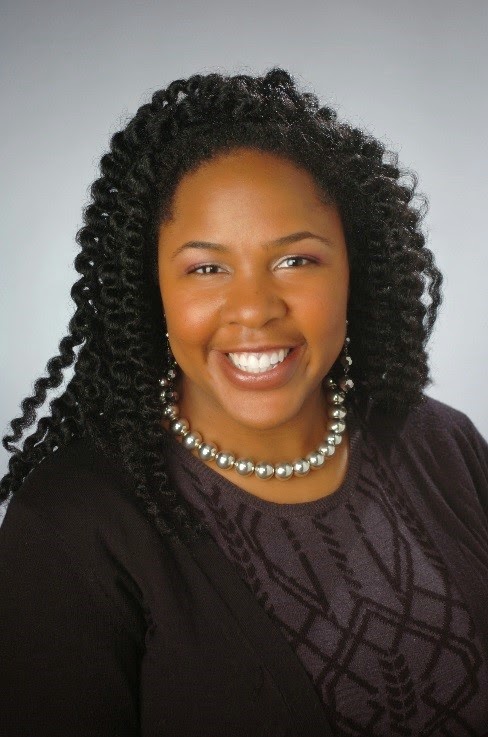
By Nicolle Zellner

In the past few weeks, several media outlets have published articles about tenure and its expectations. Topics range from re-envisioning how metrics (e.g., citation rates, h-index, prizes, invited talks) should be used (if at all) to eliminating tenure altogether. 


Credit: Jim Darling/2023 DU Provost Conference/Denver University


Amber Dance reported in Nature that the North American tenure system has sometimes struggled to keep up with the goals of modern academia. Some universities and schools, however, are altering their tenure criteria; others are seeking to help faculty members to meet the criteria already in place. “There are campuses that are making those incremental shifts that are really impactful,” says Chavella Pittman, a sociologist at Dominican University in River Forest, Illinois, and a consultant on faculty development. My own institution, a liberal arts college, has recently polled the faculty to ask about alternate forms of scholarship (e.g., community-focused scholarship) and peer review that could be used to evaluate colleagues' scholarly development in the context of interim and tenure reviews, as well as promotion, merit, and bonus increase recommendations.

In fact, there is a global movement to reform how research is assessed, and it includes recognizing a wider range of research contributions. In July 2022, the European University Association and Science Europe laid out guiding principles for reform and established the Coalition for Advancing Research Assessment (CoARA). Commitments to guide the reform of research assessment include:

  • recognizing diversity in the contributions to, and careers in, research;
  • basing research assessment primarily on qualitative evaluation;
  • abandoning the inappropriate uses in research assessment of journal- and publication-based metrics;
  • avoiding the use of rankings of research organizations in research assessment; and
  • agreeing to allocate resources, raise awareness, and share results from reform experiments.

These kinds of catalysts - not panaceas - may help when an academic ladder is longer, especially for folks from historically marginalized communities. In the October issue of Physics Today, Rachel Ivie and Susan White, who have long collected, interpreted, and published data on graduation rates and employment factors in the community of physics broadly, report that race and ethnicity can affect how quickly a faculty member receives tenure. Interestingly, they found that it does not take longer for women to receive/earn tenure compared to men, nor was there a statistically significant difference in time to tenure between faculty members who identify as white and faculty members who identify as Hispanic/Latino. However, barriers in the tenure process have been found in qualitative research and statistical analyses of the small numbers of people in the intersectional groups that were studied led to a large standard error in the analysis.

Time and startup packages reflect a huge investment in an academic career, on both sides (faculty member, institution). So, when tenure doesn't work out - despite receiving federal grants, being recognized with professional society prizes and awards, and having success in the classroom - the news is devastating. As reported in the Physics Today article, tenure denials are uncommon, and statistics about them are scarce, but almost everyone knows about someone who was denied tenure. In many cases, though, reasons are vague or not provided. Others leave before going up for tenure at all.

At most top universities, tenure is evaluated in multiple areas: number of publications (and perhaps, quality/rank of journal), number of citations, quality of teaching evaluations, letters of recommendation, recognition in the community via receipt of prizes and invited talks, and success in being awarded grant money. An unwritten requirement is that a candidate be a "good fit" and service to the institution or community usually doesn't count for much. Studies have shown that each of the evaluation criteria is biased against women (see references 1-4 below). According to Meg Urry, a professor of astronomy at Yale University, past president of the American Astronomical Society (AAS), and past chairperson of the Committee on the Status of Women in Astronomy (CSWA), though she doesn't have statistics, in the departments she's been in, it’s the women’s cases that get picked on.

Is there a better option? Urry calls the tenure system terrible. David Helfand, former chair of astronomy at Columbia University and a past president of the AAS, has himself steadfastly refused tenure stating that tenure does not equal excellence. In the Physics Today article, a physicist who was denied tenure says, "Tenure is necessary. Without it, the university system would crumble. Scientists would go to other sectors for higher-paying, less stressful jobs." And there are plenty of examples of this. In the same article, geochemist Maureen Feineman says that in the long run, she's been a much happier human than she would have been in a tenured position.

What do you think? Please comment below and/or anonymously submit your experiences of tenure denial and/or difficulties in positive reviews. We will publish the stories in a forthcoming series about tenure experiences.


Read more:

The Insular World of Academic Research: More community-focused scholarship could build public trust. What's standing in the way? Read about this at The Chronicle of Higher Education (subscription required).

Know Your Rights: Tenure Discrimination

The Future of Tenure (Rethinking a beleaguered institution., page 10)

Tenure's Broken Promise (It’s scarce, unevenly distributed, and limiting scholars’ careers., page 30)


References:

1. Gender Differences in Grant Submissions across Science and Engineering Fields at the NSF 

2. Exploring Bias in Student Evaluations: Gender, Race, and Ethnicity

3. Gender diversity of research consortia contributes to funding decisions in a multi-stage grant peer-review process

4. A moving target”: a critical race analysis of Latina/o faculty experiences, perspectives, and reflections on the tenure and promotion process


Wednesday, June 1, 2022

Crosspost: First-ever study of LGBT+ experiences in physics reveals red flags

Written by Kim Lamke Calderón for Phys.org
University of California-San Diego Executive Vice Chancellor, Elizabeth Simmons, co-authored a comprehensive study on the experiences of LGBTQ+ identifying members of the physics community. Credit: University of California-San Diego
LGBT+ physicists often face harassment and other behaviors that make them leave the profession, according to a new study, which comes as physics as a discipline has attempted to grapple with equity and inclusion issues.

The authors found that the two biggest factors that influence a person's decision to leave physics are the overall climate of the organization they belong to and more specifically observing exclusionary behavior.

"People feel shunned, excluded, and they were continually having to readjust and twist themselves to fit into the physics community," said Ramón Barthelemy, assistant professor of physics at the University of Utah and co-lead author of the study. "LGBT+ people are inherently a part of this field. If you want physics to be a place that anyone can participate, we have to talk about these issues."

"Nearly everybody I know who is LGBT+ in physics has left, to be honest," said Tim Atherton, associate professor of physics at Tufts University and co-lead author of the study. "We're talking dozens and dozens of students and faculty. I can empathize with the experiences of the study's participants from some of my own experiences."

Thursday, February 10, 2022

An Open Call for Guest Blog Posts

Written by Bryné Hadnott
This could be you, writing a thought-provoking blog post in an idyllic office with macarons, tea, and fresh cut flowers. #workspacegoals
Are you known for your razor sharp wit and dry sense of humor? Are you that person in your friend group who has a hot take on literally every topic? Do your posts get retweeted by random celebrities because something about your opinions just "rings true" with people? Then, good news, everyone! The Women in Astronomy Blog is looking for your thought pieces, glow ups and glow downs, and any other thoughts rattling in your brain that can be arranged into a guest blog post of around 500 words or less.

Here's a non-exhaustive list of blog post ideas to get the brain juices flowing: 
Take a look, it's in a book review (e.g., The Disordered Cosmos)
Rotten Tomatoes-style movie critique (e.g., Don’t Look Up)
I went to a cool conference talk/panel/plenary/poster session!
A week or day in the life of …
What my institution is (or isn’t) doing to address ___________
What ______ gets wrong about _______ 

Since this is the Women in Astronomy Blog, all posts should highlight folks or issues related to underrepresented gender and minority groups in physics, astronomy, and related fields. We are here for intersectionality (shout out to Kimberlé Crenshaw, J.D.) and welcome posts that recognize and address the complexity of how gender is intertwined with any and all other identities. 

Hate speech and any language used to discriminate against or maliciously target a particular group of people—particularly on the basis of race, gender, sexual orientation, or religion—are not welcome. 

With all of that in mind, to pitch a guest post, click the link here and let us know what you're thinking. 

Or, feel free to send an email with a short (< 300 words) pitch for your guest blog post, your name, and your affiliation to wia-blog@lists.aas.org. Anonymous posts will be considered on a case-by-case basis. 

Friday, July 12, 2019

AASWomen Newsletter for July 12, 2019

AAS Committee on the Status of Women
Issue of July 12, 2019
eds: Nicolle Zellner, Heather Flewelling, Maria Patterson, JoEllen McBride, and Alessandra Aloisi

[AAS has migrated their email system to Microsoft Exchange, so please check your spam folder if you did not receive the newsletter this week. It is no longer possible to subscribe or unsubscribe to the AASWomen newsletter by means of Google Groups. We have updated our subscribe and unsubscribe instructions below. Please follow us on social media for updates and thank you for bearing with us as we work out all the kinks.
Twitter @AAS_Women, Facebook https://bit.ly/2PkU9of]

This week's issues:

1. Crosspost: Pre-registration Open for the Inclusive Astronomy 2 Conference
2. Register now to watch the first Astro2020 steering committee meeting!
3. Education Professional Development Mini-Grant Opportunity Now Open
4. Women are less supportive of space exploration – getting a woman on the Moon might change that
5. Astronaut Barbie has landed, and it’s one giant leap for women in STEM 
ESA Astronaut Samantha Cristoforetti
and her Barbie (stylist.co.uk image)
6. How a decision-analysis tool helped one scientist couple make some tough career choices
7. These young scientists will shape the next 50 years of Moon research  
8. Queer voices in palaeontology  
9. How I lost my identity — and embraced a new one
10. Why Men Thought Women Weren’t Made to Vote
11. Who gets grant money? The (gendered) words decide.
12. How to Submit to the AASWomen Newsletter
13. How to Subscribe or Unsubscribe to the AASWomen Newsletter
14. Access to Past Issues of the AASWomen Newsletter

Tuesday, April 3, 2018

Where Are We on Harassment?

By Aparna Venkatesan

The year 2015 was a watershed moment for mainstream awareness of harassment in astronomy and physics, with individual cases involving decades-long harassment and long-term fallout for junior astronomers making national news. This was a galvanizing call to action for those working in astronomy and astrophysics, ahead of the recent #MeToo and other powerful movements. 2015 was also the year when the first Inclusive Astronomy meeting was held at Vanderbilt University in Nashville, TN, resulting in concrete recommendations endorsed by the AAS Council for creating an inclusive workplace and professional community (link for the  Nashville Recommendations for Inclusive Astronomy at AAS Groups wiki: https://tiki.aas.org/tiki-index.php?page=Inclusive_Astronomy_The_Nashville_Recommendations)

Clancy et al. (2017) demonstrated that a significant difference exists
in the percent of individuals who have felt unsafe in their current
position due to gender and race.  
Although harassment can occur in a variety of ways and environments, some groups are especially vulnerable and targeted by harassers, as reported by Clancy, Lee, Rodgers & Richey (2017; “Double jeopardy in astronomy and planetary science: Women of color face greater risks of gendered and racial harassment”, J. Geophys. Res. Planets, 122, 1610–1623; PDF  available at: https://agupubs.onlinelibrary.wiley.com/doi/pdf/10.1002/2017JE005256). This team of authors includes social scientists, astronomers, and planetary scientists. Their results are based on an online survey of workplace experiences conducted between 2011 and 2015 of 474 astronomers and planetary scientists, with the survey created by former CSWA Chair Christina Richey and Erica Rodgers. (For further discussion on the survey, an interview with the paper authors can be found here: https://eos.org/editors-vox/harassment-in-astronomy-and-planetary-science.) Some key points from this AAS-supported work include (with the survey and methodology caveats noted by the authors): women experience more physical and verbal harassment than men, and people of color (POC) experience more physical and verbal harassment than white respondents. Women of color are especially at risk for all types of harassment (including assault) and hostile workplace experiences compared with white women and men of color. The authors drew attention to decades of research on women of color being at greater risk of both gendered and racialized harassment (Moraga and Anzaldua, 1981; Carter 1988; Prescod-Weinstein, 2014, 2015, and other references in article), as seen in the accompanying figure (WM = white men, WW = white women, MOC = men of color, WOC = women of color; numbers at the bottom figure are the raw count for each category). Those with multiple subordinate-group identities might experience different kinds and levels of oppressions relative to those with a single subordinate-group identity. 

Wednesday, October 5, 2016

Celebrating National Hispanic Heritage Month: The Arecibo Observatory Space Academy

Photo montage by Ricardo Correa 

Today’s guest bloggers are Edgard Rivera-Valentin and Luisa Zambrano-Marin. Ed is the Project Manager for the Space Academy and a staff scientist in the Planetary Radar group at the Arecibo Observatory. Luisa is the Program Coordinator for the Space Academy and a data analyst for the Planetary Radar Group at Arecibo Observatory.

We are Latinos, we are Scientists, and we are Educators. We often struggle to succeed in a field in which we are underrepresented and devalued both consciously and unconsciously by peers. Our upbringing, culture, and expectations are diverse and diverge from the “norm”. We understand what it’s like to feel unprepared for college, graduate school, and the professional workforce. And all too often, we know the struggle of breaking through established barriers in the scientific community. We are the 3%. 

Hispanics and Latinos are the largest underrepresented group with a measured interest in STEM fields. Studies show that Hispanic and Latino students are equally as interested in entering a STEM major in college as their White counterparts, and yet we are less likely to graduate with a degree in a STEM field (Crisp and Nora, 2012). There is indisputably a gap to be filled, one that we know occurs past the interest in STEM and before the student decides their career path. At the professional stage, it gets even more noticeable, despite the fact Latinos and Hispanics compose nearly 20% of the U.S. population, we only account for 3% of the STEM doctoral degrees and 3% of Physics faculty in the United States. 

So something is very wrong when we have a significant percentage of the population of which a significant number show strong interest in STEM fields and yet are not well represented in the professional stage.

Friday, April 22, 2016

AASWOMEN Newsletter for April 22, 2016

AAS Committee on the Status of Women
Issue of April 22, 2016
eds: Daryl Haggard, Nicolle Zellner, Elysse Voyer, & Heather Flewelling

This week's issues:

1. Social Justice in the Physics and Astronomy Classroom
2. White Privilege Conference 17      
3. President’s Column: Combatting Bias in the Trenches
4. The complex role of gender in faculty hiring
5. How Marvel's 'Thor' Contest Empowered a Group of Young Women Science Buffs
6. Why We Need Intersectionality Week  
7. Job Opportunities    
8. How to Submit to the AASWomen Newsletter
9. How to Subscribe or Unsubscribe to the AASWomen Newsletter
10. Access to Past Issues of the AASWomen Newsletter

-------------------------------------------------------------------------------
1. Social Justice in the Physics and Astronomy Classroom  
From: Daryl Haggard via womeninastronomy.blogspot.com

At the beginning of this winter term (in Montreal we don't even try to call it the "spring" term), I tried for the first time to directly address social justice issues, including racism and harassment, in my physics classroom…

With considerable trepidation, I tackled this the way brand new faculty tackle most things, I just tried something. And yes, it was clumsy. I share my experience here because I want to embolden other junior (and senior) faculty to take a stab at this conversation and because I would like to learn from those of you who have made (or will make) similar attempts.

Read more at

http://womeninastronomy.blogspot.com/2016/04/social-justice-in-physics-and-astronomy.html  

-------------------------------------------------------------------------------
2.  White Privilege Conference 17
From: Ed Bertschinger via womeninastronomy.blogspot.com

White people who want to improve the experiences of others have to work against the socialization and norms of society, which convey fear of people of color, of Muslims, of transgender people, of people with disabilities, and so on. If it was possible to be unaware of this fear and its impact before, this year's presidential campaign should make it clear to anyone, regardless of her/his/their politics, that we live in a divided and troubled society.

Read more  

http://womeninastronomy.blogspot.com/2016/04/white-privilege-conference-17.html

-------------------------------------------------------------------------------
3. President’s Column: Combatting Bias in the Trenches
From: Nicolle Zellner [nzellner_at_albion.edu]

In her column, AAS President Meg Urry urges us in the community to think about how to combat gender bias in proposal reviews.

Read more at

https://aas.org/posts/news/2016/04/president%E2%80%99s-column-combatting-bias-trenches

-------------------------------------------------------------------------------
4. The complex role of gender in faculty hiring
From:  Nicolle Zellner [nzellner_at_albion.edu]

"Gender bias in hiring is not blatant...but gender-associated differences in productivity, postdoctoral experience, and institutional prestige of degree-granting institutions—which are likely due to bias against women during the training process—largely account for the observed gender imbalance in computer science faculty hiring networks."

Read more about hiring computer science faculty at

http://www.sciencemag.org/careers/2016/04/complex-role-gender-faculty-hiring

Read "Gender, Productivity, and Prestige in Computer Science Faculty Hiring Networks" at

http://arxiv.org/abs/1602.00795

-------------------------------------------------------------------------------
5. How Marvel's 'Thor' Contest Empowered a Group of Young Women Science Buffs    
From: Nicolle Zellner [nzellner_at_albion.edu]

“Natalie Portman's physicist may not be returning for 'Thor: Ragnarok,' but her character has forever changed the lives of 10 girls from around the country who excel at STEM studies.”

Read more at

http://www.hollywoodreporter.com/news/how-marvels-thor-contest-empowered-884464

-------------------------------------------------------------------------------
6. Why We Need Intersectionality Week
From: Meg Urry [meg.urry@yale.edu]

At the annual AAUW National Convention, a group of Younger Women’s Task Force chapter directors got together to discuss social justice, including the topic of intersectionality. As a result of those discussions, the first-ever YWTF Intersectionality Week will take place May 1–7.

Read more at

http://www.aauw.org/2016/04/13/intersectionality-week/

-------------------------------------------------------------------------------
7. Job Opportunities


For those interested in increasing excellence and diversity in their organizations, a list of resources and advice is here: http://www.aas.org/cswa/diversity.html#howtoincrease.

- Assistant Professor of Astronomy (tenure-track), University of Hawai`i at Hilo (Big Island)
   http://hilo.hawaii.edu/uhh/hr/vacancy/982

--------------------------------------------------------------------------------
8. How to Submit to the AASWOMEN newsletter

To submit an item to the AASWOMEN newsletter, including replies to topics, send email to aaswomen_at_aas.org

All material will be posted unless you tell us otherwise, including your email address.

When submitting a job posting for inclusion in the newsletter, please include a one-line description and a link to the full job posting.

Please remember to replace "_at_" in the e-mail address above.

--------------------------------------------------------------------------------
9. How to Subscribe or Unsubscribe to the AASWOMEN newsletter

Join AAS Women List by email:

Send email to aaswlist+subscribe_at_aas.org from the address you want to have subscribed. You can leave the subject and message blank if you like.

Be sure to follow the instructions in the confirmation email. (Just reply back to the email list)

To unsubscribe by email:

Send email to aawlist+unsubscribe_at_aas.org from the address you want to have UNsubscribed. You can leave the subject and message blank if you like.

To join or leave AASWomen via web, or change your membership settings:

https://groups.google.com/a/aas.org/group/aaswlist  

You will have to create a Google Account if you do not already have one, using https://accounts.google.com/newaccount?hl=en  

Google Groups Subscribe Help:

http://support.google.com/groups/bin/answer.py?hl=en&answer=46606  

--------------------------------------------------------------------------------
10. Access to Past Issues

http://www.aas.org/cswa/AASWOMEN.html  

Each annual summary includes an index of topics covered.

Monday, November 16, 2015

Accessible Astronomy

Today's guest post is by Jesse Shanahan.  Jesse is a graduate student studying astrophysics at Wesleyan University where she studies supermassive black holes and active galactic nuclei with Dr. Edward Moran. In her spare time, she organizes public outreach events at local schools, specializing in special needs and at-risk classrooms. In her first year of graduate school, she founded an astronomy outreach program for kids, which has received attention from press and remains a popular bi-monthly event at Van Vleck Observatory. She also provides virtual and in-home tutoring for K-12 in math, writing, test preparation, and study skills. Throughout her career, Jesse has advocated staunchly for inclusive equity and is a founding member of the Astronomy Anti-Racism Group (AARG!). She continues to be a dedicated disability rights activist and is currently in the process of forming the first working group on disability justice and accessibility in astronomy.   


The more time I spend in astronomy, the more I realize that the ability to just do science is an incredible privilege. Generally speaking, I’ve never experienced this fully due to being a female-presenting astronomer. However, even setting aside gender discrimination and harassment,  I’ve never experienced the privilege of being able to access my workplace, data, or classroom like my coworkers, advisors, and students can.

Why?

Well, I have a disability. My first semester in graduate school, I was unable to use any of the telescopes in the observatory, either for research or for class purposes.  They all required the ability to climb steep stairs. My very first physics class was in a lecture hall dominated by stairs. When I did research at Arecibo Observatory and Green Bank Telescope, I had similar experiences. Everything required the ability to walk distances, climb hills, or climb stairs. My first AAS conference, I had to sit in front of my poster rather than stand, and I was harassed for it. People equated my need for a chair with laziness: a common form of ableism. When I received accommodations from my university (which are my legal right according to section 504 of the Americans with Disabilities Act), several professors responded with similar assumptions. My need for rest or flexible deadlines was consistently interpreted as laziness rather than an actual physical need.

Wednesday, September 30, 2015

Diversity Matters: Calling In or Calling Out?

 
Melissa Harris-Perry is the host of a TV talk show and a professor of Politics and International Affairs at Wake Forest University. Her book, Sister Citizen: Shame, Stereotypes, and Black Women in America, argues that persistent harmful stereotypes profoundly shape black women's politics, contribute to policies that treat them unfairly, and make it difficult for black women to assert their rights in the political arena. Harris-Perry is my go-to source of information on issues of intersectionality. I’m a dedicated viewer and a fan of her show.


Nicholas Kristof is a journalist, op-ed columnist for The New York Times, and a winner of two Pulitzer Prizes. Along with his wife, Sheryl Wudunn, he is the author of Half the Sky: Turning Oppression into Opportunity for Women Worldwide. They write that more girls have been killed in the last fifty years, precisely because they were girls, than men were killed in all the wars of the twentieth century. Far from merely making moral appeals, the authors posit that it is impossible for countries to climb out of poverty if only a fraction of women participate in the labor force. I read Half the Sky from cover to cover, but I had to do it in small doses because it was quite depressing. I so admire Kristof and Wudunn for bringing these stories to light.

Harris-Perry often writes a letter of the week to a public figure on a matter of social injustice. They are often snarky, condescending . . . and well-deserved! Some examples are her letter to Nikki Haley about taking down the confederate flag in South Carolina; to Jeb Bush for choosing the same man who advised his brother on Iraq to be his foreign policy adviser; and to Sam Brownback on the effects of his tax policy on the poorest people in Kansas.

Monday, June 22, 2015

Confronting My Own Racism

I am a white woman, and I have spent most of my life not thinking about race. Not in a "we live in a post-racial America" type of way, but just that on an everyday level it didn't really come up that much. Of course when something overtly racist happened, I would notice and be upset by it. I knew that people of color (POC) are underrepresented in STEM, I thought this was a bad thing, and I wanted to increase the number of underrepresented minorities (URM) in Astronomy and Physics. But overall, race and racism was an occasional thought that would briefly come to my mind, and then quickly leave.
Source: Washington Post 

Wednesday, November 26, 2014

On Planck’s Law, Blackbodies and the Physics of Diversity

Dr. Jedidah Isler
@JedidahIslerPhD
Reproduced from the June 2014 Issue of STATUS: A Report on Women in Astronomy.  The article below is written by Dr. Jedidah Isler, Syracuse University, Department of Physics.

Diversity and inclusion are important, yet vexing, issues that we struggle with in every arena. Academia and, more specifically, astronomy are not exempt. Many interpretations of the experiences of diverse people have been offered, but unfortunately, many have fallen short in pivotal ways.

As an astrophysicist, I see the beauty and logic that physics allows us to impose on the cosmos, but also on a broader array of issues. Sociophysics, for example, “uses concepts from the physics of disordered matter to describe some aspects of social and political behavior.” [1] I would like, then, to describe a few diversity issues in terms of a physical concept that astronomers are familiar with, namely Planck’s Law. This analogy is not perfect, but it affords us a mechanism to address some of the complexity of diversity conversations and direct us towards more globally beneficial diversity practices.

Even before I begin, I acknowledge that I cannot address all aspects of diversity, which includes the full spectrum of ethnicity, class and sexual expression. I focus on the diverse experiences of women (broadly defined), but these principles can generally be extended to other dimensions of diversity. Still, I encourage expansion of our colloquial definitions of diversity, even as social psychologists grapple with characterizing our behavior surrounding it. My goal is not to establish who suffers most, but to suggest that different groups suffer differently and in profoundly complicated ways. Thus, this article is for all of us. It is an attempt to provide a familiar framework for this complex issue.

Monday, November 10, 2014

Queer Eye for the Straight Marriage


The Women in Astronomy blog is committed to representing diverse perspectives on women in astronomy.  The below post is a response from the AAS Committee on the Status for Women in Astronomy (CSWA) reaching out to AAS Working Group for LGBTIQ Equality (WGLE) for guest contributions, specifically contributions from the LBGQTI perspective.  If you are interested in contributing a guest post to this blog, please contact Jessica Kirkpatrick

Today's guest post is by Dr. Jane Rigby. Jane Rigby is an astrophysicist at the NASA Goddard Space Flight Center, a contributor to Astrobetter, and a member of the AAS’s Working Group for LGBTIQ Equality (WGLE).

The other day after work, my wife and I were sprawled on the playroom floor, watching our toddler run in circles. I picked a strewn section of the paper and scanned this article.

Confused, I read it more carefully. Was this news? I could have titled the article “Man gets chores, work done”? Why was it leading the local section? To me, the most interesting facet of the article was that the attorney had deliberately chosen a lower-paying job with reasonable hours and a short commute. The rest -- “He cooks! He does laundry!” seemed so quotidian. I was boiling water for pasta, and planned to do laundry after the kid’s bedtime. Is it still newsworthy to profile a straight couple that shares household duties?

Monday, October 20, 2014

Confronting Race and Racism to Move Away From One-Dimensional Diversity

When I joined the CSWA last year, I had dinner in Cambridge with a number of fellow CSWA members who were in the area at the time. At one point we went around the table giving our reasons for serving on the committee. I stated that my motivation was the help people of color, particularly women of color. I found the success of the CSWA and the advances of (white) women in astronomy extremely inspiring and I wanted to learn better how they had moved from being minorities to having a more equal representation in astronomy.

The CSWA Chair recently told me that if I wanted to take on the subject of race and the issues facing women of color, that rather than expecting the committee's full support for this "specialized" issue, I should go ahead and lead the way. With this post, and my previous post, I endeavor to bring the issues facing of women of color in our community into better focus, with the hope that the rest of the committee might see this as a problem worth addressing. After all, if white women made up < 5% of the astronomy community, I think there would be widespread calls for action. To focus on a specific population, Black women make up about 1% of the astro community, and 0% of faculty hires over the past 10 years. The situation for Latina and Native women isn't much better (See Donna Nelson's statistics for top-40 astro depts as of 2007). In fact, the situation is even dire for Asian American women, broadly speaking.

On my personal blog I have given understanding of racism in America, and how I teach the concept to my children. The reading list posted therein informs much of what follows, so if you’d like references please see the end of that article. See also my introduction on the subject of race in (US) astronomy. For people wishing to comment on this, please do me, yourself and the community a favor and first read this excellent reader’s guide on discussing racism. You’ll be surprised how often the first thing that comes to your mind has been previously voiced and repeated ad nauseam elsewhere in similar forums, if not on the floor of the US Senate back in 1964 during debates over the Civil Rights Act. When in doubt, please frame your comment as a question, and remember that as an educated individual you are not entitled to your opinion.

The 1927 AAS meeting. In one key respect it is the same now as it was then.
The first concept I'll address is that of race. This subject is covered extensively in the easy-to-read textbook Seeing White (see my Twitter challenges #BloggingWhite and #TweetingWhite), as well as in numerous other books, research papers, blog posts, etc. Thus, I cannot do proper justice in the space here, but I can highlight some important aspects of race that should pique your interest as a scientists and citizen:
  1. Race has little to no biological basis. Many lines of genetic research have shown that when humans are divided into various "classical" racial categories (a process that is, itself, fraught with difficulty and ambiguity), that 85% of genetic variation occurs within racial groups, while < 7% of the variability is across racial divisions. At a genetic level, we are an order of magnitude more human than we are any specific race.
  2. While race is not a biological reality, it is very much real because we humans believe in race and act according to racial divisions. This started with the US Census, which needed to identify Black slaves in the South so they could be counted as 3/5 of a human each for congressional representation. It continued as a justification for slavery (slaves are happier when taken care of by white owners!) with the oppressive Jim Crow laws, legal segregation, as well as federal appropriation of funds, employment and military service. It also formed the primary basis of the problematic eugenics movement, and eugenics researchers produced most of the junk "science" that informs even modern conceptions of race. Race divisions continue today in the wealth gap, imprisonment disparities, school segregation, etc.
The key takeaway is: race, while not a biological reality, is a social reality with numerous and far-reaching consequences for how we live and interact in American society. Race is real, but only because we have created it, defined it, nurtured it and most importantly: used it.

Friday, September 5, 2014

On the number of women hired

In my previous post I provided an update on the number and percentage of women hired in tenure-track professor positions over the past year. In 2014, women were hired into 40% of available positions, representing a remarkable 16 out of 40 hires. I would argue that this is the mark of progress and strong evidence that the previous dearth of women astronomy professors in past decades was not because women are somehow inherently inferior to men. The lack of women previously was due to a number of societal and institutional barriers that barred women from equal opportunities in astronomy. 
The women of the Harvard-Smithsonian CfA in 2013. Women have made major strides in astronomy!
However, there is another way to look at the underrepresentation of women in astronomy in the past: look at it instead as an overrepresentation of men. Take for example the number and breakdown of PhDs awarded by the Harvard Astronomy program in the 1980s. From 1980-1989, Harvard awarded 41 PhDs, but only 4 of these went to women (9.8%). Why did men have such a lopsided advantage in earning PhDs in astronomy from one of the top US astronomy institutions? 

One could come up with a list of reasons why women didn't apply for grad school, or why women dropped out, or why women simply weren't interested in careers in astronomy because, say, they prioritized family over career. But given the number of women competing at the top levels and pursuing fruitful careers in astronomy today, it's difficult to place the blame on women for why they were underrepresented in the 1980s.

I find the most compelling explanation for the disproportionate number of men in the 1980s is fairly simple. The answer is that men had a large number of advantages that affirmed their place in the astronomy community. During the 1980s men enjoyed an implicit affirmative action program geared toward the advancement of men at the expense of women. 

Fortunately, since the 1980s a number of the key provisions of the aforementioned male affirmative action program have been disabled, and new affirmative action programs have been put in place to incentivize equal consideration of women and men in hiring, and to affirm a place for women in our field of study. These programs work and the proof is in the numbers. In 2014 40% of the new hires last year were women! Also, over just the past two years, I know of three women who earned tenure at major astronomy institutions. 

While I'm excited about the 40% number, my excitement is greatly tempered for one key reason. Looking at my spreadsheet of recent hires and focusing on the women who were hired in 2014, something quite striking stands out to me. Of the 16 women hired in 2014, only 3 were non-white. To break things down further, only two (2) were Latina and zero (0) were Black. Indeed, over the past four years, only one Black woman has been hired into a tenure-line faculty position according to the Astronomy Rumor Mill, which makes for a total of six (6) five (5) Black women astronomy professors (or tenure-line researcher) in the US*.

For some reason, the rising tide does not lift all boats. 
The women of the Harvard-Smithsonian CfA in 2013. Look carefully and critically: 64 out of 72 are white women
and zero are Black. Why do white women have such an advantage over non-white women in astronomy?
A couple years ago, I would have looked at these numbers and asked, "Where are all the Black and Latina/o people in astronomy?" However, just as there was a different way of looking at the small number of women in astronomy in the 1980s, there's another perspective on this question: "Why is it that white women have such a distinct advantage in getting astronomy professorships?"

The answer to this question can be found in many different peer-reviewed journal sources, as well as a host of college text books and long-form articles. Among the ones I have read over the past year include When Affirmative Action Was White by Ira Katznelson, The Warmth of Other Suns by Isabel Wilkerson, and Seeing White: An Introduction to Privilege and Race by Jean Halley, Amy Eshleman and Ramya Mahadevan Vijaya, the Case for Reparations by Ta-Nehisi Coates and Segregation Now... by Nikole Hannah-Jones. Seeing White, in particular, lays out a very clear case for the persistence of institutional racism in modern culture and its adverse affects on non-white people, and how racism provides powerful advantages for white people as a group. Since astronomy is a human institution that exists within larger culture, there is no reason at all to assume that these explanations do not extend to the culture of astronomy in the US.

When we say that women have made major gains over the past few decades, it is important to include one important modifier: White women have made major gains. Women of color remain underrepresented at levels below that of white women in the 1980s. Black women in particular are well below their percentage of the US population (<<1% in astronomy vs. 12.6% of US women).

To answer Chanda Prescod-Weinstein's question: Yes, you are a woman in astronomy. But sadly the tendency is to overlook you and other women of color when we tout the gains of women in astronomy. We cannot talk about the success of women in astronomy without noting the deficit of non-white women in astronomy. Further, the CSWA can only fully meet its charge by recognizing the groups of women who are being left behind as the tide rises, and taking action to correct this major inequity among women in astronomy.


* I used Astronomers of the African Diaspora as a reference for the number of Black women professors. The site is out of date (it doesn't list me), and I didn't count Beth Brown who sadly passed away, and Jarita Holbrook who is no longer employed in the US (bad move, Arizona). If I missed one or two, then the number of Black women astronomers is still epsilon compared to the number of white women professors.