Showing posts with label AAS. Show all posts

Thursday, April 9, 2026

Support Science Funding (Again): A Call to Action

This week, as Artemis II circled the Moon and took humans farther from Earth than ever before, the Office of Management and Budget (OMB) released its 2027 budget. That budget looks eerily similar to the budget released in 2025 that sought to gut support for NASA as well as funding for other agencies involved in science and research. This proposed budget, if passed, would cut $5.6 billion from NASA science, despite overwhelming support for NASA from Congress.

In the Planetary Society's article "What is the skinny budget, and what does it mean for NASA?" Ari Koeppel wonders if the proposal may be a strategic move "to normalize deep reductions to government programs."

Photo: The Planetary Society
Jared Isaacman, who was sworn in as NASA administrator on December 18, 2025, released a letter to NASA employees this week in response to the budget, essentially supporting the cuts by emphasizing his commitment to efficiency and that the budget is sufficient. Despite Isaacman's statement, many in the greater science community are alarmed by this nearly identical attempt to once again shrink the resources allocated to science.

In AAS's statement on the proposed budget this week, Roohi Dalal writes, "Congress holds the 'power of the purse' and will ultimately make the decision about how much federal funding is appropriated to these and other agencies. We urge you to take action next week and, thereafter, to remind Congress of the importance of federal funding for the sciences."

The AAS is holding a Week of Action beginning Monday, April 13. Take action each day to show Congress you support a fully funded science budget and not the "skinny" budget released by the OMB. Find all the steps on the AAS website. Anyone who completes three steps will be recognized as an advocacy hero at the next AAS meeting.

The Planetary Society had already marked April 19 and 20 as their annual Day of Action, where members advocate for science face-to-face with members of Congress in Washington, D.C. That day will take on extra meaning. 

This week, take some time to participate in AAS's Week of Action and show Congress how much Americans support funding NASA and science in general. 
 
The Moon with Earth setting in the background
Earth sets at 6:41 p.m. EDT, April 6, 2026, over the Moon’s curved limb in this photo captured by the Artemis II crew during their journey around the far side of the Moon. Photo: NASA


Thursday, January 22, 2026

AAS Congressional Visits Day 2026 & The Unknowns of Science (Policy)

The deadline to sign up for AAS Congressional Visits Day is fast approaching (February 1, 2026). In today's crosspost, Cecilia Ochoa, a PhD student at the University of California, Riverside, writes about her experience as an AAS science policy advocate in 2025.

Representative Mark Takano and Cecilia Ochoa.
Photo: AAS
Ochoa says, "After a day of running between the House and the Senate, I left with a sense that I had done something to protect the funding for my research, but that the work is far from over. While this year's CVD primarily focused on advocating for science funding, there are numerous other issues important to US astronomers, such as dark skies and space debris, that also require advocates."

Read the rest of Ochoa's experience as an advocate in The Unknowns of Science (Policy).

Learn more about how AAS volunteers can advocate for science and policy at AAS.org/advocacy.

Congressional Visits Day for 2026 are April 13-15, and applications are open through February 1. 
Learn more and sign up to be an advocate at AAS.org. 


Ochoa's article was originally published on August 5, 2025, at AAS.org. 

Thursday, December 11, 2025

An Invitation to the CSWA Networking and Community Event at AAS 247

It's almost that wonderful time of year. AAS 247 is less than a month away, and the Committee on the Status of Women Astronomers is excited to invite AAS 247 attendees to a special community and network event. Space is limited! Please sign up soon to reserve your place.

Photo: AAS

Networking Event: 1400 Degrees and AAS CSWA at AAS 247

1400 Degrees is partnering with the American Astronomical Society’s Committee for the Status of Women in Astronomy (CSWA) for an evening networking and community-building event at the AAS247 meeting in Phoenix, Arizona on January 5th, 2026. 

Connect over dinner and beverages with scientists from different institutions, career stages, and scientific sub-disciplines within physics and astronomy, in a casual and comfortable environment.
 
Feel free to share this invitation with your (21+) colleagues attending the AAS conference who are interested in supporting women and gender minorities in physics and astronomy.
 
 
The 247th AAS meeting (joint with the Historical Astronomy Division) will be held 4-8 January, 2026 in Phoenix, Arizona at the Phoenix Convention Center. 

The meeting will be jam-packed with great scientific content and provide ample opportunity for networking with friends and colleagues. Check out the block schedule for AAS 247 and the workshops and splinter sessions at AAS.org.

Registration for AAS 247 is still open through January 2, 2026. Don't forget to register for the CSWA networking event as well. We would love to see you there!

Attendees during the AAS Sunday evening reception at the American Astronomical Society's (AAS) 243.
Photo: AAS


Thursday, June 5, 2025

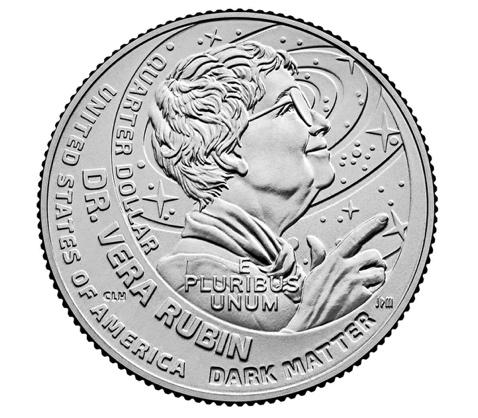
The Vera Rubin Town Hall and Free Coin Giveaway Is Almost Here

The 246th AAS is nearly here. We want to invite everyone attending AAS this year to join us for a special event on June 11 and receive a free Vera Rubin coin and coin board just for attending!

Vera Rubin Celebration Town Hall at the 246th AAS (June 8-12), Anchorage, Alaska

Date/time: Wednesday, Jun 11, 6:30-7:30 p.m.
Building/room: Dena'ina Civic & Convention Center, Ballroom A
SESSION ID #:  46  (1 hour)
American Women Quarters 2025 Rolls and Bags - Dr. Vera Rubin image number 3
Credit: United States Mint
Come join us in celebrating the groundbreaking scientific achievements and enduring legacy of Dr. Vera Rubin, whose work provided the first compelling evidence for dark matter, fundamentally altering our understanding of the universe. 
Vera Rubin was a leading figure in observational cosmology whose critical observations of galaxy rotation curves led to one of the most profound discoveries in modern astrophysics, reshaped our understanding of galactic dynamics and laid the foundation for research that continues today, including the first direct evidence of dark matter from NASA’s Chandra X-ray Observatory and now, new studies at the Vera C. Rubin Observatory.
Rubin was also a lifelong advocate, mentoring generations of astronomers and advocating for greater participation in the field.  This one-hour panel discussion will honor Vera Rubin’s scientific contributions and advocacy, highlight ongoing research with missions and scientists that build on her discoveries, and foster dialogue on science, history, and public engagement.  The U.S. Mint’s newly released Vera Rubin coin will be showcased with free coin and coin board giveaways for the AAS audience attendees.
Our panel features Nicole Drakos, Amruta Jaodand, and Maddie Lucey. Drakos is a theoretical astrophysicist studying structure formation in the universe. Jaodand is a multi-wavelength astronomer and astroinfomatics aficionado. Lucey is an astronomy and astrophysics postdoctoral fellow whose research aims to build our understanding of the early universe by studying the ancient stars in our galaxy.  Kimberly Arcand will moderate this one-hour discussion hosted by the Smithsonian Astrophysical Observatory/Chandra X-ray Observatory, and AAS Committee on the Status of Women in Astronomy, with the U.S. Mint. Arcand is the Visualization scientist, emerging tech lead, and acting communications & public engagement lead for NASA’s Chandra X-ray Observatory.
With such an exceptional panel, we know you'll want to join us for this event. Mark June 11 at 6:30 p.m. in your calendars for this special AAS event and come get your free Vera Rubin coin, as well.

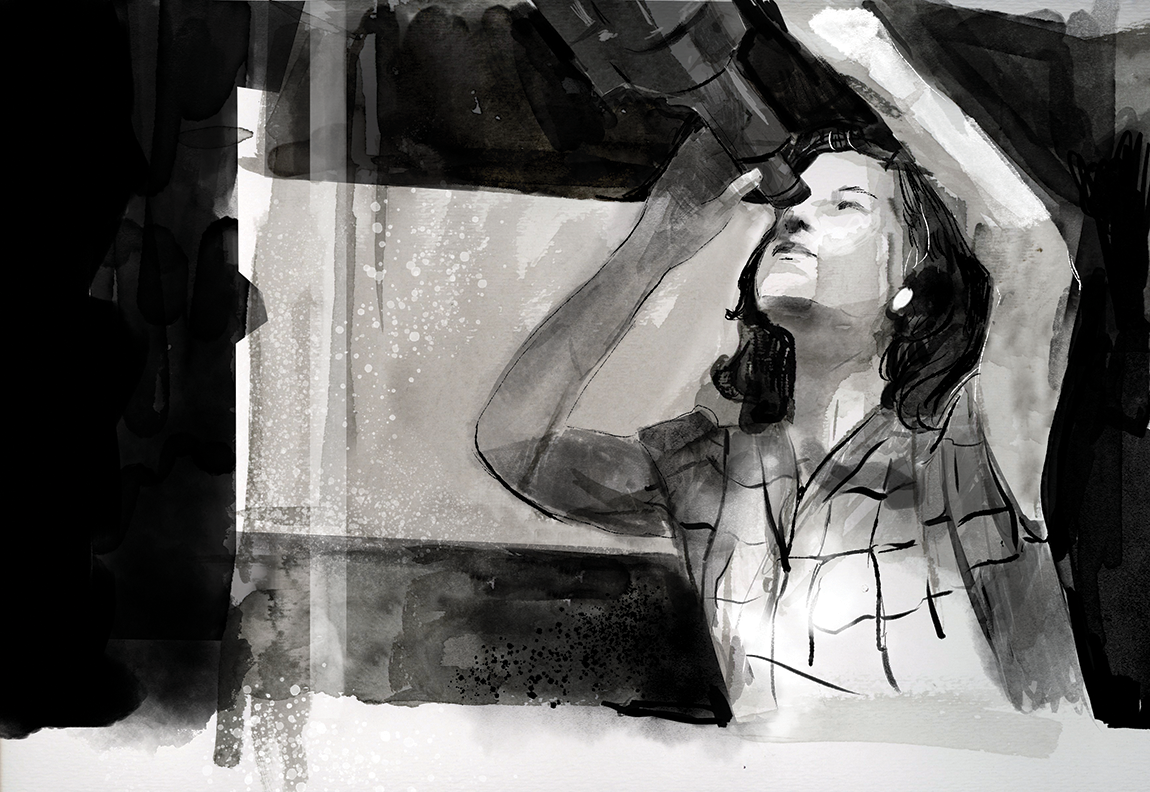
A person looking through a telescope

AI-generated content may be incorrect.
Illustration: NASA/CXC/SAO/K.Divona
In the 1970s, astrophysicist Vera Rubin discovered evidence that the Universe was made of more than what could be seen with telescopes — today known as "dark matter". Born in 1928, Vera was drawn to watching the stars at an early age. Her passion would lead her to become the sole astronomy major in her graduating class at Vassar in 1948. Rubin pursued advanced training at Cornell and then Georgetown, where she completed a Ph.D. She was a lifelong advocate for women in science and scientific literacy.


Thursday, April 3, 2025

Cross-post: The AAS Education Committee Is Soliciting New Volunteers!

This is a cross-post from the AAS Education Committee blog. The AAS Education Committee oversees the AAS's education activities. Members make recommendations, review educational activities, and implement AAS activities. Contact education committee co-chair Tania Anderson if you're interested in learning more or volunteering!


From the AAS Education Blog:

As co-chairs of the AAS Education Committee, we want to publicly thank all of the current committee members and let you know about the amazing work that is ongoing by this mighty set of volunteers. The AAS Education Committee, which is charged with the oversight of the educational activities of the AAS, is made up of 16 members from across the Society who have an interest and expertise in education, outreach, public engagement, and communication. As the mission of the AAS is “to enhance and share humanity's scientific understanding of the universe as a diverse and inclusive astronomical community,” the Education Committee thus serves a vital role in guiding the impact of the Society. Members of the committee bring their experience and network to support the whole Society’s activities in astronomy education — from public outreach, through introductory astronomy, to the training of future astronomers.

Read the full blog and get in touch with the committee at the AAS Education Committee blog. 

Thursday, January 9, 2025

CSWA Sessions & Events at AAS National Harbor 2025

by Karly Pitman, CSWA Chair


We look forward to seeing you at the 245th American Astronomical Society meeting to be held January 12-16, 2025 at the Gaylord National Resort & Convention Center in National Harbor, Maryland.  


CSWA will be hosting and co-hosting several events early in the week.  Please come by to meet your CSWA representatives, network, and support the advancement of women in our field.


AAS and CWSA Meeting Schedule:


Sun. Jan. 12:

AAS Grad School & REU Fair

Prince George’s Exhibit Hall E

5:30-7:00 p.m. ET

Come hear about CSWA's strategic plan and current activities and how you can get involved with AAS at the CSWA table!


Mon. Jan. 13:

CSWA Hackathon - Take Action for Equity

Chesapeake 6

1:00-3:15 p.m. ET

The AAS Committee on the Status of Women in Astronomy (CSWA) has recently authored several papers with recommendations by and for our community on ways to support gender equity and the success of women in astronomy. In this interactive, solutions-oriented session, attendees will choose from a menu of canonical and systemic problems facing women in our field (e.g., issues impacting employment pipeline and retention, compensation, two-body problem, workplace civility, barriers to power and leadership, etc.) and collaborate in real time to brainstorm practical and tactical solutions to address them. We all know what the problems are - what we need is dedicated time together to solve them. If you don’t have time to volunteer for a committee but want to effect change and take action, this is your opportunity.


Tue. Jan. 14:

1400 Degrees and AAS CSWA Networking Event at AAS245

(Offsite event at Rosa Mexicano, RSVP link below; 6:30-9:00 p.m. ET)


1400 Degrees is partnering with the American Astronomical Society’s Committee for the Status of Women in Astronomy for an evening networking and community-building event at the AAS245 meeting in National Harbor, Maryland, on January 14th, 2025. Connect over dinner and beverages with scientists from different institutions, career stages, and scientific sub-disciplines within physics and astronomy in a casual and comfortable environment. Feel free to share this invitation with your (21+) women and gender minority colleagues attending the AAS conference. Space is limited, so make sure to RSVP quickly. We hope to see you there!


Link to RSVP on Eventbrite: https://www.eventbrite.com/e/1400-degrees-and-aas-cswa-at-aas-2025-tickets-1083319611119


Hosts: Karly Pitman/CSWA and Gabriele Betancourt-Martinez (Heising-Simons Foundation; 1400 Degrees: https://1400degrees.org/)

We hope you can join us for some or all of these events. Find the full schedule for AAS 2025 at https://aas.org/meetings/aas245. 


Thursday, September 12, 2024

Assessing the Demographics of Participants in AAS Press Conferences

By Elizabeth Fenstermacher

In support of the CSWA’s Strategic Plan for the 2020s, a survey to assess the participation of community members at official AAS press conferences was conducted. In Assessing the Demographics of Participants in Press Conferences at Meetings of the American Astronomical Society (2010-2022), Grace Bagdon, Nicolle Zellner, Patricia Knezek, and the AAS Committee on the Status of Women in Astronomy (CSWA) examined the demographics of who is invited to participate in press conferences and reported on the participants’ perceptions of the influence that participating in even just one AAS press conference has on one’s career and forward trajectory. 

A few highlights:

    graph of gender + institution and # of press conferences
    Figure 6 in Bagdon et al. (2021).

  • 59.7% of respondents felt that participation in press conferences impacted their career in a positive way. Women were more likely than men to feel this way, and those from small academic institutions were significantly more likely to feel this way.

  • Around 35% of respondents who identified as women had participated in more than one press conference while over 48% of men could say the same.

  • Respondents report that the ‘Dual Anonymous’ method has been shown to increase the participation, and thus the representation, of women.


graph of effects of dual-anonymous reviewing, per gender and ethnicity
Figure 22 (left) and Figure 23 (right) in Bagdon et al. (2021).


When asked to provide feedback on the results of this research, longtime AAS Press Officer Rick Fienberg stated,
The most important sentence (in my opinion) is this one from the Recommendations section: ‘This study has…demonstrated that press conference participation is broadly representative of AAS membership and that this participation can positively impact a career.’ That alone should prompt more people to step forward to participate in press conferences.
In response to the reports findings of an overwhelming support for the ‘Dual Anonymous’ method, Rick recommended that ‘Public Information Officers’ (PIOs) at investigator institutions should also be encouraged to utilize a dual anonymous method as well, when selecting what is newsworthy. He offered the following:
...when reaching out to PIOs for recommendations, it’d be worthwhile to encourage them to do the same, i.e., to focus on the abstracts and not the authors when looking for newsworthy results to highlight. I suspect if you were to look at the people who’ve participated in multiple press conferences over the years, you’d find that they are more likely than average to have worked with a PIO. In my experience, PIOs often recommend the same people repeatedly.

graph of career stage and press conferences
Figure 9 in Bagdon et al. (2021).


Friday, February 9, 2024

AASWomen Newsletter for February 9, 2024

AAS Committee on the Status of Women
Issue of February 9, 2024
eds: Jeremy Bailin, Nicolle Zellner, Sethanne Howard, and Hannah Jang-Condell

[We hope you all are taking care of yourselves and each other. --eds.]

This week's issues:
1. Celebrating Black in STEM – Part 1
2. AAS Announces Honors
3. Help Protect Funding for Astronomical Sciences
4. Herschel Medal Awarded to Roberta Humphreys
5. Other Astronomy Prizes Awarded 
6. Passion, curiosity and perseverance: my mission to capture women in science on camera
7. Soapbox Science’s 2024 speaker call is NOW OPEN!  
8. How to Submit to the AASWomen Newsletter
9. How to Subscribe or Unsubscribe to the AASWomen Newsletter
10. Access to Past Issues of the AASWomen Newsletter

An online version of this newsletter will be available at http://womeninastronomy.blogspot.com/ at 3:00 PM ET every Friday.

Thursday, May 4, 2023

Crosspost: An Interview with AAS President-Elect Dara Norman

By Ashley Walker, Howard University

Ashley Walker is a planetary science PhD student at Howard University and member of the AAS Committee on the Status of Minorities in Astronomy (CSMA). She sat down with Dr. Norman, who was elected to be the next AAS President by AAS members earlier this year, to discuss the path that led her to astronomy, the mentors who influenced her, and what she aims to accomplish during her term as AAS president.

Dara Norman, AAS


A legacy I would like to see is basically that there's not one way to be an astronomer, and that there are opportunities available for people who decide that they love astronomy, but writing a bunch of papers is not where they want to be. What they want to do is communicate to students, or they want to communicate to the public, or they want to help other astronomers get their data and get their research done. Or they want to go into policy, and they want to make sure that there is funding and opportunity for the people who do want to write a million papers. But I really think that there are a lot of ways to do this, and the more credit we give to all of the people who are making it possible for all of us to do this kind of work, the better the field will be, and the more accessible the field will be. So hopefully that will be part of the legacy that I leave behind.

Read more at

https://aas.org/posts/news/2023/04/interview-aas-president-elect-dara-norman

Thursday, April 28, 2022

IDEA Actions for Our Science Communities

By Nicolle Zellner and Karly Pitman, CSWA co-Chairs


In the past few years, there has been a noticeable shift in how organizations, institutions, and professional societies (among others) are integrating inclusion, diversity, equity, and accessibility (IDEA), justice, and/or belonging into their daily practices. The Women in Astronomy blog has published numerous posts on this topic while highlighting IDEA advocates and allies. In a recent post, Joan Schmelz, director of the Science and Technology Institute and the NASA Postdoctoral Program at Universities Space Research Association, wrote about her approach for intentionally infusing IDEA culture throughout Astronomy.


There are plenty of resources out there and multiple ways to become educated about best practices, lessons learned, and practical applications. This week, Advancing IDEA in Planetary Science is taking place. The goal of this virtual conference is to “ensure that the planetary science community can take giant leaps in advancing IDEA principles in the workforce over the next decade.” The conference is free and registration is open. Whether a planetary scientist or not, the talks and workshops are sure to be engaging, informative, and inspiring. There will also be two working sessions (Apr. 28 3:30 p.m. to 5:00 p.m. CDT and Apr. 29 from 3:30 p.m. to 4:30 p.m. CDT) to develop detailed and tangible recommendations for the community.


NASA’s DEIA Strategic Plan (2022-2026) includes multiple key performance goals. For example, one aims to ensure that recruitment plans focus on underrepresented individuals and members of underserved communities and individuals with disabilities. Others aim to build a diverse future science, technology, engineering and mathematics (STEM) workforce by engaging students in authentic learning experiences; implement a continuous pay equity assessment process; and develop and implement automated, analytic products centered around measuring demographic representation and trends (among others). NASA’s Equity Action Plan will focus on increasing integration and utilization of contractors and businesses from underserved communities; enhancing grants and cooperative agreements to advance opportunities, access, and representation for underserved communities; leveraging Earth Science and socioeconomic data to help mitigate environmental challenges in underserved communities; and advancing external civil rights compliance. The National Science Foundation has also recently updated its Strategic Plan (NSF 2022-2026) and diversity is mentioned in several places, drawing from the National Science Board's Vision 2030 recommendations. While many diversity working groups and institutions don't necessarily have the budgets to execute to the scale of the funding agencies, actions at the federal level should serve to inspire individuals and institutions that are funded by NASA in developing their IDEA goals.


The American Astronomical Society itself has also infused IDEA into its own Strategic Plan (2021-2026), with the goal of implementing recommendations made by recent IDEA task forces and consortia. Members of its inclusion committees, CSWA, SGMA, WGAD, and CSMA, meet regularly and collect and publish resources to help advance careers of AAS members in general.


But perhaps the biggest sea change in encouraging the implementation of IDEA practices occurred when the National Academies required that both the Astrophysics and Planetary Science and Astrobiology decadal surveys include a study of the state of the profession. The Astro2020 decadal report, Pathways to Discovery in Astronomy and Astrophysics for the 2020s, urges federal agencies to ensure that their scientific integrity policies address harassment and discrimination by individuals as forms of scientific misconduct. The report also encourages federal funding agencies to establish a consistent format and policy for regularly collecting, evaluating, and publicly reporting demographic data and indicators and then consider using that information in the evaluation of funding awards (e.g.,  individual investigators, project and mission teams, third-party organizations that manage facilities). In a similar vein the just-released Planetary Science and Astrobiology (PS&AB) Decadal Survey, Origins, Worlds, and Life, also recommends collecting data concerning workplace climate, as well as data on the size, identity, and demographics of the PS&AB community; broadening opportunities to advance the state of the profession; and recognizing the need for an inclusive and inviting community free of hostility and harassment. That the decadal reports of both of these closely related scientific communities make similar recommendations means that the importance of a diverse and healthy workforce is finally being acknowledged. Now it’s up to us - members of these communities - to capitalize on this momentum and take action to bring these recommendations to life.


Here are some ways that you can take action in the short term: 

  • Participate in upcoming events at the 240th AAS meeting in Pasadena, CA

    • CSWA splinter session, June 13, 5:30 - 7 pm PT

    • Other sessions TBD, so check the schedule when it’s published

  • Volunteer to be a part of the AAS inclusion committees

  • Be a mentor on AAS’s new mentoring platform, Mentoring365


Resources:

WGAD, AAS Working Group on Accessibility and Disability 

SGMA, AAS Committee for Sexual-Orientation & Gender Minorities in Astronomy 

CSMA, AAS Committee on the Status of Minorities in Astronomy

CSWA, AAS Committee on the Status of Women in Astronomy

Diversity, Equity, and Inclusion at the American Geophysical Union

International Astronomical Union, Astronomy for Equity and Inclusion

Statement by the Astronomical Society of the Pacific