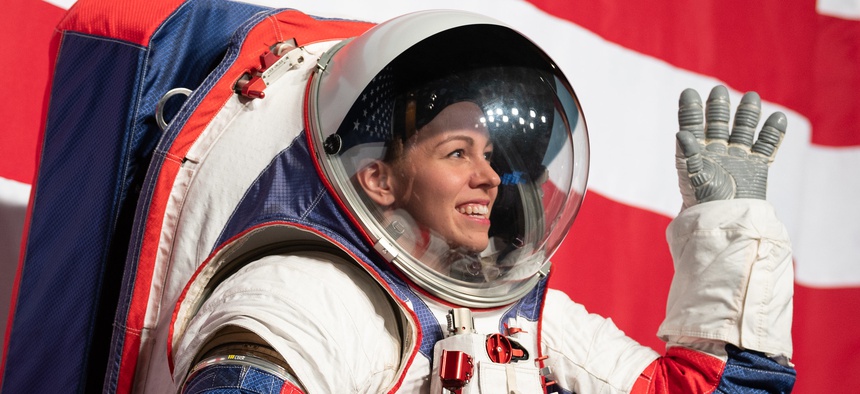
Showing posts with label career impact. Show all posts

Thursday, January 8, 2026

Crosspost: Picture an Astronomer: Best Practices for Retaining Talent in Astrophysics

Our crosspost today is from a newly released whitepaper edited by Ava Polzin and Katherine E. Whitaker about the challenges women in astronomy face and how these might be overcome.

Cover: Illustration of Vera Rubin, based on the 1948 picture of her at the Vassar College Observatory from the Carnegie Science Vera C. Rubin Photograph Collection. The background is one of the first light images from the NSF-DOE Vera C. Rubin Observatory released June 2025. It is the first major observatory to be named after a woman. All art by Julie Malewicz.

Summary:


Women are consistently underrepresented in astrophysics yet are simultaneously subject to disproportionate attrition at every career stage. This disparity between demonstrated efficacy in job performance and ultimate career outcome was the primary motivation for the Picture an Astronomer series, which included both targeted public outreach to increase representation of women in astrophysics and high-level, solution-oriented discussions among professional astronomers. 

In March 2025, more than 200 astronomers came together in a hybrid-format symposium focused on the state of the field for female scientists, combining scientific exchange with discussions of policies and practices to strengthen retention of talent in the field. This white paper is the result of those discussions, offering a wide range of recommendations developed in the context of gendered attrition in astrophysics but which ultimately support a healthier climate for all scientists alike.

Excerpt from the foreword by C. Megan Urry:


One particular conversation when I was a postdoc in the 1980s clarified both the ubiquity and inaccuracy of the upside-down notion that women had it easier than men. It started with the usual statement from a male colleague that, thanks to affirmative action, I would have no difficulty advancing in the field (a claim wildly contrary to the lack of encouragement I experienced to that point). I challenged him to substantiate that view. He launched into a story about a woman hired as faculty at a top university despite her complete lack of qualifications, and despite overwhelming competition from an outstanding young man for whom the job had actually been intended. But an interfering Dean had insisted that this woman be added to the short list and then insisted that she be hired. I might have believed this story—after all, such stories were commonplace—but when I asked who the woman was and what her research area was, the storyteller didn’t know any details. 

Wait, I said, you don’t know who she is or what she does but you are sure she was unqualified? “Everyone knows this is true,” he responded

As scientists, we know this isn’t how evidence and scientific analysis is supposed to work. Before coming to conclusions, we seek facts and are skeptical of broad claims— you don’t just accept some story because it aligns with your beliefs. Later, I happened to meet someone who had been on the actual search committee for that position. When I recounted the story to him, he—a person who was there, who participated in the deliberations and the decision to hire this woman—told me the story was flat out wrong. 

In fact, the woman had been on the short list from the get-go and was hired because she was the strongest candidate by far. According to this first-hand account, she blew the rest of them out of the water, including the young man who was a supposed shoo-in. This jolted me into a new awareness of the realities of my profession. I began to see that women2 were judged differently than men—indeed, much more harshly—which the social science literature confirms. We were less likely to be seen as academic stars, more likely to be criticized or overlooked. At the Space Telescope Science Institute (STScI), created in 1981, the tenure-track staff included only one woman (Neta Bahcall) among the first 60 people hired. This was despite the fact that women received 10-20% of the PhDs in astronomy in the 1980s. I was the third woman hired onto the tenure track, after Anne Kinney. 

She and I started asking, “Why so few?”

Read the whitepaper from the "Picture an Astronomer Symposium" at arXiv: Picture an Astronomer: Best Practices for Retaining Talent in Astrophysics.

Thursday, October 23, 2025

10 Things You Can Do to Support Friends on the Job Hunt

If it feels like every other person on your LinkedIn page is searching for employment, you're not alone. We want to acknowledge what a challenging time this is for so many in our community and extended networks.
Image by Robin Higgins from Pixabay

Today, we offer some tips on how to encourage people you know, whether personally or through your network, who are currently out of work and seeking their next job.

1) Acknowledge their situation with a supportive comment. Don't scroll by when you see someone post they're out of work. They're in a vulnerable place, and they've taken the risk of posting that online.

2) Reach out personally. If you know them well and have their email or phone number, contact them 
directly. If they're more of a LinkedIn contact, send a direct message. Tell them you're aware of their situation and want to support them. Ask if there's anything you can do immediately, and reassure them you're actively thinking about their situation. 

3) Write a recommendation for their LinkedIn profile without being asked. Give specific reasons why your friend is great in their field.

4) Write a post on your LinkedIn account or other appropriate network about how this friend is an expert in their field. Include specific examples of what they've done and what they could bring to their next position. Make sure you tag them in your post.

5) Connect them to those in your network with similar skills, or people you know who could be hiring soon. Write an email or message linking the two and detailing why you think they should connect.

6) When you see job postings that fit your friend, tag them, send it to them, or even better, personally reach out to draw their attention. With every #hiring announcement you see, ask yourself if your friend could be a good fit.

7) If you know someone in that organization, reach out about the position to recommend your friend. Having an internal recommendation is a big win for job seekers.

8) Offer specific ways to support your friend instead of the blanket "reach out if there's anything I can do." Let your friend know exactly what you're going to do for them. (Connect them to a new company, look over their resume, schedule a quick call or meet up).

9) If you're in the same location, meet face-to-face. Find out what role they're looking for next. Buy them a coffee. Offer a little friendship and stress relief.

10) Check back in with them after a few weeks, and keep checking on them. Put it on your calendar if you need a reminder. Don't drop in once and disappear. 
Photo by Resume Genius on Unsplash

Job hunting can be a long and difficult season. Your support matters, most likely more than you'll ever know. You won't regret being on your friend's team as they job hunt, and you'll get to celebrate when they're hired for their next role. 

Then you can both support someone else in your community who needs a little extra lift as they search for a new role. We hope these small steps give you actionable items to follow as you support a friend on the job hunt. 

**AAS members looking for work, or supporting a friend who is, don't forget to visit the AAS Careers page, where you can find resources on job searches, tips, and more. 


Thursday, October 16, 2025

Guest Post: Invisible Journeys: The Struggles and Strengths of Displaced Women Scholars

Today, we welcome guest blogger Dr. Encieh Erfani, who is currently a researcher at the University of Mainz, Germany, and who writes passionately about science communication, as well as the struggles of women and displaced scholars in academia.

Invisible Journeys: The Struggles and Strengths of Displaced Women Scholars
By Encieh Erfani, Ph.D.
When I first heard the term “displaced scholar”, it sounded abstract, as if it belonged in a policy document rather than in someone’s life story. Yet for thousands of academics around the world, including myself, displacement is not abstract at all. It is a lived reality that reshapes careers, families, and identities. For women in particular, displacement magnifies pre-existing inequalities, creating a double burden: surviving exile while navigating the gendered challenges of academic life.
Today, as conflicts, authoritarianism, and crises push more scholars into exile, it is time to reflect on who these displaced women scholars are, what obstacles they face, and how the scientific community can respond.


Who Are Displaced Women Scholars?

There is no single, universally agreed-upon definition of displaced or at-risk scholars. Broadly, they are academics who are forced to leave their home institutions and, often, their home countries because of political repression, conflict, discrimination, or threats to their safety.
While all displaced scholars experience professional and personal upheaval, women often face unique challenges. Many juggle responsibilities as caregivers while trying to rebuild their academic careers in new and uncertain environments. Others encounter cultural or institutional barriers that make it harder to re-enter academia abroad. And because women are already underrepresented in many STEM fields, their forced displacement silences voices that are already too few.


Photo Courtesy of Encieh Erfani, Ph.D.
The Challenges of Displacement

The barriers facing displaced women scholars are complex and interconnected. Four of the most pressing are:
1. Interrupted Careers
Academic careers depend on continuity — building long-term projects, supervising students, publishing steadily, and securing grants. Displacement severs that chain. Labs are left behind, collaborations are cut short, and years of research may be lost overnight. For women, who already face systemic barriers to advancement, these interruptions can be devastating.
2. Visa and Immigration Uncertainty
A displaced scholar’s ability to continue her work often depends on navigating complex, lengthy, and stressful visa and immigration processes. For women who may also be responsible for children or other dependents, this uncertainty adds another layer of difficulty.
3. Isolation
Moving into a new academic environment without networks is isolating. Women scholars may find it even harder to access male-dominated networks of influence in science, making integration and recognition more challenging.
4. Gendered Barriers Amplified
Exile compounds gender inequities. Women displaced from countries with restrictive gender norms often face stereotypes in host institutions as well. At the same time, they may lack childcare support, mentoring, or policies tailored to their circumstances.
Behind each of these categories are human stories: an Afghan astrophysicist banned from teaching because of her gender; an Iranian scientist forced into exile for her activism; Ukrainian researchers trying to balance caring for their children while keeping their research alive abroad.


Why It Matters for Astronomy and STEM

Why should the scientific community, and especially astronomers, care? Because displacement is not only a humanitarian issue, but also a scientific one.
Every displaced woman scholar represents years of training, expertise, and creativity that science risks losing. Astronomy, like all sciences, thrives on diversity of thought and global collaboration. Yet when women are forced into silence or leave academia because of exile, our field becomes narrower, poorer, and less representative of humanity.
Astronomy in particular offers a symbolic reminder: while we study distant galaxies and exoplanets, we cannot ignore the struggles of those whose scientific journeys on Earth are disrupted. Science is a universal human pursuit, but access to it is not yet universal.


Pathways Forward

There are already organizations working to support displaced scholars. The Scholars at Risk (SAR) network and the Institute of International Education’s Scholar Rescue Fund (IIE-SRF) have provided placements, fellowships, and funding to thousands of at-risk academics worldwide. SAR arranged at least 164 positions in the 2023–24 period [1]. The IIIE-SRF reports that it supported 234 scholars in 2024 (and documents its cumulative totals since 2002 of over 1,100 fellows) [2].
For women, targeted support is critical. This includes:
  • Institutional commitments: Universities can develop fellowships specifically designed for displaced women scientists.

  • Mentorship and networks: Connecting displaced women to mentors and peers can reduce isolation.

  • Practical support: Childcare, relocation assistance, and mental health resources are often as important as research funding.

  • Recognition: Host institutions and professional societies should actively highlight and celebrate the contributions of displaced women scientists.

Astronomy departments and associations, including the International Astronomical Union (IAU), the American Astronomical Society (AAS) community, can play a role by opening opportunities, finding host institutes, inviting displaced women to conferences, and advocating for inclusive funding policies.


Photo Courtesy of Encieh Erfani, Ph.D.

Conclusion

The journeys of displaced women scholars are often invisible. Yet they are journeys of resilience as well as struggle. Supporting these women is not only a moral imperative; it is also essential for the vitality of science itself.
If we allow displacement to silence women scholars, we risk losing knowledge, perspectives, and discoveries that could shape the future of astronomy and beyond. If we act to support them, we affirm that science is truly a global and inclusive endeavor.
The sky reminds us daily that boundaries are human-made. Science, too, should transcend borders,  ensuring that no voice, especially that of a displaced woman, is left unheard.
References
  1. https://www.scholarrescuefund.org/about-us/by-the-numbers/?utm_source=chatgpt.com

About our Guest Blogger:

Encieh Erfani is originally from Tabriz, Iran. She earned her Bachelor's degree in Physics from Tabriz University, followed by a Master's degree in Physics with a focus on Gravitation from Azarbaijan Shahid Madani University.

In 2007 she was awarded a Postgraduate Diploma Scholarship in High Energy Physics from the International Centre of Theoretical Physics (ICTP) in Trieste, Italy. She completed her dissertation, "The Standard Model Higgs Boson as the Inflaton?" under the guidance of Paolo Creminelli in August 2008.
Erfani pursued a PhD in the Physics Department of Rheinische Friedrich-Wilhelms-Universität Bonn in Germany, where she successfully defended her thesis, "Inflation and Dark Matter Primordial Black Holes" under the supervision of Manuel Drees in August 2012.
After completing her PhD, she moved back to Iran and worked as a Post-Doctoral fellow at the School of Physics in the Institute for Research in Fundamental Sciences (IPM) in Tehran, and a visiting researcher at ICTP-SAIFR in Brazil. 
She returned to Iran in 2015 and joined the Physics Department at the Institute for Advanced Studies in Basic Science (IASBS) as an Assistant Professor. However, Erfani resigned on 23 September 2022 in support of the "Woman, Life, Freedom" protests, which led to her exile. Currently, she is a researcher at Mainz University in Germany.
Learn more about her work at her LinkedIn profile or website.

Thursday, April 17, 2025

Cross-post: PhD Parents: The Pros and Cons of Having a Child During Your Doctorate

When is it a good time to have a child if you're studying for a PhD? Science writer  explores this question with several researchers who had children during the PhD process in this Nature article originally published January 25, 2025.


Neuroscientist Ewa Bomba-Warczak knew she wanted to have children, and in the fourth year of her doctoral studies she remembers asking her aunt, “When is a good time?” Her aunt countered with, “When is a bad time?” Others told Bomba-Warczak to wait until she passed her qualifying exams for the PhD or reached another milestone, but she realized there was always going to be a new bar to clear. She became pregnant soon after that conversation with her aunt and defended her thesis at the University of Wisconsin–Madison in 2016 when her daughter was four months old. “My mum was taking her around the hallways so she wouldn’t cry,” she recalls.

Many PhD students find themselves contemplating whether to have a child during their PhD or wait until afterwards. 

Read the entire article at nature.com.

Tuesday, May 7, 2013

My Mother's Legacy

Today's guest blogger is Nicholas McConnell. Nicholas earned his PhD in 2012 and is now the Beatrice Watson Parrent Fellow at the Institute for Astronomy (University of Hawaii). His research focuses on supermassive black holes and giant elliptical galaxies.

This essay is about my mother. It is in part a shameless effort to earn family brownie points by "timely" blogging. Nonetheless, my mother's attitudes form one of the windows through which I try to examine gender issues in astronomy, and they inform my actions toward male and female colleagues. As I share her story I hope that others in this forum find common threads with their own.

I was born in 1984, the summer before my mother's final year of law school. She was working for The First National Bank of Chicago, who financed nighttime law classes for her and nine other employees. After graduating and passing the Illinois bar exam, she worked as an appellate court clerk, then as an associate lawyer for the firm Sidley Austin. In 1988 she resigned to take full-time care of me and my two younger siblings. She explains, "The old and sexist saying, 'The law is a jealous mistress,' is true. I wanted the impossible: to both pursue my career and to be with you all full-time. I focus too intensely on each immediate goal to be good at part-time anything." (In spite of this self-assessment, she did co-found the Chicago Bar Association's Part-time Woman's Network Committee.)

Wednesday, May 1, 2013

When Money Can’t Talk

In one of my earlier posts, I wondered whether or not K-12 STEM programs are truly effective at helping to plug the leaky pipeline in the United States.  In that post, I referred to the study that found that countries that make economic commitments to science and science education report higher percentages of women in STEM careers. In this current period of continuing resolutions and a sequestration that are dominating the distribution of federal dollars and threatening to cut NSF and NASA (and other) programs, I wonder if an already bad situation in the Uniter States will only get worse.  Specifically, will young scientists in general, and perhaps even women in particular, be disproportionately affected by decreasing numbers of research grants and dwindling STEM education opportunities?

Thursday, January 31, 2013

Guest Post: Eilat Glikman on 'In Praise of Remote Observing'


This week's guest-blogger is Eilat Glikman. Eilat holds an NSF Astronomy and Astrophysics postdoctoral fellowship at Yale University.  She studies dust reddened quasars and their role in quasar/galaxy co-evolution, as well as faint quasars at high redshifts.  Eilat has two young children ages 7 and 4 and is dedicated to finding that elusive formula for work/life balance.  

When I decided to pursue a career in astronomy (and academia) I was not aware of the incredible amounts of travel required.  I hate to travel, get stressed in the run up to a trip, am terrible at packing and get homesick quite easily.  Of course, when I arrive at my destination I usually enjoy myself, whether it is observing and getting awesome data or going to a conference and having stimulating and vibrant discussions.  Still, it was a rude awakening when I realized the extreme amounts of airline miles that some astronomers rack up (and the frequent flyer culture that ensues).

In graduate school, I made the best of my trips by adding Hawaiian vacations to IRTF runs.  But toward the end of graduate school, when I was pregnant, traveling to a remote mountaintop in order to go observing was no longer tolerable and I started taking advantage of remote observing whenever possible.  And maybe it is because my first remote observing experiences were with the well-tested interface at IRTF, but once I got a taste of observing without travel, I was hooked.

During my postdoc at Caltech, I used the remote observing facility to observe with the Keck telescope, and delighted in the fact that I could put my toddler to bed, kiss him good night, drive to the office, work all night and come home to sleep during the day.  Comparing this routine with one that adds two days of travel and being completely away from my family, the work-life friendliness of remote observing becomes completely apparent.

I have since written entire papers based on remotely obtained data, from Keck and IRTF.  More recently I have been using WIYN’s remote observing capabilities to do my science at Yale.  And last night I used a new, quite complicated (on paper) instrument on WIYN for the first time.  The first half of the night was for my science, after that my observing partner and I handed the reigns to the next team.  I drove home, within 30 minutes was asleep in my own bed, and am now back in the office ready to go for another half-night.

I cannot express enough how wonderful that feels.

(I will leave for another post some tips on how to maximize good rest during a remote observing run, especially with children.)

The IRTF offers an ideal model to follow.  Anyone with an approved observing program can observe remotely, from anywhere.  The last time I observed with IRTF, I did it from the comfort of my own home.   The data were beautiful and it might have been the best observing run I ever had!
Observatories, astronomy departments, listen up:  If you want to maximize productivity from your facilities, be accessible to more people, and level the playing field for astronomers with different work-life situations and (I didn’t even mention) funding situations, invest in remote observing.

Friday, January 18, 2013

CSWA Special Session at the AAS: Family Leave Policies


At the 221st AAS meeting at Long Beach, CA, the CSWA sponsored a special session entitled, "Family Leave Policies and Childcare for Graduate Students and Postdocs." The principal organizers were CSWA members Dave Charbonneau and Laura Trouille.

Slides from the presentations by Dave Charbonneau, Natalie Gosnell, Bob Mathieu, Edward Ajhar, and Charles Beichman are now posted as PDFs at http://www.aas.org/cswa/jan13.html.

Charbonneau's presentation included a report of preliminary results from the CSWA's national survey of department chairs on this topic. Gosnell and Mathieu reported on implementation of a forward-looking policy at UW-Madison. Ajhar reported on the NSF's work-life balance initiative, and Beichman described NASA's fellowship programs and their parental leave policies. Laura Trouille briefly presented preliminary results from the postdoc family leave survey. These results are also posted at the website listed above.

If you couldn't attend the session, take a look at the slides for a snapshot of the current state of this issue, which is critical for 21st century careers in astronomy.

If you'd like to voice your support for improving family leave policies for our community, please consider signing http://faculty.wcas.northwestern.edu/aaron-geller/petition. As of this post, the petition has over 1100 signatures. 

Tuesday, December 18, 2012

Bullying: How It Affects You

Today’s guest post is from an anonymous contributor.


Joan Schmelz gave a wonderful talk at the Summer AAS in Anchorage, and I was so glad that a topic that certainly has impacted many people was on such prominent display. In fact, I almost wanted to email Joan and ask if she had heard about my experiences in particular, because it so well matched something I personally had gone through with a bully.

I am not sure if I am unique (I hope I am, but doubt it) in that I have had a chain of at least three bullies strung together in my young astronomy life. From a young hotshot professor who expected their new grad students to perform like postdocs, to a senior person in the field who took it as a personal affront (and went on a personal attack) when a student had a scientific disagreement with him/her, to a person going to my advisor and claiming that I was incompetent to do my own work without his/her having direct control over the science I was outputting. These incidents were daisy chained together: it seemed as if once I'd escaped one bully, another was waiting in the wings to take over. It got me asking many things, but firstly, was there something about me that attracted them to me as a target?