In 1966, when seamstresses at the International Latex Corporation arrived at its new Apollo Suit shopfloor in Frederica, Delaware, they were essentially “taught to sew again from scratch.” And for good reason: Compared to the company’s bras and girdles, the craftsmanship needed to fashion a spacesuit was, in every sense, out of this world.
The AAS Committee on the Status of Women in Astronomy maintains this blog to disseminate information relevant to astronomers who identify as women and share the perspectives of astronomers from varied backgrounds. If you have an idea for a blog post or topic, please submit a short pitch (less than 300 words). The views expressed on this site are not necessarily the views of the CSWA, the AAS, its Board of Trustees, or its membership.
Thursday, May 28, 2026
Crosspost: The Bra-and-Girdle Maker That Fashioned the Impossible for NASA
In 1966, when seamstresses at the International Latex Corporation arrived at its new Apollo Suit shopfloor in Frederica, Delaware, they were essentially “taught to sew again from scratch.” And for good reason: Compared to the company’s bras and girdles, the craftsmanship needed to fashion a spacesuit was, in every sense, out of this world.
Thursday, April 9, 2026
Support Science Funding (Again): A Call to Action
![]() |
| Photo: The Planetary Society |
Thursday, April 2, 2026
Christina Koch's Path to the Moon
Yesterday, history was made. For the first time since 1972, a rocket launched to the Moon—the first time for many of us to witness such an event. Christina Koch (pronounced cook), the only woman in the four-person crew, is also making history as the first woman to travel so far into space.
![]() |
| Image Credit: NASA/Kim Shiflett |
She enjoyed science and math and excelled at those subjects, helped along her path by attending North Carolina School of Science and Mathematics. Koch studied electrical engineering and physics at North Carolina State University, earning both a Bachelor of Science and a Master's degree in electrical engineering. She set her sights on NASA early by graduating from the NASA Academy Program at Goddard Space Flight Center in 2001.
Before her ventures into space, Koch focused on extreme environments on Earth. She was a research associate in the United States Antarctic Program, which took her to both the North and South Poles. She did a winter-over season at Amundsen-Scott South Pole Station, where she learned how to adapt to the challenges of living far from family in a harsh climate with the same people—skills that readily translate to space travel.
Koch also used her engineering skills in the Space Department of the Applied Physics Lab at John Hopkins University, where she built instruments to measure radiation particles on NASA missions. She has also worked as a field engineer and a station chief for NOAA.
Koch's depth of experience, along with her childhood dream, eventually led her to apply to NASA's astronaut program. She was named as one of eight members of NASA's 21st astronaut class in 2013 and completed her training in 2015. Four years later, she headed to the International Space Station, where she made history twice. First, she participated in the first all-female spacewalk on October 18, 2019. When her mission was extended until February 2020, she took the record from Peggy Whitson for the longest single continuous stay in space for a woman at 328 days.
Koch was named as part of Artemis II's crew in 2023 in a history-making move. Yesterday, April 1, 2026, she launched into space with fellow NASA astronauts Mission Commander Reid Wiseman and Pilot Victor Glover and Mission Specialist 2 and CSA astronaut Jeremy Hansen. While the other three astronauts come from military backgrounds, Koch joins the crew as an expert electrical engineer and Mission Specialist 1. Her role includes overseeing hatch systems and operations on Orion. Mission specialists are trained in all roles in the event of an emergency.
Koch and the Artemis II crew will reach lunar orbit April 6, fly around the Moon, and return to Earth April 10. When she does, Koch will emerge from the Orion capsule as the first woman, but surely not the last, to travel beyond low Earth orbit as humanity bids to go to the Moon once again.
![]() |
| Image Credit: Mark Sowa - NASA - JSC |
Thursday, June 12, 2025
Budget cuts and canceled grants continue to threaten science and research.

The smallest proposed NASA budget since 1961.
Source: The Planetary Society
Thursday, February 27, 2025
Spotlight on Dr. Beth Brown
Friday, September 27, 2024
AASWomen Newsletter for September 27, 2024
Issue of September 27, 2024
eds: Jeremy Bailin, Nicolle Zellner, Sethanne Howard, and Hannah Jang-Condell
[We hope you all are taking care of yourselves and each other. --eds.]
![]() |
| From Item #1 |
This week's issues:
1. Workshopping Success Beyond Research
2. Request for Comments: F.18 MOSAICS DRAFT Text
3. Gender-plus analysis of Canadian science and engineering grants
4. Job Opportunities
5. How to Submit to the AASWomen Newsletter
6. How to Subscribe or Unsubscribe to the AASWomen Newsletter
7. Access to Past Issues of the AASWomen Newsletter
An online version of this newsletter will be available at http://womeninastronomy.blogspot.com/ at 3:00 PM ET every Friday.
Friday, July 19, 2024
AASWomen Newsletter for July 19, 2024
Thursday, July 18, 2024
Celebrating Apollo-era Women
Further reading:
- Panel Participants (incl. bios and pictures)
- Other Women of Apollo
- First Lady Astronaut Trainees
Thursday, April 18, 2024
Women at NASA Support Human Spaceflight
By Nicolle Zellner
On April 12, the United Nations celebrated the International Day of Human Spaceflight in honor of Yuri Gagarin, a Soviet citizen. who conducted the first human space flight. This historic event opened the way for space exploration for the benefit of all humanity.
NASA has been the leader of human spaceflight in the United States, and women at all of the NASA centers and facilities have worked - for decades - to support those efforts. Here are just a few of them.
Teresa Kinney, NASA's first female chief engineer at the agency's Kennedy Space Center (KSC), is one of the managers working to put the Gateway lunar space station together in orbit around the Moon later in the 2020s. She says, ""If everybody thinks alike, you're not thinking about the problem correctly."
Read more at
https://www.space.com/nasa-1st-female-chief-engineer-gateway-moon
Kari Alvarado, is the lead management analyst and Dryden Aeronautical Test Range (DATR) asset manager at NASA’s Armstrong Flight Research Center in Edwards, CA. Her advice? Never compare yourself to others. Only compare yourself to you and your own potential."
Read more at
https://www.nasa.gov/centers-and-facilities/armstrong/womens-history-month-meet-kari-alvarado/
Gwendolyn Wheatle currently serves as the Administrative Assistant for the Office of STEM Engagement at NASA’s Langley Research Center in Hampton, VA. What started as a temporary, three-week clerical position supporting the Office of the Chief Scientist has blossomed into a 38-year career at NASA. She reminds us that you don’t have to have a degree in engineering or science to hold a position at NASA - no matter your degree, background, or experience, there is a place for you.
Read more at
Learn more! Women are making history at NASA every day, as the agency continues to drive innovation and push the envelope. Learn more at https://www.nasa.gov/women-at-nasa/.
Friday, April 5, 2024
AASWomen Newsletter for April 5, 2024
Issue of April 5, 2024
eds: Jeremy Bailin, Nicolle Zellner, Sethanne Howard, and Hannah Jang-Condell
[We hope you all are taking care of yourselves and each other. --eds.]
This week's issues:
1. Sexism in academia wastes public funding and is bad for science
2. Women Eclipse Chasers
3. Meet 5 women pushing the boundaries through NOAA’s work in space 4. Meet the Two Women Leading Space Station Science
5. We asked over 50 women space leaders for words of inspiration. Here's what they told us
6. The State of Girls in STEM: A Conversation to Plan Action
7. How to Submit to the AASWomen Newsletter
8. How to Subscribe or Unsubscribe to the AASWomen Newsletter
9. Access to Past Issues of the AASWomen Newsletter
An online version of this newsletter will be available at http://womeninastronomy.blogspot.com/ at 3:00 PM ET every Friday.
Friday, December 8, 2023
AASWomen Newsletter for December 8, 2023
AAS Committee on
the Status of Women
Issue of December 8, 2023
eds: Jeremy Bailin, Nicolle
Zellner, Sethanne Howard, and Hannah Jang-Condell
[We hope you all are taking care of yourselves and each other. --eds.]
![]() |
| Evelyn Fox Keller (Image: Rick Friedman/Corbis, via Getty Images) |
1. Repost: Don’t Masculinize the Letter of Recommendation: Towards a Truly Gender-Brave Science Community
2. Astronomy Award Winners Announced
3. Reimagining the Astronomy PhD for the 21st Century
4. Mary Cleave, ‘trailblazing’ astronaut, dies at 76
5. Evelyn Fox Keller (1936–2023), philosopher who questioned gender roles in science
6. "For Women in Science" celebrates the first hundred Mexican scientists supported by the L'Oréal-UNESCO national programme
7. STEM gender gap shows no signs of closing with Gen Z
8. Brite 2024 Application Now Open
9. Job Opportunities
10. How to Submit to the AASWomen Newsletter
11. How to Subscribe or Unsubscribe to the AASWomen Newsletter
12. Access to Past Issues of the AASWomen Newsletter
An online version of this newsletter will be available at http://womeninastronomy.blogspot.com/ at 3:00 PM ET every Friday.
-------------------------------------------------------------------------------
Friday, September 29, 2023
AASWomen Newsletter for September 29, 2023
AAS Committee on
the Status of Women
Issue of September 29, 2023
eds: Jeremy Bailin, Nicolle
Zellner, Sethanne Howard, and Hannah Jang-Condell
[We hope you all are taking care of yourselves and each other. --eds.]
This week's issues:
1. NASA's Hubble Fellowship Program2. NSF supports the Council of Graduate Schools in efforts to broaden participation in the nation’s technology workforce
3. Astronomers push back on new IAU harassment polic
4. Natural Inspiration
5. How to Submit to the AASWomen Newsletter
6. How to Subscribe or Unsubscribe to the AASWomen Newsletter
7. Access to Past Issues of the AASWomen Newsletter
Thursday, September 28, 2023
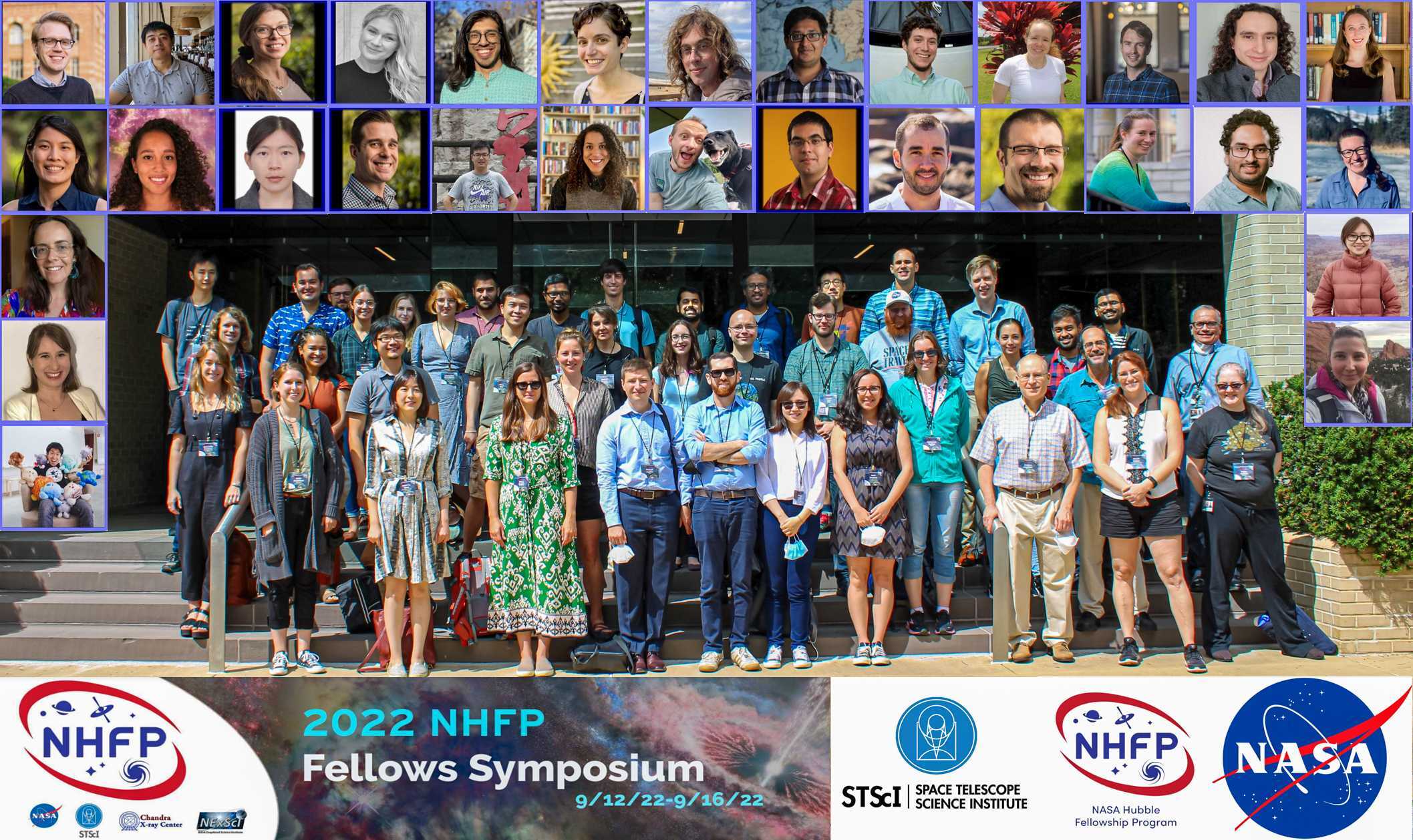
NASA's Hubble Fellowship Program
By Antonino Cucchiara (NASA HQ) and Patricia Knezek (NASA HQ)
Summary: The NASA Hubble Fellowship Program (NHFP) seeks input from the astronomical community and, in particular, from early career colleagues, in response to the 2021 NHFP program review and recommendations. This feedback form will be available until October 21st, 2023.
Background: The NASA Hubble Fellowship Program, the umbrella program that currently includes the Hubble, Sagan, and Einstein Fellowships, has been critical in providing talented and scientifically productive early career researchers the necessary tools to pursue groundbreaking discoveries while becoming leaders in the field of astronomy. The NHFP was created in 2018, but when considering its impact in combination with fellowships (e.g. Chandra, Spitzer) previously funded by NASA's Astrophysics Division, the role the fellowships have played cannot be understated: many fellows reached leadership positions in academia, federal agencies, and research centers and were awarded research grants, and prizes earlier than many of their peers.
In 2021, NASA Headquarters (HQ) initiated the first-ever review of the NHFP with the main objectives of identifying areas of improvement. While the charge of the review panel was to focus on two major areas (the NHFP success under its current structure and Diversity, Equity and Inclusion of the program), the report included 32 recommendations that span a wide range of topics (e.g., the Mission of the NHFP, the management of the program, the review and application processes, Diversity and Accessibility, and the support of the fellows).
The report was published in December 2021 and showed the impact and aura of prestige that surrounds the program, its participants, and the key role within the astronomical community in providing resources to emerging early career researchers.
Nevertheless, under the broader lenses of NASA’s Science Mission Directorate (SMD) 2020-2024 Science Plan and the adoption of Inclusion as a NASA core value (in addition to the values of Excellence, Integrity, Teamwork, and Safety), the NHFP report highlights the need for change in several aspects of the NHFP, some of which were already underway at the time of its publication.
Actions: NASA HQ created a task force, which included the NHFP program leads and management personnel at NASA, as well as personnel at Goddard Space Flight Center, the Space Telescope Science Institute, the NASA Exoplanet Science Institute, and the Center for Astrophysics, to address the recommendations. Over the first year, the task force crafted a response to the report and identified recommendations that were already implemented or would be implemented by the 2023 Fellows cycle (e.g., providing funding for non-research career development activities, and extending the 4-year post-PhD eligibility criteria). This response can be found here.
Also, in the summer of 2022 a Community Feedback form was delivered to the astronomical community to gauge which of the 32 recommendations should be prioritized, while considering their impact on the program and the fellows’ experiences. The responses on the aforementioned form came from community members who identify along multiple diversity axes, from early career to more senior colleagues and also included members from institutions and private sectors. While all recommendations were included in the feedback request, key takeaways from the response was that the community was split in its consideration of the importance of Inclusion, Diversity, Equity and Accessibility (IDEA, as defined in the report and in NASA SMD Strategic Plan) and the role this should play in the various aspects of the program (e.g., from the definition of a program Mission statement, to selection criteria, to the need for funding fellows’ career development initiatives). Many of the 32 recommendations, though, require financial commitments that will naturally delay their implementation, as well as require fundamental changes in financing the program’s day-to-day operations (e.g., policies, reviews, etc.).
In summer 2023, the task force developed a more focused feedback form, whose aim is to narrow down some of the key aspects of the program review (and relevant recommendations) to gauge community inputs regarding possible changes to the NHFP that could support future needs of the fellows. The task force will brief the community on the results and outcomes of the current feedback form at a Special Session on the NHFP at the 243th AAS in New Orleans, in January 2024.
Thursday, May 11, 2023
Crosspost: Woman On A Mission: How This Fil-Am Engineer Rose Through The Ranks At NASA
By Christina M. Oriel, for Asian Journal
"I REALLY wasn’t interested in space," confesses Josephine Santiago-Bond... The Filipina-American engineer never anticipated that her experiences would culminate in a career revolving around missions and exploration in outer space.
![]() |
| Photo Credit: NASA Public Affairs |
Read more about her life and career trajectory at
https://www.asianjournal.com/.../woman-on-a-mission-how.../
|