AAS Committee on the Status of Women
Issue of March 8, 2024
eds: Jeremy Bailin, Nicolle Zellner, Sethanne Howard, and Hannah Jang-Condell
[In celebration of International Women's Day, we thank the women in our lives for all they do. --eds.]
 |
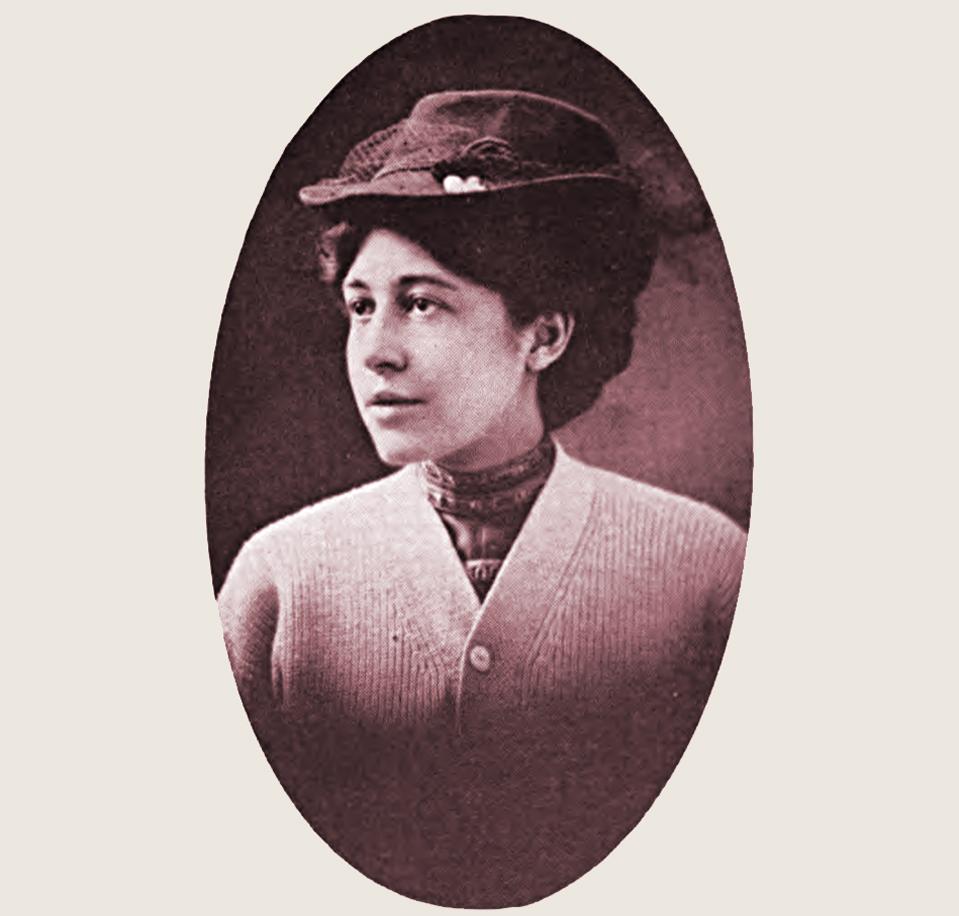
| Ruby Payne-Scott (Image Credit: Hall Family) |
1. Cross-post: The Forgotten Star of Radio Astronomy
2. Unveiling Gender Imbalance, Efforts, and Consequences in Astronomy
3. Women and Girls in Astronomy Program: 2024 Call for Proposals
4. Women of NASA Langley Research Center
5. Simone Daro Gossner
6. Nature publishes too few papers from women researchers — that must change
7. Save the Date for the October 15-16 2024 Public Summit on Preventing Sexual Harassment!
8. Call for Presentations for Public Summit on Preventing Sexual Harassment in Higher Education
9. How to Submit to the AASWomen Newsletter
10. How to Subscribe or Unsubscribe to the AASWomen Newsletter
11. Access to Past Issues of the AASWomen Newsletter
An online version of this newsletter will be available at http://womeninastronomy.blogspot.com/ at 3:00 PM ET every Friday.
-------------------------------------------------------------------------------
1. Cross-post: The Forgotten Star of Radio Astronomy
From: Nicolle Zellner via womeninastronomy.blogspot.com
Australian physicist Ruby Payne-Scott helped lay the groundwork for a whole new kind of astronomy: radio astronomy. By scanning the skies for radio waves instead of the light waves that we can see with our eyes, Payne-Scott and her colleagues opened a new window into the universe and transformed the way we explore it. But to keep her job as a woman working for the Australian government in the 1940s, Payne-Scott had to keep a pretty big secret.
Read more at
https://womeninastronomy.blogspot.com/2024/03/cross-post-forgotten-star-of-radio.html
-------------------------------------------------------------------------------
2. Unveiling Gender Imbalance, Efforts, and Consequences in Astronomy
From: John Leibacher <jleibacher_at_nso.edu>
In celebration of International Women's Day, the IAU Women in Astronomy (WiA) Working Group (WG) is excited to organize the event: "Unveiling Gender Imbalance, Efforts, and Consequences in Astronomy." This initiative aims to acknowledge both permanent and contractual researchers who have made exceptional contributions to advancing gender equality in Astronomy, encompassing achievements in research, mentorship, and advocacy. Our objective is to honor individuals who consistently foster a supportive environment for every member of our community.
The event will take place online via Zoom on 8th March 2024, from 13:30 to 15:30 CET and it will be recorded.
Information about the session can be found at
https://forms.gle/KpsVLVJeFm5YFTUq6
Learn more about the special WiA WG session and view the recording at
https://sites.google.com/view/iau-women-in-astronomy/home
-------------------------------------------------------------------------------
3. Women and Girls in Astronomy Program: 2024 Call for Proposals
From: Yasmin Catricheo <YCatricheo_at_aui.edu>
The Women and Girls in Astronomy Program (WGAP) inspires and supports women, girls, and underrepresented genders in the field of astronomy. The program, implemented by the NA-ROAD, targets aspiring astronomers and current professionals alike to establish a network to uplift, educate, connect with, and promote astronomy for development in women and girls.
The Program is looking to fund 10 projects that use astronomy for development activities to promote, support, and uplift women and girls in the field. Qualifying projects must align with at least one of the NA-ROAD’s five Strategic Goals 1 through 5, and take place in Canada, United States, the Caribbean, Mexico, or Greenland. Projects are encouraged to approach astronomy from a unique lens, including, but not limited to, scientific, social, technical, cultural, and artistic perspectives.
Learn more and apply at
https://naroad.astro4dev.org/na-road-projects/women-and-girls-astronomy-program/
-------------------------------------------------------------------------------
4. Women of NASA Langley Research Center
From: Nicolle Zellner [nzellner_at_albion.edu]
By Monika Luabeya
In honor of Women’s History Month and those who paved the way for them, hundreds of female staff – from artists to administrative support, educators to engineers, and scientists to safety officers – gathered in front of the Katherine G. Johnson Computational Research Facility at NASA’s Langley Research Center in Hampton, Virginia, on Feb. 6, 2024.
See the picture and read more at
https://www.nasa.gov/image-article/women-of-nasa-langley-research-center/
-------------------------------------------------------------------------------
5. Simone Daro Gossner
From: Sethanne Howard <sethanneh_at_msn.com>
Since I was Chief of the Nautical Almanac Office, Gossner is an important part of my history.
Simone Daro Gossner (1920–2002) was a Belgian-American astronomer who specialized in eclipses at the Nautical Almanac Office of the United States Naval Observatory. She received her education in Brussels. During World War II, when the universities in Brussels were closed due to the German occupation, she became an underground teacher. In 1946, she was brought to Radcliffe College in the United States through a program by the American Association of University Women, which aimed to provide educational opportunities for young women affected by the war.
Read more at
https://en.wikipedia.org/wiki/Simone_Daro_Gossner
-------------------------------------------------------------------------------
6. Nature publishes too few papers from women researchers — that must change
From: Nicolle Zellner [nzellner_at_albion.edu]
By The Editors
This journal will double down on efforts to diversify the pool of corresponding authors and referees.
During the period analysed, some 10% of corresponding authors preferred not to disclose their gender. Of the remainder, just 17% identified as women — barely an increase on the 16% we found in 2018, albeit using a less precise methodology. By comparison, women made up 31.7% of all researchers globally in 2021, according to figures from the United Nations science, education and cultural organization UNESCO (see go.nature.com/3wgdasb).
Read more at
https://www.nature.com/articles/d41586-024-00640-5
-------------------------------------------------------------------------------
7. Save the Date for the October 15-16 2024 Public Summit on Preventing Sexual Harassment!
From: John Leibacher <jleibacher_at_nso.edu>
The 2024 Public Summit will take place on October 15-16, 2024 at Michigan State University in East Lansing, Michigan, with the option of attending virtually or in-person. The Public Summit of the National Academies’ Action Collaborative on Preventing Sexual Harassment in Higher Education is an open forum for those in the higher education ecosystem to collaboratively identify, discuss, and elevate innovative and promising approaches and new research on addressing and preventing sexual harassment. This annual event brings together a diverse group, including members and partner network organizations of the Action Collaborative, the broader higher education community, sexual harassment researchers and response practitioners, grassroots and nonprofit organizations, public and private foundations, and federal and state policymakers.
Learn more at
-------------------------------------------------------------------------------
8. Call for Presentations for Public Summit on Preventing Sexual Harassment in Higher Education
From: John Leibacher <jleibacher_at_nso.edu>
The Action Collaborative on Preventing Sexual Harassment in Higher Education invites submissions for presentations, posters, and sessions on practices to address and prevent sexual harassment in higher education and research that can help inform such practices. Individuals across higher education and those that want to contribute to the discussion around preventing sexual harassment in higher education are encouraged to submit about their work, ideas, and research so it can be included at the Action Collaborative’s Annual Public Summit. The submission deadline is Friday, June 7, 2024.
For more information, please see
-------------------------------------------------------------------------------
9. How to Submit to the AASWOMEN newsletter
To submit an item to the AASWOMEN newsletter, including replies to topics, send email to aaswomen_at_lists.aas.org .
All material will be posted unless you tell us otherwise, including your email address.
When submitting a job posting for inclusion in the newsletter, please include a one-line description and a link to the full job posting.
Please remember to replace "_at_" in the e-mail address above.
--------------------------------------------------------------------------------
10. How to Subscribe or Unsubscribe to the AASWOMEN newsletter
Join AAS Women List through the online portal:
To Subscribe, go to https://aas.simplelists.com/aaswlist/subscribe/ and enter your name and email address, and click Subscribe. You will be sent an email with a link to click to confirm subscription.
To unsubscribe from AAS Women by email:
Go to https://aas.simplelists.com/aaswlist/subscribe/ , in the "My account and unsubscriptions", type your email address. You will receive an email with a link to access your account, from there you can click the unsubscribe link for this mailing list.
--------------------------------------------------------------------------------
11. Access to Past Issues