Showing posts with label Vera Rubin. Show all posts

Thursday, June 5, 2025

The Vera Rubin Town Hall and Free Coin Giveaway Is Almost Here

The 246th AAS is nearly here. We want to invite everyone attending AAS this year to join us for a special event on June 11 and receive a free Vera Rubin coin and coin board just for attending!

Vera Rubin Celebration Town Hall at the 246th AAS (June 8-12), Anchorage, Alaska

Date/time: Wednesday, Jun 11, 6:30-7:30 p.m.
Building/room: Dena'ina Civic & Convention Center, Ballroom A
SESSION ID #:  46  (1 hour)
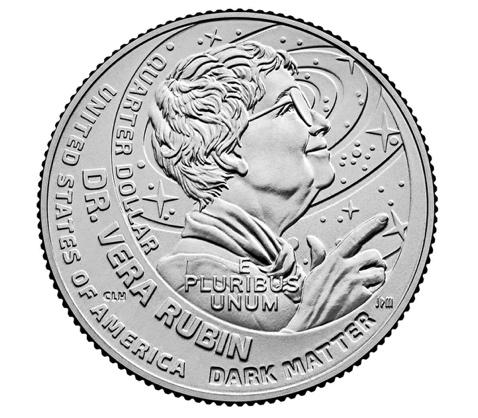
American Women Quarters 2025 Rolls and Bags - Dr. Vera Rubin image number 3
Credit: United States Mint
Come join us in celebrating the groundbreaking scientific achievements and enduring legacy of Dr. Vera Rubin, whose work provided the first compelling evidence for dark matter, fundamentally altering our understanding of the universe. 
Vera Rubin was a leading figure in observational cosmology whose critical observations of galaxy rotation curves led to one of the most profound discoveries in modern astrophysics, reshaped our understanding of galactic dynamics and laid the foundation for research that continues today, including the first direct evidence of dark matter from NASA’s Chandra X-ray Observatory and now, new studies at the Vera C. Rubin Observatory.
Rubin was also a lifelong advocate, mentoring generations of astronomers and advocating for greater participation in the field.  This one-hour panel discussion will honor Vera Rubin’s scientific contributions and advocacy, highlight ongoing research with missions and scientists that build on her discoveries, and foster dialogue on science, history, and public engagement.  The U.S. Mint’s newly released Vera Rubin coin will be showcased with free coin and coin board giveaways for the AAS audience attendees.
Our panel features Nicole Drakos, Amruta Jaodand, and Maddie Lucey. Drakos is a theoretical astrophysicist studying structure formation in the universe. Jaodand is a multi-wavelength astronomer and astroinfomatics aficionado. Lucey is an astronomy and astrophysics postdoctoral fellow whose research aims to build our understanding of the early universe by studying the ancient stars in our galaxy.  Kimberly Arcand will moderate this one-hour discussion hosted by the Smithsonian Astrophysical Observatory/Chandra X-ray Observatory, and AAS Committee on the Status of Women in Astronomy, with the U.S. Mint. Arcand is the Visualization scientist, emerging tech lead, and acting communications & public engagement lead for NASA’s Chandra X-ray Observatory.
With such an exceptional panel, we know you'll want to join us for this event. Mark June 11 at 6:30 p.m. in your calendars for this special AAS event and come get your free Vera Rubin coin, as well.
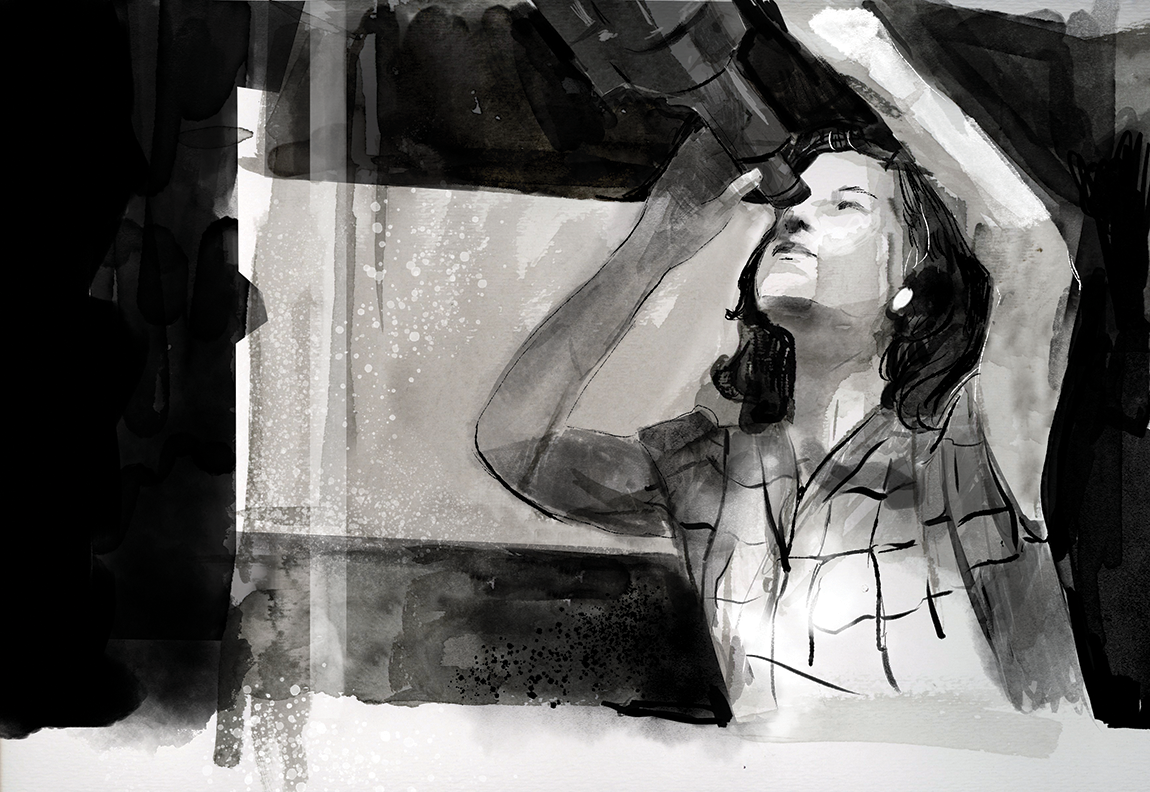
A person looking through a telescope

AI-generated content may be incorrect.
Illustration: NASA/CXC/SAO/K.Divona
In the 1970s, astrophysicist Vera Rubin discovered evidence that the Universe was made of more than what could be seen with telescopes — today known as "dark matter". Born in 1928, Vera was drawn to watching the stars at an early age. Her passion would lead her to become the sole astronomy major in her graduating class at Vassar in 1948. Rubin pursued advanced training at Cornell and then Georgetown, where she completed a Ph.D. She was a lifelong advocate for women in science and scientific literacy.


Thursday, May 1, 2025

Celebrate Dr. Vera Rubin at the Rubin Town Hall at the 246 AAS Meeting

Call For Panelists

The 246th AAS Meeting will be held June 8-12 in Anchorage, Alaska. The Rubin Town Hall will be held on June 12 to celebrate the legacy of Dr. Vera Rubin. 

Are you attending the 246th AAS Meeting? The Committee on the Status of Women in Astronomy is looking for members who would like to be panelists for this event. Selected panelists will participate in a 1-hour panel. 

Let's take the opportunity to celebrate the legacy that Dr. Vera Rubin left to astronomy and cosmology.

If you're interested in being a panel member or simply sharing a story or a remembrance of Dr. Rubin, please contact us or Kim Arcand. We would love to have your participation.

As part of this celebration, the U.S. Mint will showcase the newly released Vera Rubin quarter, part of the American Women Quarters Set 2025. 

More information about the Rubin Town Hall:


Rubin Town Hall at the 246th AAS
Anchorage, Alaska
Day/time TBD (likely Thursday, June 12, afternoon)
SESSION ID #:  46  (1 hour)
Come join us in celebrating the groundbreaking scientific achievements and enduring legacy of Dr. Vera Rubin, whose work provided the first compelling evidence for dark matter, fundamentally altering our understanding of the universe.  Vera Rubin was a leading figure in observational cosmology whose critical observations of galaxy rotation curves led to one of the most profound discoveries in modern astrophysics, reshaped our understanding of galactic dynamics and laid the foundation for research that continues today, including the first direct evidence of dark matter from NASA’s Chandra X-ray Observatory and now, new studies at the Vera C. Rubin Observatory. Rubin was a lifelong advocate as well, mentoring generations of astronomers and advocating for greater participation in the field.  In this one-hour panel discussion, we will honor Vera Rubin’s scientific contributions and advocacy, highlight ongoing research with missions and scientists that build on her discoveries, and foster dialogue on science, history, and public engagement.  The U.S. Mint will showcase newly released Vera Rubin coins.
This event is hosted by the Smithsonian Astrophysical Observatory/Chandra X-ray Observatory and AAS Committee on the Status of Women in Astronomy.
You can register for the 246th AAS Meeting at aas.org and find the full schedule of events on the website. We look forward to celebrating Dr. Vera Rubin with you at the Rubin Town Hall.

Illustration Credit: NASA/XC/SAO/K.Divona


Friday, July 26, 2024

AASWomen Newsletter for July 26, 2024

AAS Committee on the Status of Women
Issue of July 26, 2024
eds: Jeremy Bailin, Nicolle Zellner, Sethanne Howard, and Hannah Jang-Condell

[We hope you all are taking care of yourselves and each other. --eds.]

This week's issues:

1. Cross-post: Vera Rubin found a lifetime of wonder in the dark skies   
2. Physicist, 98, honoured with doctorate 75 years after groundbreaking discovery
3. Female Scientists Are Leaving Academia Mid Career. Why It’s Important And What We Can Do About It.
4. IAU WiA Gender Equity Survey
5. How to Submit to the AASWomen Newsletter
6. How to Subscribe or Unsubscribe to the AASWomen Newsletter
7. Access to Past Issues of the AASWomen Newsletter

An online version of this newsletter will be available at http://womeninastronomy.blogspot.com/ at 3:00 PM ET every Friday.

-------------------------------------------------------------------------------
1. Cross-post: Vera Rubin found a lifetime of wonder in the dark skies
From: Nicolle Zellner via womeninastronomy.blogspot.com

By Elizabeth Gamillo

A century ago galaxies in our universe perplexed astronomers. Just a decade after the realization of what galaxies are, astronomers first noticed that spiral galaxies were rotating strangely. Their outer areas were rotating around the galactic centers nearly as quickly as their inner “hubs.” Something must have been helping the rotation along. In 1933, astronomer Fritz Zwicky first suggested that an unseen component, which he called dark matter, must exist.

Three decades after dark matter was hypothesized, in a breakthrough moment, one astronomer collected the first direct evidence of dark matter’s existence. Her name was Vera Rubin, and her work helped to revolutionize astronomy in the middle part of the 20th Century.

Read more at

https://womeninastronomy.blogspot.com/2024/07/cross-post-vera-rubin-found-lifetime-of.html

-------------------------------------------------------------------------------
2. Physicist, 98, honoured with doctorate 75 years after groundbreaking discovery
From: Jeremy Bailin [jbailin_at_ua.edu]

By Mabel Banfield-Nwachi

A trailblazing physicist who gave up her PhD 75 years ago to have a family has received an honorary doctorate from her former university.

Rosemary Fowler, 98, discovered the kaon particle during her doctoral research under Cecil Powell at the University of Bristol in 1948, which contributed to his Nobel prize for physics in 1950.

She has now been awarded an honorary doctor of science by the University of Bristol chancellor, Sir Paul Nurse, in a private graduation ceremony close to her Cambridge home.

Read more at

https://www.theguardian.com/science/article/2024/jul/22/physicist-rosemary-fowler-honoured-doctorate-75-years-after-discovery

-------------------------------------------------------------------------------
3. Female Scientists Are Leaving Academia Mid Career. Why It’s Important And What We Can Do About It.
From: Nicolle Zellner [nzellner_at_albion.edu]

By Bonnie Marcus

There is a disturbing trend in academia. Female scientists are leaving academic institutions at the peak of their career.

The equal representation of women in research is important for the overall quality and performance of our academic institutions. Diversity of thought stimulates discussion and facilitates the creation of new ideas and perspectives. The loss of an entire gender’s input represents a loss of half the best and brightest minds in science, and puts the quality of scientific research in jeopardy.

In our recent conversation, we discussed some of the major reasons women at the peak of their careers are leaving their academic institutions.

Read more at

https://www.forbes.com/sites/bonniemarcus/2024/07/24/female-scientists-are-leaving-academia-mid-career-why-its-important-and-what-we-can-do-about-it/ 

-------------------------------------------------------------------------------
4. IAU WiA Gender Equity Survey
From: Sethanne Howard [sethanneh_at_msn.com]

In alignment with our commitment to Equity, Diversity, and Inclusion in astronomy, we kindly request your participation in the Gender Equity Survey organized by the IAU Women in Astronomy Working Group. This survey aims to provide National Astronomy Communities (NACs) and institutions with an updated overview of global efforts to ensure equal opportunities for individuals of all genders in astronomy. The insights gathered will help us adopt best practices to promote diversity and inclusion in the field.

Please take a moment (max 7 mins) to complete the survey using the following link:

https://forms.gle/qjZ4h3w1A2Hgqfdi6 

-------------------------------------------------------------------------------
5. How to Submit to the AASWOMEN newsletter

To submit an item to the AASWOMEN newsletter, including replies to topics, send email to aaswomen_at_lists.aas.org .

All material will be posted unless you tell us otherwise, including your email address.

When submitting a job posting for inclusion in the newsletter, please include a one-line description and a link to the full job posting.

Please remember to replace "_at_" in the e-mail address above.

--------------------------------------------------------------------------------
6. How to Subscribe or Unsubscribe to the AASWOMEN newsletter

Join AASWomen List through the online portal:

To Subscribe, go to https://aas.simplelists.com/aaswlist/subscribe/ and enter your name and email address, and click Subscribe. You will be sent an email with a link to click to confirm subscription.

To unsubscribe from AASWomen by email:

Go to https://aas.simplelists.com/aaswlist/subscribe/ , in the "My account and unsubscriptions", type your email address. You will receive an email with a link to access your account, from there you can click the unsubscribe link for this mailing list.

--------------------------------------------------------------------------------
7. Access to Past Issues

http://womeninastronomy.blogspot.com/search/label/AASWOMEN  

Thursday, July 25, 2024

Cross-post: Vera Rubin found a lifetime of wonder in the dark skies

Eds. Note: On July 23, Vera Rubin would have turned 96.


By Elizabeth Gamillo for Astronomy magazine

Image Credit: Mark Godfrey (PNAS).


A century ago galaxies in our universe perplexed astronomers. Just a decade after the realization of what galaxies are, astronomers first noticed that spiral galaxies were rotating strangely. Their outer areas were rotating around the galactic centers nearly as quickly as their inner “hubs.” Something must have been helping the rotation along. In 1933, astronomer Fritz Zwicky first suggested that an unseen component, which he called dark matter, must exist.

Three decades after dark matter was hypothesized, in a breakthrough moment, one astronomer collected the first direct evidence of dark matter’s existence. Her name was Vera Rubin, and her work helped to revolutionize astronomy in the middle part of the 20th Century.


Read more about Vera Rubin and her legacy at

https://www.astronomy.com/science/vera-rubin-found-a-lifetime-of-wonder-in-the-dark-skies/


Read the 2016 astrobites article at

https://astrobites.org/2016/12/27/how-one-person-discovered-the-majority-of-the-universe-the-work-of-vera-rubin/

Thursday, May 25, 2023

Crosspost: Vera Rubin Lives On in Lives of the Women She Helped in Astronomy

The “mother of dark matter” was a force of nature—and a forceful advocate for other women who wanted to dedicate their career to the cosmos. Credit: Tulika Bose for Scientific American. 


Friday, March 26, 2021

AASWomen Newsletter for March 26, 2021

AAS Committee on the Status of Women
Issue of March 26, 2021
eds: Heather Flewelling, Nicolle Zellner, Maria Patterson, Jeremy Bailey, and Alessandra Aloisi

[We hope you all are taking care of yourselves and each other. --eds.]

This week's issues:

1. Women of Arecibo: Allison Smith
2. Crosspost: Inclusive Mentoring: The Mindset of an Effective Mentor
3. Supporting gender equality through understanding intersectionality
4. Diversity is hard to find among the highest paid leaders at elite research universities
5. Upcoming launch of $8.8 billion telescope places women’s leading roles in center focus
6. Women In STEM: Voices From Around The World
7. Women must not be obscured in science’s history
8. Upcoming SHIELD Webinar: Fri April 9th, 2021 2:00 PM EST
9. Meet the unknown female mathematician whose calculations helped discover Pluto
10. Vera Rubin, astronomer extraordinaire — a new biography
11. Job Opportunities
12. How to Submit to the AASWomen Newsletter
13. How to Subscribe or Unsubscribe to the AASWomen Newsletter
14. Access to Past Issues of the AASWomen Newsletter

-------------------------------------------------------------------------------