Thursday, September 25, 2025

Space for Students - Part 12: What Would You Like To See For Women In Astronomy?

By: Libby Fenstermacher

In our popular Career Profile series, the AAS Committee on the Status of Women in Astronomy has compiled dozens of interviews highlighting the diversity of career trajectories available to astronomers, planetary scientists, and those in related fields. In a twist on this series, we video-interviewed students in astronomy and astrophysics to highlight their personal and academic career paths. The purpose of this series is threefold. It aims not only to give a voice and exposure to those who are up and coming in the field but also to give feedback to the Astronomical community at large about the experiences of students who identify as women. The hope is that these interviews will not only share advice and lessons learned but will shed light on how to encourage and inspire more women, from various backgrounds and skill sets, to follow space trajectories and reach towards the stars.


Libby Fenstermacher stands in front of a table with a screen at AAS 245.
Libby Fenstermacher at AAS 245.

A note from series creator Libby Fenstermacher:


Over the past year, you’ve all been introduced to almost a dozen students and young professionals within the astronomy and astrophysics communities. These interviews were comprised of women from various backgrounds, geographies, and with a multitude of variations in planned forward trajectory. The stories told over the course of this series were linked by throughlines in myriad ways, and all altogether reflect an overall picture of where the broad fields of astronomy and astrophysics stand in the minds of its future guides. One thing that every interviewee had in common was a strong and unhindered belief in themselves and a dedication to spreading the importance of their work for humanity's future.

This week, instead of an interview, please enjoy this brief presentation I put together for AAS 245 this past winter. As a sociologist, I am interested in what draws people, especially women, to STEM disciplines, particularly outer space-related fields. After interning at NASA Headquarters with Astrophysics in the Summer and Fall of 2024 (and again in 2025 for Earth Sciences), I became interested in the fields of astronomy and astrophysics in particular, which is what I am now completing my master's thesis on. The following presentation is related to this project and acts as a content analysis through the lens of sociologist Pierre Bourdieu’s habitus, capital, and field framework.

Habitus, in Bourdieu’s terms, is the set of ingrained dispositions shaped by socialization that we carry through life. It often operates outside awareness and can feel like identity itself. Habitus also shapes which forms of capital we can access and how we convert them within a field.

Capital comes in multiple forms. Bourdieu outlined three core types: economic, cultural, and symbolic. Scholars later extended this to include forms like educational, emotional, and scientific capital. The key idea is convertibility: one form can often be exchanged for another.

A field is a structured arena with its own rules, hierarchies, and culture, where actors at the micro, meso, and macro levels compete for capital, prestige, and power. Fields privilege particular habitus to keep things running smoothly and to make participation feel natural. When a person’s habitus aligns with a field’s expectations, they are more likely to feel competent and be recognized. When it does not, people can face friction and fewer opportunities. Some become stigmatized or step back from the field.

These dynamics influence field fit.

With these terms in mind, I invite you to watch the following video: What Would You Like To See For Women In Astronomy?


You can also follow the link here: https://www.youtube.com/watch?v=S9GPZnbJzmI&t=2s


Thursday, September 18, 2025

Celebrating Hispanic Heritage Month

Hispanic Heritage Month is celebrated from September 15 to October 15 each year. The month provides space to spotlight the ongoing achievements of those from Hispanic and Latino communities. 

Below are just a few articles about how scientists from Hispanic and Latino backgrounds are finding ways to honor their heritage, preserve their language within science, and become the future faces of STEM. 


In Raising the Visibility of Latin American Science, writer Humberto Basilio explores how Latin American scientists are finding ways to publish in Spanish and Portuguese, in their native languages, and the challenge of breaking through the dominance of the "Global North" in scientific publishing. 

The YouTube series La Pola Geológica (The Geological Beer) was created by three female Colombian geoscientists: Carolina Ortiz-Guerrero, Daniela Muñoz-Granados, and Lina C. Pérez-Angel. Through their series, they chat (in Spanish) with other scientists and explore the natural world.

In 2024, Science Friday and América Futura partnered to produce the series “Astronomy: Made in Latin America” in English and Spanish. The series reflects on the struggles and successes of astronomy in Latin America, from "The feat of building the world's largest telescope" to three Latina scientists who are battling sexism in "Latina space scientists want to stop being the exception.

The Committee on the Status of Women also featured nine students in 2024/2025 from the Cenca Bridge Program. The Central American - Caribbean Bridge in Astrophysics (Cenca Bridge) is a nonprofit organization with the mission to create and develop astronomy research opportunities in Central America and the Caribbean.

Cenca Bridge connects undergraduates from Central America and the Caribbean to mentors and advisors overseas to increase their chances of pursuing astrophysics as a profession. Every year, Cenca Bridge holds the remote internship program, where undergraduate students from the region apply to be selected for a 3-month-long paid research internship. As the only organization to provide a paid remote research internship, it is important to highlight the contributions that many women in astrophysics from Central America and the Caribbean have already contributed to our field.

Learn about the 2024/2025 Central American - Caribbean Bridge in Astrophysics (Cenca Bridge) Fellows:

Natalia Ramirez Vega (Costa Rica)
Catalina Morales-Gutiérrez (Costa Rica)
Kaylan-Marie Achong (Trinidad and Tobago)
Nicole Stephanie Mejia Cerros (Honduras)
Valeria Hurtado (Nicaragua)
Leiany De Oleo Rodriguez (Puerto Rico)
Linsy Abigail Martinez Rubio (Honduras)
Thara Caba (Dominican Republic)
Lynne-Flore Simy (Haiti)

We look forward to featuring more Cenca Bridge Fellows in the future. 

Happy Hispanic Heritage Month.

Thursday, September 11, 2025

Cross-post: Why Leaving Academia Doesn't Mean Leaving Your Identity Behind

Today's cross-post is an excerpt from "From the Lab to the World," a LinkedIn newsletter by Silvia Pineda-Munoz, PhD. She is the founder of Climate Ages & Outreach Lab. Pineda-Munoz's reflections on transitioning to work outside academia are relevant for many scientists, both inside and outside academia.

Why Leaving Academia Doesn’t Mean Leaving Your Identity Behind

When I left academia, I thought I was leaving myself behind, too.

So much of my identity was wrapped up in being “the scientist.” The one who spent years piecing together the climate past through fossils and data. The one who was trusted to write papers, teach students, and present findings at conferences.
The titles mattered. The postdoc mattered. Even the conference name tag mattered more than I’d like to admit.
So when I started to imagine a life outside of academia, I hit a wall:
If I wasn’t “Dr. Pineda-Muñoz, paleontologist and ecologist,” then who was I?

The Hidden Weight of Academic Identity

I think a lot of us who have been through the PhD pipeline feel this. You spend years proving your worth in publications and grant proposals, measuring your value in metrics that don’t always translate to the outside world.
And when you even consider walking away, people ask:
“But what about all those years of training?” “Won’t you waste your degree?” “Don’t you want tenure?”
It’s hard not to internalize those questions. For me, it felt like I was betraying a part of myself if I admitted I wanted something different.
But here’s what I realized: leaving academia doesn’t mean leaving your identity behind. It means carrying it forward in a different way.

The Scientist’s Brain in a Different Arena

When I stepped into entrepreneurship, I didn’t stop being a scientist.
I brought the same habits with me:

  • Asking questions first. Science trains you to start with curiosity. In business, that means listening to your audience before trying to sell them anything.
  • Running experiments. I can’t help but treat every campaign like a hypothesis. Try it, measure it, adjust. That’s not failure; it’s iteration.
  • Thinking in systems. Ecology taught me that nothing exists in isolation. Entrepreneurship is no different: content, audience, offers, operations: they’re all interconnected. And just like in the natural world, if one part fails, your whole business ecosystem collapses.

The lab coat may be gone, but the brain that put it on every day is still here.

Photo: Silvia Pineda-Munoz, PhD.

Read the rest of Pineda-Munoz's journey from academia to becoming an entrepreneur, science communicator, and founder at "From the Lab to the World."
Silvia Pineda-Munoz is also happy to speak with anyone further on what leaving academia is like, her journey, and any other questions. Reach out to her on LinkedIn at Silvia Pineda-Munoz.


Thursday, September 4, 2025

Margaret Rossiter's Life and Work Brought Women Scientists to Light

Margaret Rossiter wouldn't listen. 

She once asked a group of mostly male professors and students in the history of science department at  Yale if there were ever any women scientists, as they had never been discussed this at these regular monthly gatherings.

"No," they answered. "None." Someone hedged that Marie Curie might be an exception. And that was that.

Rossiter didn't listen to these responses. She didn't believe that women scientists hadn't played a role in the history of American science. She spent the next fifty years of her career disproving that sentiment and chronicling the contributions of women in science.

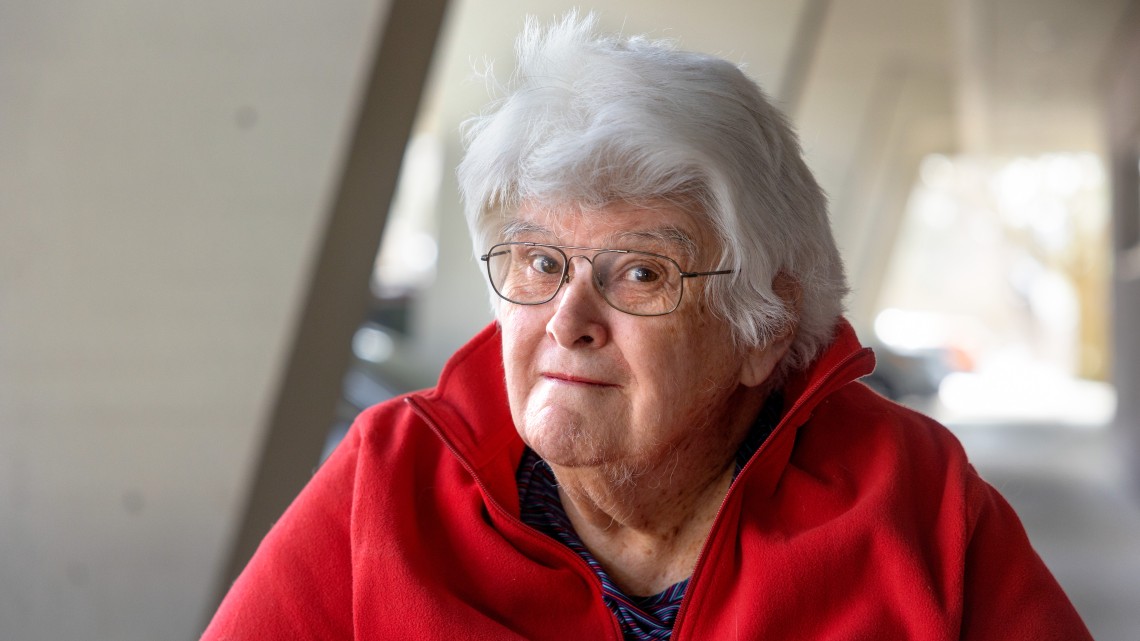
Margaret W. Rossiter in 1989.
 
Office of Visual Services (UREL), Cornell University
.


Rossiter was born in Malden, Massachusetts. She became interested in the history of science in high school. She attended Radcliffe and graduated with a degree in the history of science, then earned master's degrees from the University of Wisconsin-Madison in the same field, and in philosophy at Yale, where that famous conversation about women scientists took place. She stayed at Yale to complete her PhD, where she worked on agricultural science.

While agricultural science was the focus of her first published work, Rossiter still gravitated to the idea that women scientists did exist and played an important part in the development of science. She began researching this idea and delved into writing her first book on the history of women in science, Women Scientists in America, Struggles and Strategies to 1940, published in 1984. Rossiter followed that book with two more: Women Scientists in America: Before Affirmative Action, 1940–1972, published in 1995, and Women Scientists in America Volume 3: Forging a New World Since 1972, published in 2012.

Rossiter wrote the first book while juggling a series of visiting professorships and grants, as she struggled to find a tenured position. At one point, she said she identified with those women scientists who also struggled. Rossiter finally found tenureship at Cornell where, after two years as a visiting professor, Cornell gave her an endowed chair in their new Department of Science and Technology. 

Rossiter was the recipient of many grants and awards throughout her career, including the Guggenheim Fellowship, the MacArthur Fellows Program, the Women's Prize from the History of Science Society, and the George Sarton Medal. The Women's History Prize was eventually renamed in her honor. 

In addition, Rossiter coined the phrase "the Matilda effect" to refer to the tendency within science to attribute women scientists' discoveries to their male counterparts. In doing so, she drew attention to this bias in science.

In 2019, Smithsonian Magazine featured Rossiter and the immediate impact of her work on women in STEM, saying, "In excavating the lives of forgotten women astronomers, physicists, chemists, entomologists and botanists, Rossiter helped clear the way for women scientists in the future." Read more from that article at Smithsonian Magazine.

Margaret Rossiter died August 3, 2025, after a long career in supporting women in science and preserving their stories and rightful places in history. 

Read more about Rossiter's life at the Cornell Chronicle or the New York Times