Issue of September 26, 2025
eds: Jeremy Bailin, Sethanne Howard, Ferah Munshi, Stella Kafka, and Ben Keller
[We hope you all are taking care of yourselves and each other. --eds.]
This week's issues:
1. Space for Students - Part 12: What Would You Like To See For Women In Astronomy?
2. AAS Names Daniella Mendoza DellaGiustina as Fred Kavli Plenary Lecturer for 247th Meeting
3. Maria Mitchell: America’s First Woman Astronomer and Mentor to Women in Science
4. The Forgotten Half-Life of Women in Physics
5. Entangled histories: women in quantum physics
6. How to Submit to the AASWOMEN newsletter
7. How to Subscribe or Unsubscribe to the AASWOMEN newsletter
8. Access to Past Issues
An online version of this newsletter will be available at http://womeninastronomy.blogspot.com/ at 3:00 PM ET every Friday.
This week, instead of an interview, please enjoy this brief presentation I put together for AAS 245 this past winter. As a sociologist, I am interested in what draws people, especially women, to STEM disciplines, particularly outer space-related fields.
Read more at: https://womeninastronomy.blogspot.com/2025/09/space-for-students-part-12-what-would.html
At the 247th AAS meeting in Phoenix, Arizona, on 5 January 2026, the Fred Kavli Plenary Lecture will be given by Dr. Daniella DellaGiustina, a planetary scientist at the University of Arizona's Lunar and Planetary Laboratory.
Read more at: https://aas.org/press/aas-names-daniella-mendoza-dellagiustina-fred-kavli-plenary-lecturer-247th-meeting
Maria Mitchell, the first widely recognized American woman scientist, gained international acclaim after discovering a comet in 1847. As Vassar College’s first astronomy professor, she advanced opportunities for women in science and mentored a generation of students using one of the country’s finest observatories.
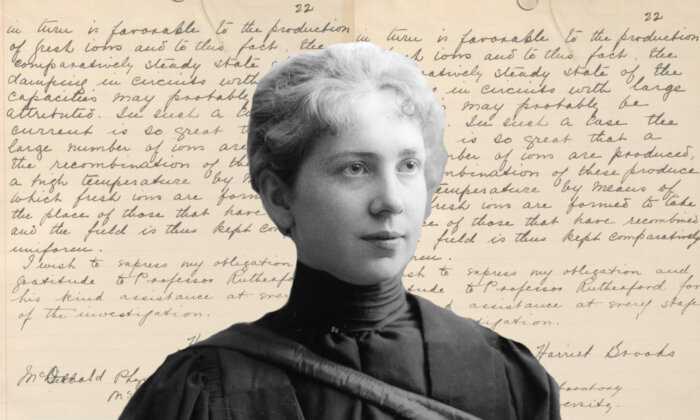
We often hear the claim that physics is an objective science in which there is no room for discussions about gender and identity. After all, the equations used in physics are gender neutral. In Newton’s famous equation F = ma, the variable F stands for force, not female. And yet this objective field is full of very subjective human bias. Harriet Brooks’ gender certainly mattered in the choices she was faced with. There was no middle ground for her. It was physics or family. Physics was the worse for it.
Read more at: https://thereader.mitpress.mit.edu/the-forgotten-half-life-of-women-in-physics/
Writing about women in science remains an important and worthwhile thing to do. That’s the premise that underlies Women in the History of Quantum Physics: Beyond Knabenphysik – an anthology charting the participation of women in quantum physics, edited by Patrick Charbonneau, Michelle Frank, Margriet van der Heijden and Daniela Monaldi.
Read more at: https://physicsworld.com/a/entangled-histories-women-in-quantum-physics/
To submit an item to the AASWOMEN newsletter, including replies to topics, send email to aaswomen_at_lists.aas.org .
All material will be posted unless you tell us otherwise, including your email address.
When submitting a job posting for inclusion in the newsletter, please include a one-line description and a link to the full job posting.
Please remember to replace "_at_" in the e-mail address above.
Join AAS Women List through the online portal:
To Subscribe, go to https://aas.simplelists.com/aaswlist/subscribe/ and enter your name and email address, and click Subscribe. You will be sent an email with a link to click to confirm subscription.
To unsubscribe from AAS Women by email:
Go to https://aas.simplelists.com, in the "My account and unsubscriptions", type your email address. You will receive an email with a link to access your account, from there you can click the unsubscribe link for this mailing list.

No comments :
Post a Comment