Showing posts sorted by date for query women in science. Sort by relevance Show all posts

Thursday, November 5, 2026

Meet Your CSWA (and Join Us!)

Last week we issued a call for new members to join the Committee on the Status of Women in Astronomy. This volunteer opportunity connects you with others supporting women astronomers in various ways. If you are interested in volunteering, please fill out the Google form.

Since 1979, over 100 people have been members of the CSWA and have worked to recommend to the AAS Board of Trustees practical measures that can be taken to improve the status of women in astronomy and encourage their entry into this field. The CSWA's Resources page and External page have a plethora of information to help women advance in the field. 

Thank you to the past members of the CSWA and the work you have done for us. 

CSWA Current Members


Name: Jeremy Bailin
Institution: University of Alabama
Specialty Research Area: Galaxy Formation, Globular Clusters
Something Interesting: Former radio DJ


Name:
Regina A. Jorgenson
Institution: Maria Mitchell Association, Director of Astronomy
Specialty Research Area: Galaxy Formation and Evolution

Something Interesting: I’m an ethical and compassionate vegan.


Name: Stella Kafka
Institution: Independent contributor
Specialty Research Area: Cataclysmic Variables
Something interesting about me: I have a 6-year-old Yorkie; I work for him.
Why I enjoy/value being part of the CSWA: Being part of the CSWA is especially meaningful to me because it brings together my passion for astronomy, equity, and empowering the next generation of scientists. Co-editing the newsletter gives me the opportunity to amplify diverse voices, celebrate achievements, highlight persistent challenges, and foster conversations that can lead to meaningful change. Most of all, I value being part of a community committed to making astronomy more inclusive, welcoming, and equitable for everyone.


Name: Dr. Karly Pitman (she/her/hers)

Institution: Chair, AAS CSWA

Specialty Research Area: planetary & ISM dust; radiative transfer & laboratory astrophysics

Something Interesting: I design and sew clothing.


Name:
Rayna Rampalli
Institution: Dartmouth College

Specialty Research Area: Galactic Archaeology 

Something Interesting: I swim with the UV Rays master's team in White River Junction, VT  (which is part of the upper valley, or UV, region hence our team name). 


Name:
Sukanya Chakrabarti
Institution: UAH

Specialty Research Area: precision measurements to constrain dark matter

Something Interesting: I am starting to do karate again after about 7 years and am currently on my way to a karate camp 😀


Name: Eric Hooper
Institution: University of Wisconsin-Madison
Specialty Research Area: AGN and galaxy connection; radio surveys.
Something Interesting: I've been a downhill skier since my 6th birthday.


Name: Emily Moravec
Institution: Green Bank Observatory
Specialty Research Area: Galaxy clusters, radio-AGN, and the interaction between clusters and radio-AGN
Something interesting about me: I am a paragliding pilot and enjoy growing flowers.
Why I enjoy/value being part of the CSWA: I want to contribute to making the field of astronomy/astrophysics a more inclusive environment. 


Name:
Libby Fenstermacher
Institution: UH Manoa Sociology PhD student
Specialty Research Area: Space, Society and Sustainability 
Something interesting about me: I was a 3x NASA intern.
Why I enjoy/value being part of the CSWA: I’m interested in making science and space more accessible while exploring the social systems shaping our future on Earth and beyond.


Name:
Kimberly Mitchell
Institution: Independent contributor, chief blogger CSWA
Specialty Research Area: Science Communication
Something interesting about me: I currently live in Portugal.
Why I enjoy/value being part of the CSWA: I enjoy using my love of space and science and my communication skills to highlight this important committee and women in astronomy in general.


Friday, October 30, 2026

AASWomen Newsletter for October 30, 2026

AAS Committee on the Status of Women
Issue of October 30, 2026
eds: Jeremy Bailin, Sethanne Howard, Ferah Munshi, Stella Kafka, and Ben Keller

[We hope you all are taking care of yourselves and each other. --eds.]

This week's issues:

1. AAS and Partners Send Letter to NASA Raising Concerns About Grant Programs
2. Archival Feature: Vera Rubin Made Dark Matter A Household Name
3. Join the CSWA and Support Women in Astronomy
4. Share Your Career Journey: Diverse Pathways in Astronomy
5. Cornell astronomy researcher to head planetary science workforce survey
6. Two Astronomers Honored for Excellence in Science Communication
7. Haunted Observatory Celebrates Women Astronomers and Their Legacies
8. Thoughts on “Female Student Quota” for Admissions: Quota spurs aspirations for elite universities
9. Call for Applications: Female Science Talents Intensive Track 2027 – Fully Funded Travel and Career Development Program for Women in Science
10. STEM4Girls Day inspires the next generation of STEM leaders
11. Anthropic STEM Fellowship - funding opportunity
12. How to Submit to the AASWOMEN newsletter
13. How to Subscribe or Unsubscribe to the AASWOMEN newsletter
14. Access to Past Issues

An online version of this newsletter will be available at http://womeninastronomy.blogspot.com/ at 3:00 PM ET every Friday.

Friday, October 2, 2026

AASWomen Newsletter for October 2, 2026

AAS Committee on the Status of Women
Issue of October 2, 2026
eds: Jeremy Bailin, Sethanne Howard, Ferah Munshi, Stella Kafka, and Ben Keller

[We hope you all are taking care of yourselves and each other. --eds.]

This week's issues:

1. Call for Nominations for the 2027 Gruber Cosmology Prize
2. Spotlight on Astronomer Laurie Rousseau-Nepton
3. First Samoan astrophysicist encourages Pasifika students to reach for the stars
4. The young women guiding tourists through India's night sky
5. From Asteroid Research to Asteroid Alyankovic: Spotlight on Dr. Allison McGraw
6. Astrophysicist France A. Córdova Named 2026 Nierenberg Prize Recipient
7. Women astronauts use social media to reframe science and femininity together
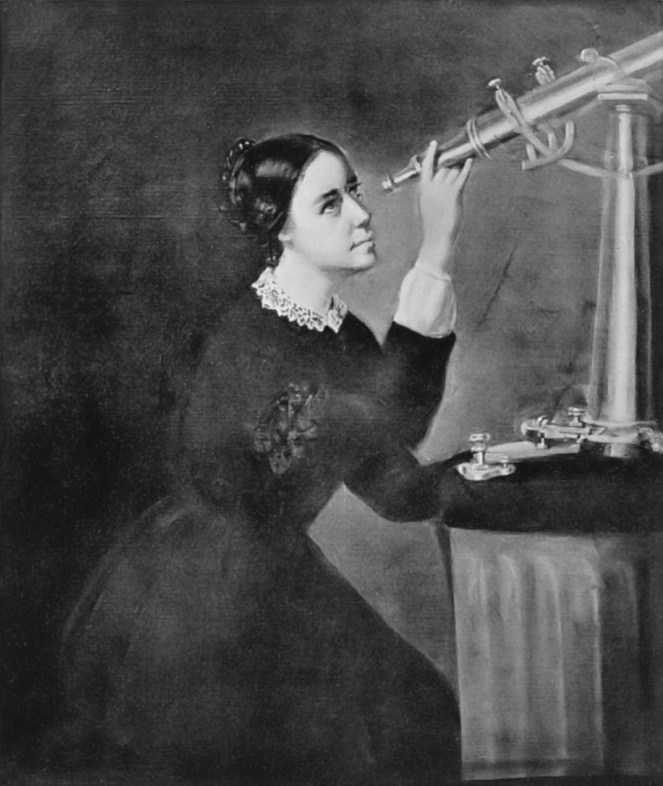
8. October 1, 1847, Maria Mitchell discovered comet C/1847 T1, later known as “Miss Mitchell’s Comet.
9. Funding opportunities for Gender Equality & Women’s Empowerment
10. Virginia Woolf’s Night and Day: A Woman’s Pursuit of Astronomy and Independence
11. How to Submit to the AASWOMEN newsletter
12. How to Subscribe or Unsubscribe to the AASWOMEN newsletter
13. Access to Past Issues

An online version of this newsletter will be available at http://womeninastronomy.blogspot.com/ at 3:00 PM ET every Friday.

Thursday, September 3, 2026

Meet the Women Behind the Nancy Grace Roman Telescope

This week the Nancy Grace Roman Telescope launched perfectly and is now on its journey to Lagrange Point 2 (L2). A million miles from Earth, the telescope will begin its mission to map the universe in a wide-angle, infrared view. Named for Nancy Grace Roman, NASA's first chief of astronomy and first woman executive, the telescope celebrates one of the most famous female astronomers to date. As part of that legacy, many of those involved in building and operating Roman are women. 

The Nancy Grace Roman Telescope launches on a SpaceX Falcon rocket on August 30, 2026. 
Photo: NASA/Joel Kowsky

Jackie Townsend, Roman Space Telescope Project Manager

Jackie Townsend didn't follow a straight path to NASA and the Roman project. She went to college twice, dropping out the first time to work in various jobs before rediscovering her love for space and going back to study physics. Townsend brought this penchant for problem-solving to NASA's Goddard Space Flight Center, where she worked on Hubble missions as a materials engineer and contributed to James Webb as well. As a manager for Roman, she said, "I find it wonderful and empowering to think that everyone from a kindergarten kid to a Nobel laureate will have the same access to data to do whatever great science they have in mind." (Jackie Townsend - Roman Team - NASA)

Rebekah Hounsell, Assistant Research Scientist

Rebekah Hounsell knew she wanted to be an astrophysicist from the age of ten. She worked on data from Hubble at the Space Telescope Science Institute and found her way to Roman early in its development when it was known as WFIRST. Hounsell helped design the High Latitude Time Domain Survey, which will discover and categorize Type Ia supernovae during Roman's mission. Hounsell is excited to see Roman discover transient events as she continues her role as Co-Principal Investigator of of the Roman Supernova Project Infrastructure Team. (Rebekah Hounsell - Roman Team - NASA)

Ami Choi, Research Astrophysicist and Roman’s Deputy Wide Field Instrument Scientist
Ami Choi leads a tour stop at NASA Goddard. 
Credit: NASA/Travis Wohlrab

Ami Choi didn't find physics or math easy, but she pursued a career in astrophysics relentlessly, first through dark matter and energy and now as the deputy Wide Field Instrument scientist for Roman. Choi's curiosity drives her work, and she is looking forward to the moment Roman begins transmitting data back. (Ami Choi - Roman Team - NASA)

Sangeeta Malhotra - Research Astrophysicist

Sangeeta grew up in India, and her town's planned power outages at night gave her the opportunity to view dark skies and fall in love with the stars. She built her first telescope while in high school and never looked back. She studied dark matter while doing her PhD at Princeton and then the Hubble Constant and dark energy. She worked on the Hubble instrument NICMOS and advised using spectroscopy measurements on Hubble Ultra Deep Field planning. All of this experience led her to wonder what more could be observed from a wide-field telescope. Malhotra joined the team for WFIRST early on doing calibration and is currently working on her next mission, Habitable Worlds Observatory. (Sangeeta Malhotra - Roman Team - NASA)

Bente Eegholm - Optical Engineer

Bente Eegholm with Roman's primary mirror.
Credit: NASA/Chris Gunn

Eegholm came to the United States from her native Denmark and worked as a contractor supporting the James Webb Space Telescope. Her work focused on a speckle interferometer used for stability in one of Webb's mirrors. Then she was a developmental lead for the ICESat-2 mission and participated in building both the ATLAS flight telescope and a spare one. She joined the Roman team in 2019 as optics lead on the prism assembly. Eegholm appreciates the Roman project's relatively fast timeline from development to launch, as well as the shorter development cycles for Earth-observing missions, as she sees value in going through a development and launch cycle. (Bente Eegholm - Roman Team - NASA)

Building and developing the Nancy Grace Roman Telescope was truly a team effort, with thousands of people contributing to the telescope's creation, launch, and ongoing mission. Keep up with the latest mission updates through the Roman Space Telescope blog from NASA. 

Read more about the Roman Team at Nasa.gov.


Quotes used in this blog were originally published as part of the Roman Team page at NASA.gov, through an interview series by Ashley Balzer, NASA science writer for the Nancy Grace Roman Telescope. 


Thursday, July 30, 2026

Women In STEM Podcasts for Summer (or anytime!)

Find a new podcast this summer, or revisit some old favorites. Many of the following feature women in STEM and astronomy (with some hosted by women in STEM). Find your new favorite pod below! 

Image by Yol Gezer from Pixabay

In Her Orbit

Hosted by aerospace CEO Shawn Linam, this podcast spotlights women working across the space industry. Linam features interviews with planetary scientists, space strategists, and NASA researchers (such as planetary scientist Jasmine Singh working on NASA’s Europa Clipper mission). Spotify

STARS Launch Pod

STARS Launch Pod is a podcast that explores the intersection of space technology and life sciences. Each episode uncovers how scientists, researchers, and innovators are building space tech to transform lives both in space and on Earth - overcoming challenges, pushing boundaries, and collaborating to make the cosmos more accessible and sustainable for humanity. Whether you’re a scientist, engineer, researcher, or future innovator, STARS Launch Pod brings you the stories that are propelling us forward - one Launch at a time. Hosted by Susan Wise. Spotify

Her Impact 

Her Impact is a narrative podcast hosted by geologist Konstantia Achilleos. Through intimate conversations with women leading in environmental science, the show explores how landscapes, culture, and community shape their work. Rooted in the Mediterranean yet globally relevant, Her Impact blends scientific insight with human stories to highlight the women transforming our relationship with nature. Season 2 expands this vision by exploring geostories from around the world and the women shaping environmental culture and the future of sustainable tourism and geotourism. Apple

Lost Women of Science

For every Marie Curie or Rosalind Franklin whose story has been told, hundreds of female scientists remain unknown to the public at large. In this series, we illuminate the lives and work of a diverse array of groundbreaking scientists who, because of time, place and gender, have gone largely unrecognized. Each season we focus on a different scientist, putting her narrative into context, explaining not just the science but also the social and historical conditions in which she lived and worked. We also bring these stories to the present, painting a full picture of how her work endures. Spotify

Gardeners of the Galaxy

Emma the Space Garder (Doughty) features botany and life sciences in space exploration. She frequently interviews NASA scientists, plant biologists, and astronauts growing crops in microgravity and simulated Mars environments. Apple

Ordinarily Extraordinary – Conversations with Women in STEM

Kathy Kale Nelson and Linda LaTourell cohost this podcast focused on ordinary women doing extraordinary work in STEM. From early career professionals to experienced leaders, their guests share how they got started, how they've grown, and what they've learned along the way. This is a space where women in STEM can be seen, heard, and supported—because representation isn't just powerful, it's essential. Spotify

Initial Conditions

AIP ran Initial Conditions through 2022 to provide the context in which physics happens. Likewise, in Initial Conditions: A Physics History Podcast, we provide the context in which physical discoveries happened. We dive into the collections of the Niels Bohr Library & Archives at the American Institute of Physics to uncover the unexpected stories behind the physics we know. Through these stories, we hope to challenge the conventional history of what it means to be a physicist. Spotify

My Nuclear Life

Sherry Lesher explores the intersection of nuclear science and society using interviews with historians, policymakers, experts in their fields, and first-hand accounts to weave a picture of your nuclear life. Spotify

Clear+Vivid

Alan Alda (yes, the actor turned science communicator) frequently hosts scientists on his podcast about communication. Learn to connect better with others in every area of your life. Immerse yourself in spirited conversations with people who know how hard it is, and yet how good it feels, to really connect with other people—whether it’s one person, an audience or a whole country. You'll know many of the people in these conversations—they are luminaries in our culture. Some you may not know. But what links them all is their powerful ability to relate and communicate. It's something we need now more than ever. Spotify

Many of these podcasts can be found on more than one platform (Spotify, Apple, YouTube). Enjoy hearing from some of the voices of women in STEM this summer. 

Friday, July 10, 2026

AASWomen Newsletter for July 10, 2026

AAS Committee on the Status of Women
Issue of July 10, 2026
eds: Jeremy Bailin, Ferah Munshi, Stella Kafka, and Ben Keller

[We hope you all are taking care of yourselves and each other. --eds.]

This week's issues:

1. Crosspost: Building a culture of inclusion and allyship for queer astronomers
2. From the Archives: Career Profile: Astronomer to Analytics Company Founder and Chief Scientist
3. Benjamin Franklin NextGen Award
4. Dr. Isobel Romero-Shaw awarded Caroline Herschel Prize Lectureship 2026
5. Having a child during grad school is especially hard on women
6. Hong Kong’s first astronaut inspires students to reach for the stars
7. L’Oréal-UNESCO for Women in Science Week 2026: Celebrating excellence and inspiring future generations
8. Cecilia Payne-Gaposchkin: She Discovered What Stars Are Made Of
9. The Elements of Marie Curie
10. University of Valencia action to promote balanced participation of women and men in Astronomy and Astrophysics
11. Women Nobel Laureates in STEM (2000–2023): Life Stories, Challenges, and How They Achieved Impact for Success
12. How to Submit to the AASWOMEN newsletter
13. How to Subscribe or Unsubscribe to the AASWOMEN newsletter
14. Access to Past Issues

An online version of this newsletter will be available at http://womeninastronomy.blogspot.com/ at 3:00 PM ET every Friday.

Thursday, July 9, 2026

From the Archives: Career Profile: Astronomer to Analytics Company Founder and Chief Scientist

Today's From the Archives features Dr. Genevieve Graves' 2016 career interview profile. Ten years on, Dr. Graves continues to work successfully outside of astronomy. Enjoy today's trip into the archives. 

The AAS Committee on the Status of Women in Astronomy and the AAS Employment Committee have compiled dozens of interviews highlighting the diversity of career trajectories available to astronomers. The interviews share advice and lessons learned from individuals on those paths.

Below is our interview with Dr. Genevieve Graves, an astronomer who left astronomy to co-found a "people analytics" company, hiQ Labs, and become its chief data scientist. Dr. Graves received her Ph.D. at UC Santa Cruz working with Professor Sandra Faber. Following her Ph.D., she went to the UC Berkeley Department of Astronomy as a Miller Fellow and then to the Department of Astrophysical Sciences at Princeton University as a postdoctoral fellow. Her astronomical research focussed on star formation histories and galaxy evolution.  

Recently, she was featured in the Harvard Business Review in an article on "Why people quit their jobs" (see the "This is an Early Warning Signal" feature box).

For access to all our Career Profile Project interviews, please visit http://aas.org/jobs/career-profiles. New Career Profiles are posted approximately every month.