Issue of September 25, 2026
eds: Jeremy Bailin, Ferah Munshi, Stella Kafka, and Ben Keller
[We hope you all are taking care of yourselves and each other. --eds.]
This week's issues:
1. Science grant funding continues to fall in 2026
2. Crosspost: We All Share the Same Sky (as told by Amina Helmi)
3. The Physics and Astronomy SEA Change is looking for application reviewers
4. Share your story with the AAS Employment Committee
5. Ladakh Hanle Dark Sky Reserve: How Women Lead India’s Astro-Tourism Revolution
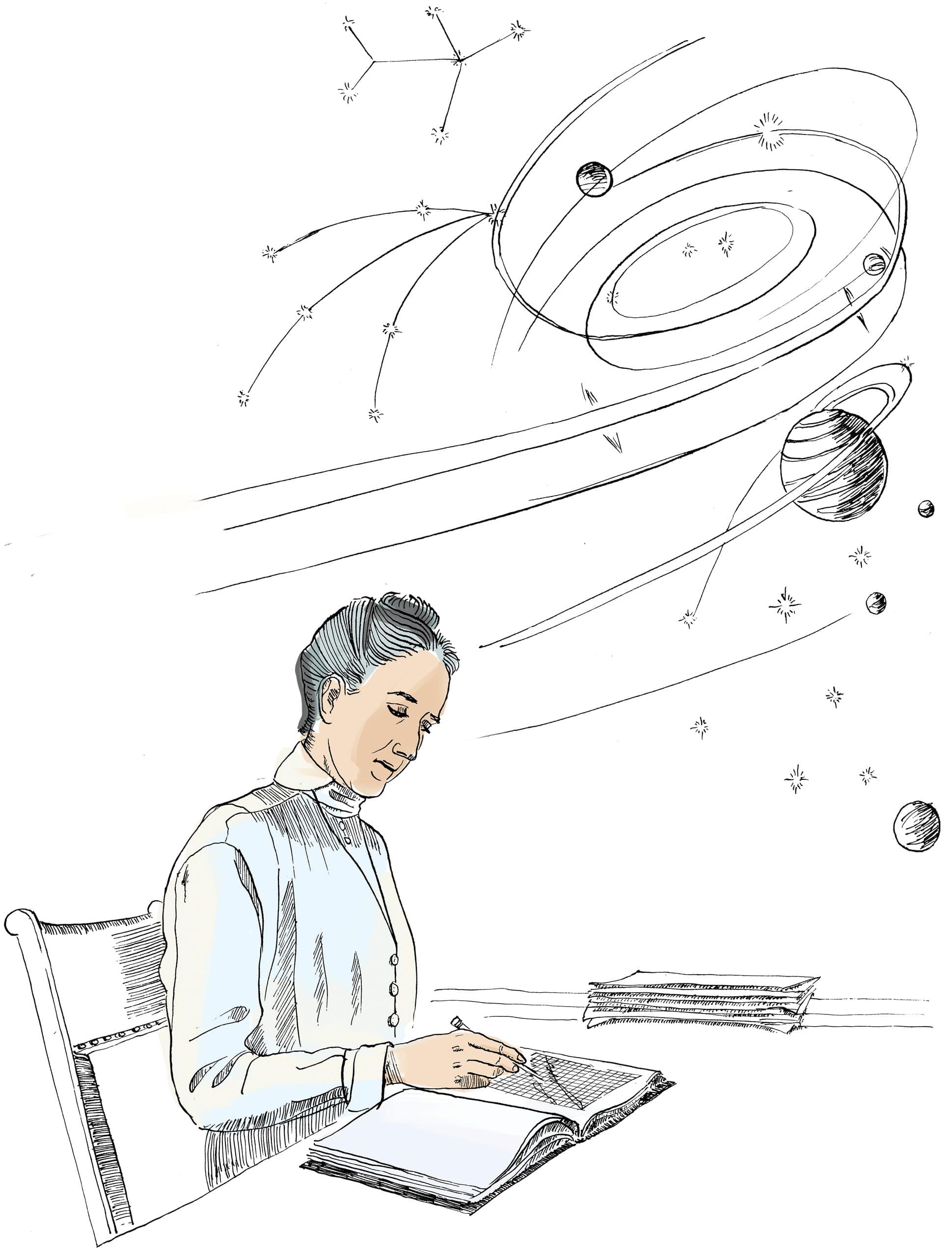
6. Henrietta Swan Leavitt: The Woman Who Measured the Universe
7. Job Opportunities
8. How to Submit to the AASWOMEN newsletter
9. How to Subscribe or Unsubscribe to the AASWOMEN newsletter
10. Access to Past Issues
An online version of this newsletter will be available at http://womeninastronomy.blogspot.com/ at 3:00 PM ET every Friday.
Grant funding across the sciences continues to fall in 2026, as noted by several in the scientific community.
On August 31, AAS reported "a 57% reduction in the number of awards between FY25 and FY26. This reduction in awards in the astronomical sciences is even more severe than the overall 30% decrease in FY26 awards at NSF reported by Nature."
The AAS policy team encourages all members to "contact your members of Congress today and urge them to exercise their oversight authority and support robust funding levels for NSF, in addition to the NASA Science Mission Directorate and the US Department of Energy (DOE) Office of Science."
Read more at
https://womeninastronomy.blogspot.com/2026/09/science-grant-funding-continues-to-fall.html
Earlier this month, astronomer Amina Helmi was awarded the 2026 Kavli Prize, which honors scientists for breakthroughs in astrophysics, neuroscience, and nanoscience.
Helmi shares her journey into astronomy and her thoughts on the discovery of the merger with our galaxy and Gaia-Enceladus. This is a crosspost of the original feature article from The Kavli Prize published on June 10, 2026.
Read more at
https://womeninastronomy.blogspot.com/2026/09/crosspost-we-all-share-same-sky-as-told.html
Physics and Astronomy SEA Change is building a pool of volunteers to review applications and support the disciplinary program. This is an opportunity to help shape the U.S. postsecondary physics and astronomy ecosystem by contributing to a review process that supports meaningful, practical, and achievable systemic change across participating institutions.
Read more here
https://docs.google.com/forms/d/e/1FAIpQLSfZYbg3qjCVrYk5cep67bojj1WIbECy6vh5eNpklz7jwbVlig/viewform
The AAS Employment Committee is in the process of updating its web pages to highlight the full range of career paths undertaken by folks trained in astronomy or astronomy-related fields. If you are willing to share your story anonymously or otherwise, please fill out this form:
https://forms.gle/mGagXPGXMogDdnqm6
By Arpita Bhowmick
In the remote high-altitude heights of Hanle, Ladakh, a remarkable transformation is observed as a new generation of villagers rewrites the narrative of life in the high Himalayas. Situated at an elevation of 4,500 metres above sea level, Hanle is home to India’s first designated Dark Sky Reserve, established in December 2022. This high-altitude, low-moisture environment within the Changthang Wildlife Sanctuary provides exceptional sky clarity and minimal light pollution, rendering it an optimal location for astronomical observation. Since the installation of the 2-metre Himalayan Chandra Telescope in the year 2000 by the Indian Institute of Astrophysics (IIA), several instruments have been established atop Dig-pa-ratsa Ri and its foothills. To involve local communities directly in the preservation and management of this pristine resource, a collaborative initiative was launched by the Union Territory administration, the Ladakh Autonomous Hill Development Council (LAHDC) Leh, and the Indian Institute of Astrophysics. Through this program, locally trained astronomy ambassadors—predominantly women—have been equipped with telescopes and week-long training to guide visitors, thereby bridging the gap between cutting-edge astronomical science and local community engagement.
Read more at
https://www.travelandtourworld.com/news/article/93a7054zo0ci/
By Alana Quinn
American astronomer Henrietta Swan Leavitt’s (1868–1921) research laid the foundation for modern astronomy’s understanding of the structure and size of the universe. After graduating from Radcliffe College in 1892, she joined the Harvard College Observatory, where director Edward Pickering employed women as “computers” to analyze photographic glass plates of the night sky. The meticulous work was poorly paid, but it was how Leavitt would change our understanding of the cosmos.
Read more at
https://issues.org/henrietta-swan-leavitt-archives/
For those interested in increasing excellence and diversity in their organizations, a list of resources and advice is here:
https://aas.org/comms/cswa/resources/Diversity#howtoincrease
- Postdoctoral Research Positions, Princeton University, Princeton, NJ
https://apply.interfolio.com/193062
To submit an item to the AASWOMEN newsletter, including replies to topics, send email to aaswomen_at_lists.aas.org .
All material will be posted unless you tell us otherwise, including your email address.
When submitting a job posting for inclusion in the newsletter, please include a one-line description and a link to the full job posting.
Please remember to replace "_at_" in the e-mail address above.
Join AAS Women List through the online portal:
To Subscribe, go to https://aas.simplelists.com/aaswlist/subscribe/ and enter your name and email address, and click Subscribe. You will be sent an email with a link to click to confirm subscription.
To unsubscribe from AAS Women by email:
Go to https://aas.simplelists.com, in the "My account and unsubscriptions", type your email address. You will receive an email with a link to access your account, from there you can click the unsubscribe link for this mailing list.

No comments :
Post a Comment