Issue of August 7, 2026
eds: Jeremy Bailin, Ferah Munshi, Stella Kafka, and Ben Keller
[We hope you all are taking care of yourselves and each other. --eds.]
This week's issues:
1. Crosspost: Physics Bachelor’s Degree Recipients : Recent Trends, Educational Characteristics, and Influences
2. American Association of University Women announces 2026-2027 fellowship and grant recipients
3. American Doctoral Fellowship Applications Open Soon
4. How women in physics in India are breaking down barriers and shaping the future
5. Australian Museum 100 people exhibition: Ruby Payne-Scott
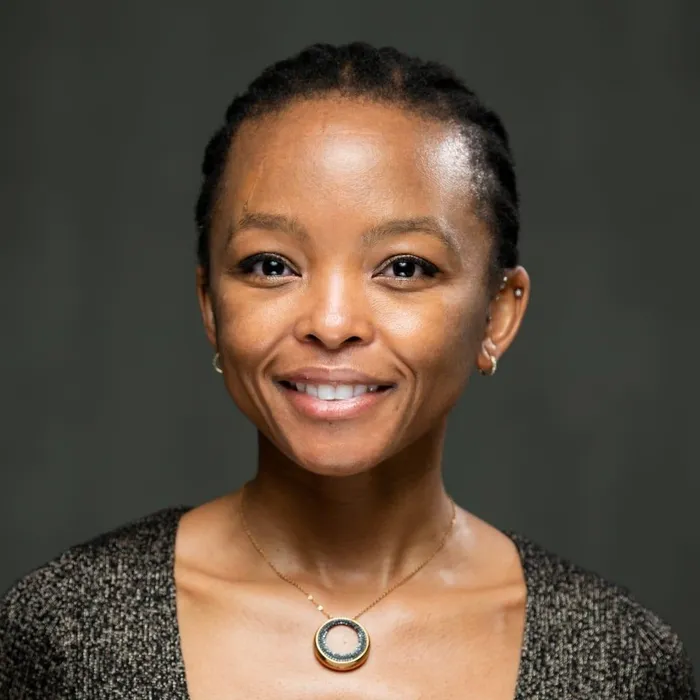
6. Interview with Keitumetse Molamu, head of Engineering and Technology Development for the South African Radio Observatory
7. How to Submit to the AASWOMEN newsletter
8. How to Subscribe or Unsubscribe to the AASWOMEN newsletter
9. Access to Past Issues
An online version of this newsletter will be available at http://womeninastronomy.blogspot.com/ at 3:00 PM ET every Friday.
AIP released its report over physics bachelor's degree recipients. There is good news for women in STEM: women earned 27% of the physics bachelor’s degrees awarded in the 2024–25 academic year, the highest proportion on record.
Since 1983, the percent of women receiving physics bachelor's degrees has risen from around twelve percent of all degrees awarded. Though that's good news, it still places well below the total percentage of women receiving bachelor's degrees each year at 58% of all awarded degrees.
Read more at
https://womeninastronomy.blogspot.com/2026/08/crosspost-physics-bachelors-degree.html
By AAUW
The American Association of University Women (AAUW) has announced its 2026–2027 class of fellowships and grants recipients, awarding a projected $5.4 million to 219 outstanding women scholars, researchers, and community change-makers across the country and around the world. For 145 years, AAUW has invested in women’s education, leadership, and economic security, awarding more than $150 million to scholars, researchers, and community-based organizations.
AAUW’s fellowships and grants are designed to help counter longstanding inequities in education, research and professional advancement by supporting women at pivotal points in their academic and professional journeys. The 2026–2027 awardees include women pursuing advanced study, conducting groundbreaking research, and leading projects designed to improve lives and expand access to education.
Read more at
https://www.aauw.org/resources/news/media/aauw-awards-millions-in-2026-2027/
The American Association of University Women (AAUW) is announcing the opening of applications for its flagship American Doctoral Fellowship, whic "offsets scholars’ expenses during one year of their doctoral program and deepens AAUW’s impact by accelerating diversity, equity, and inclusion in academia. The American Doctoral Fellowship is open to women in all fields of study, though those engaged in science, technology, engineering, and math fields, or those researching gender issues, are especially encouraged to apply."
Applications open Aug 17 and close Sept 30.
Read more at
https://www.aauw.org/resources/programs/fellowships-grants/american-doctoral-fellowship-program/
By Physics World
India has produced some exceptional women physicists over the years. From Bibha Chowdhuri, who co-discovered the meson and became the first Indian woman to receive a PhD in physics, to Ritu Karidhal, who played a pivotal role in making India the fourth country in the world to reach Mars, the country boasts a large pool of talented women.
But despite women accounting for more than 40% of Indian science graduates, they still only make up about 16% of all physics faculty at universities in India, close to the disappointing global average of roughly 17%. As in many other parts of the world, there are myriad reasons for the low numbers, ranging from social pressure to prioritize families over research careers to a lack of visible role models and even sexual misconduct.
IOP Publishing, which publishes Physics World, recently held a webinar to celebrate the contributions of female physicists in India and explore the challenges they face. It featured Kaveri Hukku, chief executive of ATOS Instruments Marketing Services, Asima Pradhan from SOA University, who recently retired from the Indian Institute of Technology in Kanpur, and Urbasi Sinha from the Raman Research Institute in Bangalore.
Read a summary of the webinar at
Watch the full recording at
https://register.gotowebinar.com/register/7901113001684925788
By Australian Museum
Ruby Payne-Scott was a pioneer in radiophysics and radio astronomy and of women in science. In 1941, the Council for Scientific and Industrial Research (now the CSIRO) hired Payne-Scott to research the secret defensive weapon, radar. After the war, she formed a team of radiophysicists to explore cosmic static, particularly ‘solar noise’ emanating from the sun, and other astronomical objects. Along with Bernard Mills and John Bolton, Payne-Scott made Australia a leader of the day in radiophysics. Her greatest contribution to the field came in 1947 with her work on unravelling the properties of ‘Fourier components’ in the distribution of radio brightness across the sky. This work allowed for the computation of these components and became the basis of future research in radio astronomy.
Read more at
By Gcwalisile Khanyile
Scientists in South Africa are making strides in transforming lives through scientific projects that leave a lasting social and economic impact.
Among those driving the change is Keitumetse Molamu, head of Engineering and Technology Development at the NRF-SARAO, which is the National Research Foundation (NRF), which manages the South African Radio Astronomy Observatory (SARAO). SARAO is a South African national facility responsible for all local radio astronomy research, development, and facilities, including the MeerKAT Radio Telescope and South Africa’s participation in the global Square Kilometre Array (SKA).
The SKA is an international effort to build the world’s largest and most sensitive radio telescope (not a single telescope, but an array of telescopes that will be spread across vast distances to achieve its massive scale and sensitivity) to help better understand the history of the universe. It will be the largest radio telescope in the world when completed, with a significant part of it hosted in South Africa, along with a component in Australia.
Molamu, who works in the space — her childhood dream, said that one of the most exciting parts of their work is seeing technologies developed for astronomy find applications in other sectors.
Read the interview at
To submit an item to the AASWOMEN newsletter, including replies to topics, send email to aaswomen_at_lists.aas.org .
All material will be posted unless you tell us otherwise, including your email address.
When submitting a job posting for inclusion in the newsletter, please include a one-line description and a link to the full job posting.
Please remember to replace "_at_" in the e-mail address above.
Join AAS Women List through the online portal:
To Subscribe, go to https://aas.simplelists.com/aaswlist/subscribe/ and enter your name and email address, and click Subscribe. You will be sent an email with a link to click to confirm subscription.
To unsubscribe from AAS Women by email:
Go to https://aas.simplelists.com, in the "My account and unsubscriptions", type your email address. You will receive an email with a link to access your account, from there you can click the unsubscribe link for this mailing list.

No comments :
Post a Comment