Friday, December 24, 2021

AASWomen Newsletter for December 24, 2021

AAS Committee on the Status of Women AAS Committee on the Status of Women
Issue of December 24, 2021
eds: Heather Flewelling, Nicolle Zellner, Maria Patterson, Alessandra Aloisi, and Jeremy Bailin

[We hope you all are taking care of yourselves and each other. Be well! --eds.]
From Item 4

This week's issues:

1.Crosspost: Astronomy Decadal Survey Reckons with Demographic Disparities, Societal Impacts

2. More Than 10,000 Studies Debunk Outdated Biological 'Explanation' For Male Success

3. Celebrate female scientists with these titles

4. When Will They Find Out I'm an Imposter?

5. How a Prestigious Scientific Organization Came Under Suspicion of Treating Women Unequally

6. Lost Women of Science Podcast, Bonus Episode: The Resignation

7. Surveys of scientists show women and young academics suffered most during pandemic and may face long-term career consequences

8. Measures to improve gender balance are working

9. How to Submit to the AASWomen Newsletter

10. How to Subscribe or Unsubscribe to the AASWomen Newsletter

11. Access to Past Issues of the AASWomen Newsletter

An online version of this newsletter will be available at http://womeninastronomy.blogspot.com at 3:00 PM ET every Friday.

Thursday, December 23, 2021

Crosspost: Astronomy Decadal Survey Reckons with Demographic Disparities, Societal Impacts

Written By Andrea Peterson for the American Institute of Physics

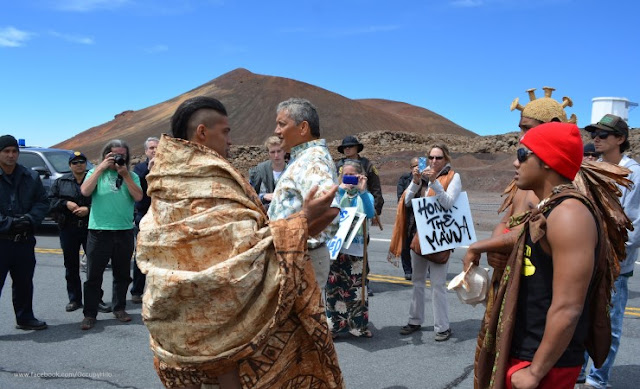
Indigenous Hawaiian activists protest the development of the Thirty Meter Telescope (TMT) on Mauna Kea, a dormant volcano sacred to native Hawaiian culture. Image credit: Occupy Hilo.

Released last month, the National Academies’ latest decadal survey of astronomy and astrophysics includes an intensive assessment of the “state of the profession” and its “societal impacts” for the first time in the survey’s 60-year history.

A dedicated survey panel was tasked with gathering community input and data on demographic trends, as well as with developing “actionable suggestions” to promote the health of the workforce and improve the diversity of the field. The panel also proposed that astronomers re-envision their approach to outreach and “broader impacts,” including by deepening their consultation with local communities over the placement of telescopes — a major issue confronting the proposed construction of the Thirty Meter Telescope in Hawaii.

Based on the panel’s input, the full survey committee presents 10 recommendations to improve the “foundations of the profession,” spanning matters such as expanding demographic data collection and diversity programs to adopting a “Community Astronomy” model of engagement and reducing astronomy’s environmental impacts. While the recommendations are not binding, they will carry considerable weight with NASA, the National Science Foundation, and the Department of Energy, which sponsored the survey.

Read the rest of the article and learn more about trends in racial and gender diversity in astrophysics at: https://www.aip.org/fyi/2021/astronomy-decadal-survey-reckons-demographic-disparities-societal-impacts

Tuesday, December 14, 2021

Meet Your CSWA: Karly Pitman

This is the seminal feature for our series highlighting the newest members of the American Astronomical Society's Committee on the Status of Women in Astronomy. For today's post, meet Dr. Karly Pitman, the executive director and senior research scientist at the Space Science Institute in Boulder, Colorado. Dr. Pitman earned her A.B. in Astronomy and Geology from Vassar College and completed her PhD at Louisiana State University. She's worked on a wide range of projects in space science from examining spectra of the martian surface to analyzing the composition interstellar dust. 

Dr. Karly Pitman is an accomplished planetary scientist and astrophysicist specializing in radiative transfer modeling and spectroscopy at the Space Science Institute.
Image Description: A person wearing a teal blazer and glasses sitting at a desk behind a laptop, smiling at the camera.

Describe the first time you made a personal connection with the planets and stars.
I’ve always liked looking at the night sky and playing with rocks and minerals. Because my parents were in college and my father worked nights for most of my childhood, we engaged in cheap forms of late-night entertainment, such as low-tech stargazing. As a kid, I could never sleep before midnight (still can’t), so I’d just stay up at night thinking or staring out my window, and this evolved into thinking too hard about what I was staring at.

How did you end up working in the field?
My parents say that I announced my intent to become a scientist to them in kindergarten, but I had seriously been considering it for a couple of years beforehand and settled on astronomy and geology when I was eight years old. My first exposure to physics proper was when I shadowed a physics professor in junior high school during career day. I had heard of and read about planetary science but didn’t get direct exposure to that until college and graduate school.

I went to a liberal arts 4-year college that had a strong science program where I could turbo load on the subjects above and carry a double major and went directly into a Ph.D. physics and astronomy program at a larger university from there. I did two postdocs: a regular postdoctoral research associateship at a university and a NASA Postdoctoral Program fellowship at JPL. Then the Great Recession hit and jobs were scarce for people my age. Many of us became independent contractors, consultants, and soft money researchers during that period, and I’ve worked in that sector for a little over a decade.

Who inspired you?
A great many people have helped me along the way (ref: https://solarsystem.nasa.gov/people/2041/karly-pitman/). I’m currently inspired by the people in our field who make it a priority to help others in addition to doing good scientific work.

What is an Executive Director/Senior Research Scientist?
It is a combo CEO and principal investigator position. As executive director, I am the head of my institution and my duties include leading, developing, and implementing strategic, organizational, programmatic, and financial plans. I have oversight of both the programmatic research and education branches as well as the operations and finance teams (business, IT, human resources, legal) and overarching management of approximately 100 people. As a Senior Research Scientist, I submit proposals, lead my own projects, write papers, etc., the same as any researcher.

What community issues are important to you and why?
The topics most important to me involve professional development, demographics, and workforce planning. We are currently in a period of massive change as our community is issuing new strategy and policy documents related to workforce. Neither the “wish list” recommendations from affinity groups nor the requirements coming down from on high have sufficient dollar amounts or budgets attached to them, and we need that to practically realize the workforce goals outlined for our profession.

Tell us about a favorite moment so far in your career.
The first time I won a grant made me very happy. Because your peers vote on whether you win or lose, it’s a major honor and acknowledgment that your work is important to the community. Since science funding is limited, the odds are very small that you’ll win, so it’s also a relief to know that you’ll be gainfully employed.

What advice would you give to someone who wants to take the same career path as you?
I always issue the caveat that advice is an opinion born of someone’s own experiences and hopes or fears for you. Take what advice is useful to you and leave the rest.

There was a Fortune article (https://fortune.com/2021/11/17/women-ceos-girls-stem-education-shelly-hod-moyal-iangels/) explaining the difference between traditional STEM and another kind of STEM (Sales, Theater, Entrepreneurship, and Management). Whether you’re working as a scientist or in an executive management role, you have to master the latter set of skills too.

What do you do for fun?
My hobbies include sewing, photography, dessert production and consumption, singing, reading literature, and studying dead languages. I have aspirational interest in ballet, fencing, and armored combat. Practically speaking, I watch a lot of T.V. and movies.

What are your goals as a part of the CSWA?
I joined the CSWA to work on its strategic plan initiatives related to professional development, including working on developing a compensation database and improving equitable opportunities for employment and promotion. This is something I’m already doing as part of my job and something that will be very important for the community to have. I would also like to work toward implementing more accessibility and safety measures for women traveling to and attending conferences.

If you weren’t in the field of astronomy, what would you be doing?
I would be curled in the fetal position. In an alternate universe, I would be pursuing a career in something equally as creative and unstable.

What changes would you like to see for women in astronomy?
An exercise that’s done at women in planetary science meetings is asking women who have done XYZ to stand up, where XYZ = leading a mission, winning a grant, leading a team, etc. I would like to see more women in the room standing.

Friday, December 10, 2021

AASWomen Newsletter for December 10, 2021

AAS Committee on the Status of Women
Cover of the "Women in Physics" coloring book from item 5
AAS Committee on the Status of Women
Issue of December 10, 2021
eds: Heather Flewelling, Nicolle Zellner, Maria Patterson, Alessandra Aloisi, and Jeremy Bailin

[We hope you all are taking care of yourselves and each other. Be well! --eds.]

This week's issues:

1. Crosspost: Record number of first-time observers get Hubble telescope time

2. Max Planck Society responds to gender discrimination allegations

3. Are female science leaders judged more harshly than men? Study it

4. Stereotype that girls aren’t interested in STEM subjects ingrained in kids as young as 6

5. Melbourne-based astrophysicists launch colouring book encouraging more girls to become scientists

6. Black students take on more debt and get fewer slots on grants, data show

7. For Tech To Hire More Women, Perception Of The Industry Must Change

8. Awards and Honors are Part of Professional Development

9. L’Oréal USA For Women In Science Fellowship Program

10. Job Opportunities

11. How to Submit to the AASWomen Newsletter

12. How to Subscribe or Unsubscribe to the AASWomen Newsletter

13. Access to Past Issues of the AASWomen Newsletter

An online version of this newsletter will be available at http://womeninastronomy.blogspot.com/ at 3:00 PM ET every Friday.

Thursday, December 9, 2021

Crosspost: Record number of first-time observers get Hubble telescope time

Written By: Dalmeet Sing Chawla for Nature
Credit: Space Telescope Science Institute

An unprecedented number of first-time investigators have secured viewing time on NASA’s Hubble Space Telescope in the years since the agency overhauled the application process to reduce systemic biases.

In 2018, NASA changed the way it evaluates requests for observing time on Hubble by introducing a ‘double-blind’ system, in which neither the applicants nor the reviewers assessing their proposals know each other’s identities. All the agency’s other telescopes followed suit the next year.

The move was intended to reduce gender and other biases, including discrimination against scientists who are at small research institutions, or who haven’t received NASA grants before. “The goal of submitting an anonymized proposal isn’t to completely eradicate any evidence of who’s submitting, but rather to have that not be the focus of discussion,” says Lou Strolger, an observatory scientist at the Space Telescope Science Institute (STScI) in Baltimore, Maryland, which manages Hubble.

Check out the rest of the article at: https://www.nature.com/articles/d41586-021-03538-8

Friday, December 3, 2021

AASWomen Newsletter for December 3, 2021

AAS Committee on the Status of Women
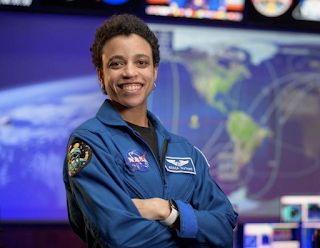
Astronaut Jessica Watkins (from item 10; credit: NASA/Bill Ingalls)
AAS Committee on the Status of Women
Issue of December 03, 2021
eds: Heather Flewelling, Nicolle Zellner, Maria Patterson, Alessandra Aloisi, and Jeremy Bailin

[We hope you all are taking care of yourselves and each other. Be well! --eds.]

This week's issues:

1. Crosspost: ESAC SCI-S Science Seminar featuring Dr. Jocelyn Bell!

2. Crosspost: Madagascar STEM Non-profit Completes a Successful OAD Project

3. Adopting as academics: what we learnt

4. Scientists question Max Planck Society’s treatment of women leaders

5. Record number of first-time observers get Hubble telescope time

6. 'Hole' humanises stories of scientists and activists in Antarctica

7. Discrimination still plagues science

8. Professor sparks outrage by saying women should be kept out of law, medicine and engineering careers

9. Silent achievers: Hidden discoveries in Science

10. NASA Astronaut Jessica Watkins Becomes the First Black Woman to Join International Space Station Crew

11. Women and the environment: power on the ground and in academia

12. Stereotypes about girls dissuade many from careers in computer science

13. Job Opportunities

14. How to Submit to the AASWomen Newsletter

15. How to Subscribe or Unsubscribe to the AASWomen Newsletter

16. Access to Past Issues of the AASWomen Newsletter

An online version of this newsletter will be available at http://womeninastronomy.blogspot.com/ at 3:00 PM ET every Friday.