Thursday, August 28, 2025

Women in Astronomy: Space for Students Part 11: Hurum Maksora Tohfa

By: Libby Fenstermacher

In our popular Career Profile series, the AAS Committee on the Status of Women in Astronomy has compiled dozens of interviews highlighting the diversity of career trajectories available to astronomers, planetary scientists, and those in related fields. In a twist on this series, we video-interviewed students in astronomy and astrophysics to highlight their personal and academic career paths. A written interview option was also provided. The purpose of this series is three-fold. It aims not only to give a voice and exposure to those who are up and coming in the field but also to give feedback to the Astronomical community at large about the experiences of students who identify as women. The hope is that these interviews will not only share advice and lessons learned but will shed light on how to encourage and inspire more women, from various backgrounds and skill sets, to follow space trajectories, and reach towards the stars. 
Unlike past editions of this series, the following interview will only be available as a written interview.
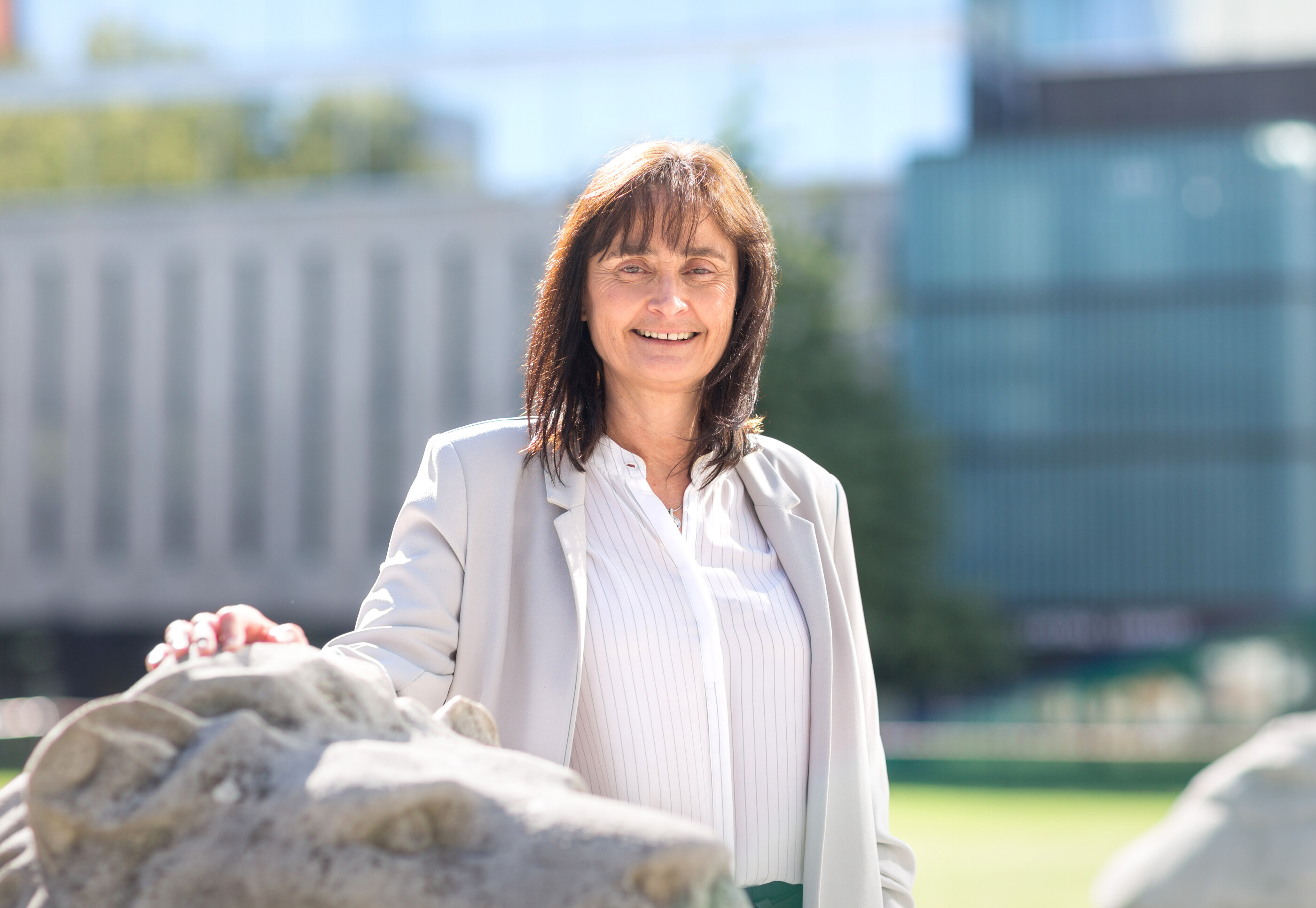
Meet Hurum Maksora Tohfa, a third-year Astrophysics PhD student at the University of Washington. When this interview was conducted, she was just about to enter her second year. Alongside her PhD, Hurum is also a Graduate Assistant for Professor Matt McQuinn, where she works on projects that explore the effects of baryon streaming velocity on structure formation in the early universe.
Hurum Maksora Tohfa
Her path into astrophysics began with a love for mathematics that grew into a passion for physics and cosmology. With a BA in physics and mathematics with a concentration in scientific computing, she has worked on projects ranging from fine structure constant variation to simulations of early star formation, developing a strong foundation in computational cosmology.
What excites Hurum most about astronomy is its ability to address fundamental questions about the universe while reminding us of our place within it. She acknowledges the challenges of complex equations and overwhelming data, but sees them as opportunities to sharpen her computational skills and contribute to the field. For aspiring astrophysicists, her advice is to take things one day at a time, be patient with yourself, and never hesitate to ask for help.
What is your background?
I got my BA(Hons.) in physics and mathematics with a concentration in scientific computing. I am currently a second year PhD student at the University of Washington. I have been involved in various research projects that span cosmology, high-energy physics, and computational methods.
What inspired you to choose a path in astronomy/astrophysics?
My interest in mathematics eventually led me to physics. While exploring different areas of physics, I found my passion for computational cosmology while working with Professor Daniel Grin on fine structure constant variation. I like how it lies at the intersection of many fundamental questions related to both particle physics and the origin of our universe and can address them in a novel and concrete way.  
What are your aspirations?
My aspirations are to pursue a PhD in computational cosmology, where I aim to expand upon my previous work by applying my computational skills to test and develop numerical tools to test or create alternative cosmological theories. After completing my PhD, I hope to continue my research in academia and share my knowledge with the next generation of physicists.
What about astronomy excites you?
What excites me about astronomy is its ability to address fundamental questions about the universe by intersecting multiple disciplines like particle physics, mathematics, and data analysis. On a deeper level, contemplating our insignificance on the vast cosmic scale humbles me and inspires me to make a positive difference in the tiny part of the cosmos I inhabit.
What about astronomy is challenging for you and what have you done to overcome these challenges?
One of the significant challenges in astronomy, particularly in computational cosmology, is dealing with analytically unsolvable dynamic equations and complex numerical evaluations. Many of the equations governing cosmic phenomena cannot be solved analytically due to their complexity, requiring sophisticated numerical methods and high-performance computing to approximate solutions. Additionally, as detectors and telescopes become more sensitive, we are entering an era where next-generation telescopes will produce an overwhelming amount of data. Managing this "big data" to extract meaningful insights poses another substantial challenge. To overcome these challenges, I have focused on developing a strong computational skillset to tackle the analytical and data-intensive challenges in the field.
What do you think is a common misperception about astronomers or astronomy as a discipline or/and educational path?
A common misperception about astronomers and the field of astronomy is that it's solely about stargazing or observing celestial objects through telescopes. Many people imagine astronomers spending their nights looking at the sky and cataloging stars, planets, and galaxies. While observation is a fundamental part of astronomy, the discipline is much more diverse and technologically advanced than this romanticized view suggests.
In reality, modern astronomy and astrophysics are highly interdisciplinary fields that integrate physics, mathematics, computer science, and data analysis. For example, as a theorist, I spend most of my time developing advanced statistical methods, running N-body simulations, and analyzing computational models to formulate theories that explain observational data. My work involves complex algorithms and high-performance computing, which are far removed from the traditional image of an astronomer gazing through a telescope.
Another misperception is that the educational path in astronomy is narrow and limits career opportunities to academia or observatories. In truth, the skill set developed—such as critical thinking, quantitative analysis, and expertise in machine learning and data science—is highly transferable to various industries, including technology, finance, and healthcare.
What are you currently working on? (Projects, Classes, Goals?)
I’m currently working on two research projects: The first project investigates the impact of baryon-dark matter streaming velocities on the formation of the first stars in the universe. In the early universe, radiation was coupled to baryons but not to dark matter, leading to a relative velocity difference between them after recombination—this phenomenon is known as streaming velocity. Previous studies show some contradicting results on the mass of dark matter halos that were affected by streaming. I'm using N-body simulations to explore how this streaming velocity impacted star formation in the early universe, which can help us better understand observations from telescopes like the James Webb Space Telescope.
I am also working on the effect of observational systematics on a relatively new summary statistics called scattering transform for Lyman alpha forest data. Along with my research, I am continuing to take graduate level courses. 
What are your near-future plans?
I am hoping to finish my current project and take the qualifier exam by the end of my second year.
What advice would you give to someone considering a trajectory similar to yours? 
If you're considering a trajectory similar to mine, my advice is to take things one day at a time and be patient with yourself. Research can be challenging and often complex, so don't hesitate to ask for help when you encounter obstacles. It's likely that someone else has already spent months resolving the same issues you're facing, and seeking their guidance can save you a lot of time and frustration. Additionally, focus on developing a strong computational background.
Did/Do you receive any mentorship and if so, what is the most important guidance you have garnered along your journey?
Yes, I have been fortunate to receive mentorship from several esteemed professors, including Professor Matt McQuinn, Professor Simeon Bird, and Professor Daniel Grin. Their passion for astronomy and cosmology has been incredibly inspiring and has significantly influenced my decision to continue in this field. From each of them, I have learned invaluable lessons about cosmology, research methodologies, and the importance of critical thinking. The most important guidance I have garnered along my journey is the value of perseverance—being consistent in tackling challenging problems and not giving up.
What if any changes would you like to see for women in astronomy? 
I would like to see a more inclusive and supportive environment for women in astronomy. This includes increasing representation of women at all levels—from students and researchers to faculty and leadership positions. Mentorship programs and networking opportunities specifically designed for women can provide valuable support and foster career development. Additionally, promoting work-life balance through flexible scheduling and acknowledging the challenges that disproportionately affect women can help retain brilliant individuals in the field.
Favorite movie/Tv show?
Bojack Horseman


Thursday, August 21, 2025

Cross-post: The Lady Computers of The Royal Observatory

This post originally appeared on The Royal Society blog and is written by guest blogger Dr. Louise Devoy, Senior Curator of the Royal Observatory 

Guest blogger Louise Devoy reflects on the first generation of paid female astronomers at Greenwich, who helped to prove that women could actively contribute to professional science.

Photo: The Royal Society

As we continue to mark the 80th anniversary of the election of the first female Fellows of the Royal Society, here’s a guest post from the Royal Observatory commemorating some earlier pioneering women in STEM:

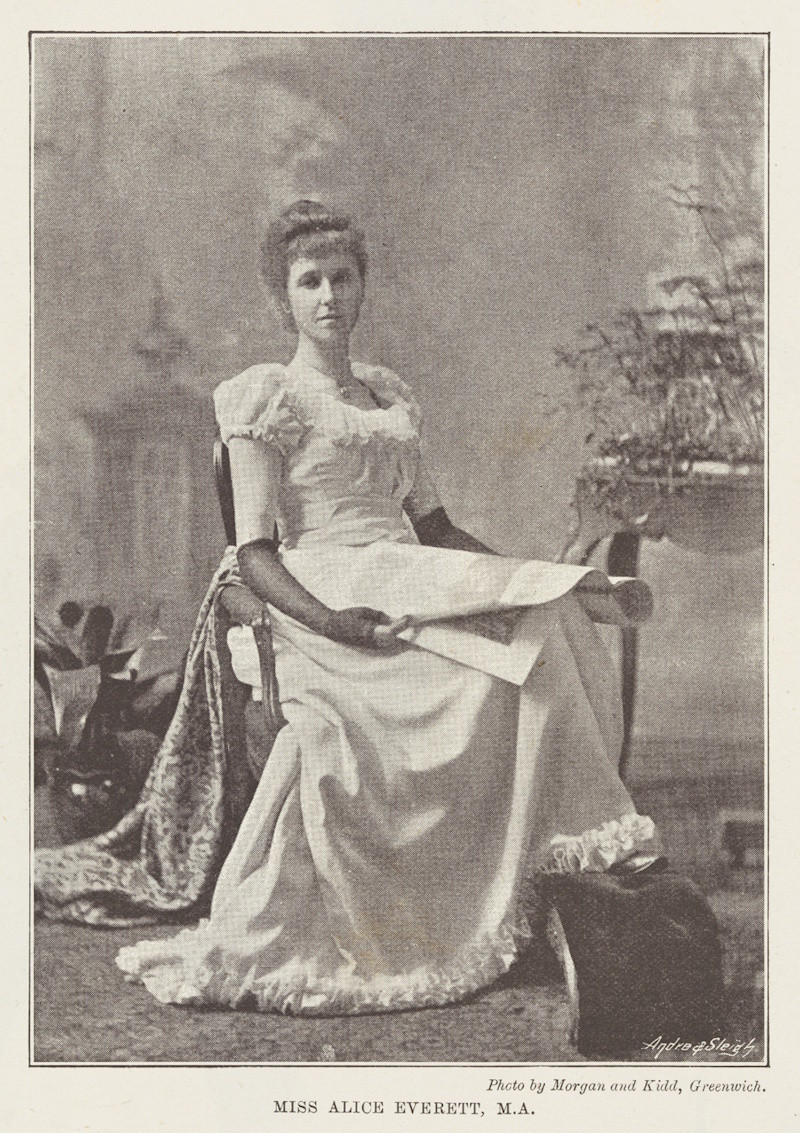
In July 2025, Professor Michele Dougherty FRS was appointed as the sixteenth Astronomer Royal, the first female post-holder since the role began in 1675. It’s an exciting milestone moment that offers us a great opportunity to reflect on the first generation of paid female astronomers at Greenwich – the ‘Lady Computers’ of the 1890s – whose ingenuity, tenacity and perseverance proved that women could actively contribute to professional science.

Women have always played an important role in the life and work of the Observatory. With the Astronomer Royal expected to live onsite, it was natural for the women in his household to take an interest in the Observatory’s activities. For example, Margaret Flamsteed, wife of the first Astronomer Royal, John Flamsteed FRS, took on the arduous task of assembling and publishing Flamsteed’s work after his death in 1719 to ensure that his catalogue of 3,000 accurate star positions would not be forgotten.

Over the centuries, successive generations of wives, daughters and sisters supported the Astronomer Royal by receiving guests, providing illustrations for books, and even accompanying their husbands on eclipse expeditions. As demonstrated by surviving letters in the RGO Archives and the Royal Society Archives, we can see how they were embedded within a network of astronomers’ wives who took a keen interest in the scientific debates of the day. 

Read the rest of Dr. Devoy's post at The Royal Society blog

Thursday, August 14, 2025

Cross-post: Women in STEM face challenges and underrepresentation – this course gives them tools to succeed


This article originally appeared in The Conversation and is republished using the CC BY-ND 4.0 license


Women in STEM face challenges and underrepresentation-this course gives them tools to succeed

Filomena Nunes, Michigan State University

As a graduate student in physics, I was often the only woman in the room. As I gained more experience, I learned valuable lessons about the scientific community and how to better advance my career. Once I started mentoring female graduate students, I realized that many of them had also felt alienated around some scientists, an experience that chipped away at their confidence or the passion for their work.
Over two decades of doing research and mentoring students, I have compiled some tools that give women the power to improve their own experiences in the STEM world. In 2019, I turned these resources into an experiential course called Tools for Women in STEM. Although the course is designed for women, all genders are welcome.

There are many reasons women are underrepresented in STEM, including bias and stereotypes, but also workplace cultures and the absence of policies for work-life balance. A report from the American Association for University Women makes recommendations for improving the retention of women in STEM careers: ensuring women are getting the mentoring they need, supporting a work-life balance and creating a welcoming culture.

This is all easier said than done. Despite the many programs and initiatives implemented across the country since 2010, when the AAUW report came out, the percentage of women in many fields of science, technology, engineering and math continues to stay very low, with a trend that is flat at best. Even if they come into the field, many choose to leave.

What does the course explore?

To help young women navigate their professional lives in STEM, I start by taking each student on a personal journey, beginning by contextualizing their experiences in STEM. Students reflect on the shame triggers that can make them feel like they’re not good enough even when their record is stellar, as well as any biases they may have about others. Self-awareness is an essential starting point.

Students then work on skills with real-life impact, ranging from networking at meetings and building effective relationships with mentors to negotiations, dealing with harassment and exploring leadership roles. This is done through in-class activities and often followed up with practice in their real life.

What does the course prepare students to do?

Prepped by videos and papers, students practice these skills and discuss strategies in small groups. This model provides an opportunity for collaboration and for assimilating and sharpening all the skills covered in the course.

Take mentoring as an example. Students practice reaching out to potential mentors and establishing a new mentoring relationship. Through discussion, students learn to both receive and provide useful feedback. When students have a safe, trusting environment, they’re more inclined to try out new things.

During the last month of the course, students practice communicating effectively in a wide range of circumstances characteristic of a STEM career. They focus on one type of communication each week: scientific presentations, posters, research group meetings and outreach, all important skills in a STEM job that aren’t always formally taught.

We wrap up the course with a “Women in STEM” outreach event that is fully created and implemented by the students themselves. This event has ranged from organizing a STEM research fair, speaking to undergrads about bridges between STEM and real life, and collecting sticky notes from researchers about their experiences in STEM.
A chalkboard covered in post it notes.
Graduate students in the Tools for Women in STEM course collected sticky notes about other researchers’ experiences in the STEM field as part of the course. Filomena Nunes
As students work together in a safe, trusting environment, they develop their own voices and gain confidence. And the connections established during the course can continue throughout their graduate program.

Why is this course relevant now?

Today, women in STEM have higher expectations for their workplace than those of previous generations, and they are less tolerant of toxic environments. Courses like this can empower students to advocate for a better experience and promote a healthy culture for women in STEM.

Women aren’t the only group underrepresented in STEM. Instruction that tailors these lessons to the challenges faced by other identity groups could help many other students succeed.
Uncommon Courses is an occasional series from The Conversation U.S. highlighting unconventional approaches to teaching.The Conversation


This article is republished from The Conversation under a Creative Commons license. Read the original article.


Read more about the course in Nunes's article from The Conversation

Thursday, August 7, 2025

The First Woman Astronomer Royal

by Kimberly Mitchell


On July 30, 2025, Michele Dougherty became the first woman Astronomer Royal in the United Kingdom. It is only the latest achievement in Dougherty’s long astronomical career, and one she never envisioned as a child.

Dougherty grew up in South Africa and became interested in astronomy and the stars through her father. He built a telescope when she was ten and showed Dougherty Jupiter’s moons and Saturn. Though Dougherty enjoyed the experience, she didn’t pursue science in secondary school. Still, her enjoyment of science and math stuck with her, strong support for the idea that building science capital in children by the age of 11 is impactful for their involvement in science and math later in life. 

When Dougherty arrived at the University of Natal, she decided to study mathematics and science despite not having a strong secondary school background in these subjects. Dougherty says of this experience, “It was like learning a new language,” but that didn’t stop her from ultimately succeeding. She got her Bachelor’s degree in mathematics before moving to physics for her graduate degree. She graduated in 1988, with her PhD work focused on wave-particle interactions in dispersive and anisotropic media. 

Michele Dougherty addressing the Royal Astronomical Society in 2015.

Photo: TowardsTheLight - Own work, CC BY-SA 4.0, Wikimedia Commons.

Dougherty completed a fellowship in mathematics in Germany before moving to London, where she joined Imperial College in 1991. Dougherty is a professor of space physics, and she was head of the Department of Physics at Imperial from 2018 until 2024. Dougherty has been the principal investigator for major planetary space missions, notably the magnetometer instrument on NASA’s Cassini spacecraft, which orbited Saturn, and the European Space Agency's JUICE mission, which will explore Jupiter’s icy moons starting in 2031. She led the work that discovered an atmosphere containing water and hydrocarbons around Saturn’s moon Enceladus, a critical finding in the search for extraterrestrial life.

The position of Astronomer Royal dates back to 1675 and is officially appointed by the British monarch. King Charles II appointed the first Astronomer Royal, John Flamsteed. Flamsteed’s main role was observing and cataloging stars to create navigational maps. Flamsteed and several of his successors are credited with establishing a tradition of extensive research and precise astronomical observations.

The position has changed somewhat, in that the Astronomer Royal now holds the title along with their current roles. Michele Dougherty is currently the Executive Chair of the Science and Technology Facilities Council (STFC) and the President-elect of the Institute of Physics, as well as a professor at Imperial College. As the Astronomer Royal, she will serve as an ambassador for astronomy, space, and STEM in the UK and beyond, and an advisor to King Charles III in any matters of astronomy. 

John Flamsteed, first Astronomer Royal.

Painting by Thomas Gibson, public domain, via Wikimedia Commons.

Dougherty is aware of the importance of becoming the first woman Astronomer Royal, as she understands how younger women and girls can draw on her achievements to inspire their own. “I think when young children in particular see someone that looks like them doing a job they think they would never get an opportunity to do, it changes their mindset a little," she told BBC News,

Dougherty joins another female astronomer, Catherine Heymans, who is the first female Astronomer Royal for Scotland. Heymans took on the role in 2021, and now both positions are held by women for the first time in history. 

In her recent BBC interview, Dougherty said: 

“For the last 350 years, the title of Astronomer Royal has been held by a white male astronomer, and that kind of reflected what the astronomical community has looked like for the last few centuries. But things are changing," she said.


"Science is becoming more diverse, which it needs to be if we want to answer these big questions, and I'm absolutely delighted now that the two Astronomers Royal across the UK are female, reflecting the fact that science is for everyone."