 |
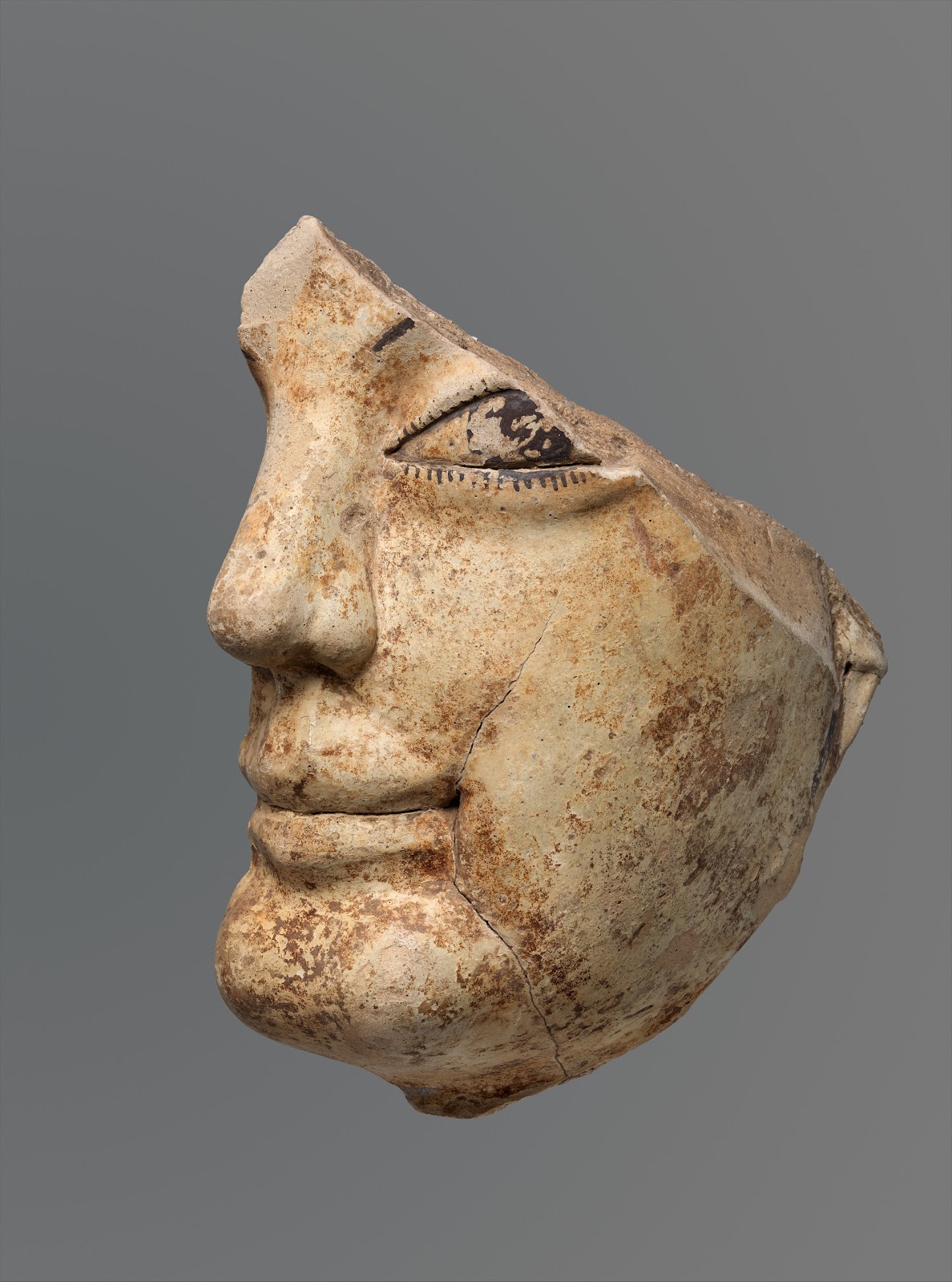
Terracotta head from a statue
|
Today's guest blogger is Stuart Dean. Stuart has a B.A. (Tulane, 1976) and J.D. (Cornell, 1995) and is currently an independent researcher and writer living in New York City. Previously he worked in a variety of other capacities, including 15 years as a corporate attorney.
Until now you could not find the name of the ancient Greek poet Sappho in any discussion in print or online regarding ancient Greek astronomy. Such a discussion is long overdue and I think it is best to let Sappho herself begin it:
Sunset/Moonrise
“As when down goes the sun/the rosyfingered moon”
Line final ‘sun’ followed by line final ‘moon’ is in effect a ‘visual rhyme,’ implying a scan of the evening sky, looking west then east, with the knowledge that the moon reflects the sun’s light. Her characterization of the moon as ‘rosyfingered,’ a word otherwise frequently used to describe the sun at dawn, further buttresses the ‘moonlight reflecting sunlight’ reading.
Evening Star/Morning Star
“Evening Star, carrying all that was scattered by the dazzling Dawn Star”
Here again, word position is key, only in this case within a single line. Line initial ‘evening star’ and line final ‘dawn star’ implies an underlying unity. It is thus possible that what Sappho evinces here is her recognition that the two stars are the same celestial object (Venus) and that she is referring to the 584-day cycle of Venus.
