Showing posts with label Black women in space. Show all posts

Thursday, June 13, 2024

Celebrate Black in Space Week 2024

By Ashley Walker, Caprice Phillips, AJ Link, LLM, KeShawn Ivory, Naia Butler-Craig, Robert Washington III, and Cheyenne Polius


Black In Astro is excited to announce #BlackSpaceWeek, which runs from June 16 to June 22, 2024 and will provide the opportunity for the Black Space Community to celebrate our multidimensionality and everything that it entails. Starting with the #BSWRollCall and continuing for the rest of #BlackSpaceWeek, we cannot wait to get into #MTheory and what it means to be #AfroDynamic; we will provide a #LiftOff platform to showcase our collective talents and reflect on #ContainingMultitudes; and finish the week by putting on #ForTheCulture and looking towards an #NDimensional future by honoring our past. Click here to
Black in Astro logo
  • see the schedule of events, 
  • submit artwork, 
  • register for panels and chats, and
  • register for research showcases.

We are multidimensional beings made of stardust. This year, for #BlackSpaceWeek, the Black In Astro team wants to uplift how our community brings our multidimensional identities and experiences with us into Space. 

The concept of multidimensionality allows us to acknowledge that our identities are not just intersectional, but ever changing and ever evolving based on our lived experiences. Multidimensionality is a way of expressing our constant relationship with everything around us, from the current matrices of oppression to the historical wisdoms of our ancestors, and from our individual struggles to our collective liberation. 

To embrace multidimensionality is to celebrate how we are just as complex and fascinating 
and worthy of awe as the universe we are traversing. 


Come join us for #BlackSpaceWeek 2024!

Thursday, February 8, 2024

Celebrating Black in STEM - Part 1


women of color at NASA
NASA Pioneers and Innovators (Image Credit: NASA)


Since 1976, every American president has officially designated February as Black History Month, a celebration of achievements by African Americans and a time to acknowledge and recognize their central role in American history. The annual event grew out of "Negro History Week", initiated by historian and civil rights leader Carter G. Woodson and other prominent African Americans. Around the world other countries also devote a month to celebrating Black history. Read more about the month's history here.

Organizations that support scientists in astronomy and physics have provided resources, guidance, and advice for advancing the careers of Black astronomers and physicists. Below is a partial list. 


Do you recommend others? Please add them in the comments section.

Thursday, September 15, 2022

Crosspost: Expedition 67 Astronaut Jessica Watkins Talks with Stanford Magazine


Aboard the International Space Station, Expedition 67 Flight Engineer Jessica Watkins of NASA discussed life and work aboard the orbital outpost during an in-flight event September 7 with the Stanford University alumni magazine.  Watkins is in the midst of a science mission living and working aboard the microgravity laboratory. The goal of the mission is to advance scientific knowledge and demonstrate new technologies for future human and robotic exploration missions as part of NASA’s Moon and Mars exploration approach, including lunar missions through NASA’s Artemis program. 

Check out this incredible interview with Stanford University alum, martian geologist, and the first Black woman to participate in an ISS long-term space mission, Jessica Watkins! 

Thursday, May 12, 2022

Crosspost: A Life of Transdisciplinary Science, The Expeditions of Mae Jemison

Written by Michelle Hampson for AAAS

Dr. Mae Jemison—doctor, engineer, and Star Trek fan—was the first Black woman to travel into space.
In 1992, newly elected AAAS Fellow Dr. Mae Jemison was doing an experiment where she injected several female African clawed frogs with a hormone to induce ovulation. After harvesting and carefully analyzing batches of eggs under a microscope and fertilizing the healthiest looking ones, she would periodically re-assess the embryos and take microscopic images to document their development. This protocol was part of standard experiments to study reproduction – except that it was happening in space.

Jemison was one of 15 selected from 2,000 applicants to serve in NASA’s astronaut corps and later became the science mission specialist on board the STS-47 Spacelab-J, in partnership with the Japan Space Agency. Over the course of the eight-day space mission, Jemison was tasked with many experiments, including this research project to investigate how frog embryos develop in the ultra-low gravity conditions of space.

Thursday, March 31, 2022

Celebrating the Pioneering Women of Astronomy and Space Exploration

By Nicolle Zellner, co-Chair of the CSWA

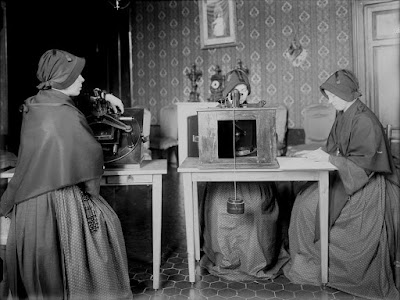
We stand on the shoulders of giants! March is Women's History Month, and this blog has honored women in science with multiple posts. It's hard to forget the pioneering work of those early female astronomers who worked as computers at the turn of the 20th Century, whether in the United States at Harvard or abroad at the Vatican

Sisters Emilia Ponzoni, Regina Colombo, Concetta Finardi and Luigia Panceri mapped
the positions and brightness of 481,215 stars for the Vatican. Photo Credit: On Being (Flickr)

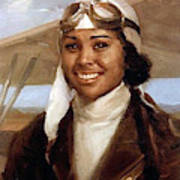
Other women tested the limits of aviation and space flight. Bessie Coleman, Jackie Cochran, Valentina Tereshkova, Sally Ride, Mae Jamison, Ellen Ochoa, and Eileen Collins flew fast, long, and high—breaking the air and space ceilings for all of us. Wally Funk, an original First Lady Astronaut Trainee, became the oldest woman to fly in space in July 2021. The next people on the Moon will include the first woman and the first person of color. Perhaps the final frontier really will be for everyone.

Bessie Coleman "dared to dream".
Photo credit: Alamy

But if it weren't for the calculations (and just plain physics!), humans wouldn't travel safely into space and home again. On her experience working as a 'human computer' at NASA's Jet Propulsion Laboratory, Macie Roberts commented, "you have to look like a girl, act like a lady, think like a man, and work like a dog." Katherine Johnson, Dorothy Vaughan, and Mary Jackson were just some of the brain power behind those early NASA spaceflights.  

Generations later, these women continue to inspire those of us who are reading their stories today. Those stories have been told in a variety of media, including The Glass Universe (review), Hidden FiguresSilent Sky, The Mercury 13, Right Stuff, Wrong Sex, and Rise of the Rocket Girls. Do you know of others? Post them in the comments section.

We should continue to support and recognize women and the work we all do. Helen Ling, a software engineer at the Jet Propulsion Laboratory in the 1950s and 1960s, once said "...if you hire [men] under you, they're uncomfortable, you're uncomfortable. So I just hired women just out of college. I thought that if you didn't give them a chance, they'll never get a chance."

The same could be said when standing on the shoulders of giants. Thanks, pioneers, for giving us all a chance.


Read more about pioneering women at

4000 Years of Women in Science

First Lady Astronaut Trainees (blog post, support for a Congressional Gold Medalvideo)

Women in Astronomy, A Resource Guide (Astronomical Society of the Pacific)

Thursday, September 23, 2021

Crosspost: Sian Proctor makes history with SpaceX's Inspiration4 as first-ever Black female spacecraft pilot

 Written by Chelsea Gohd for space.com 

Sian Proctor is making history as the first-ever Black female spacecraft pilot.

Proctor, a geoscientist, artist and science communicator, has been paving the way in the space sector for decades. Now, years after being a finalist in NASA's astronaut candidate program back in 2009, she is realizing her dream of becoming an astronaut as she launches to orbit with the Inspiration4 mission tonight (Sept. 15).

While the mission itself is making history as the first all-civilian mission to launch to orbit, Proctor is accomplishing a major first herself as the first Black female spacecraft pilot.

"I'm really grateful to be here and to have this opportunity," Proctor said Sept. 14 during a news conference with reporters. "There have been three Black female astronauts that have made it to space, and knowing that I'm going to be the fourth means that I have this opportunity to not only accomplish my dream, but also inspire the next generation of women of color and girls of color and really get them to think about reaching for the stars and what that means."

Read the rest of the article at https://www.space.com/sian-proctor-inspiration4-first-black-female-spacecraft-pilot to learn more about the history of Black women in space and Proctor's journey from science communication to civilian astronaut.