Tuesday, June 29, 2021

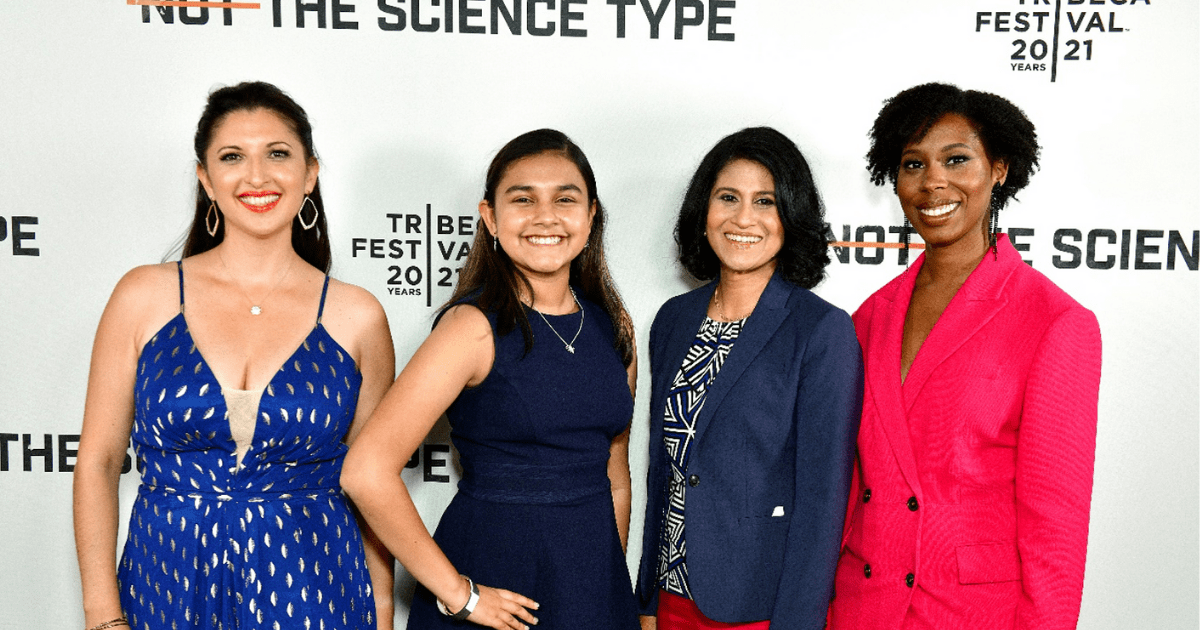
Crosspost: Interview with Dr. Martha Gilmore

Don’t let anyone tell you that you don’t belong in this field

By Nicolle Zellner via Women in Planetary Science

Martha Gilmore is the Seney Professor of Geology in the Department of Earth and Environmental Sciences at Wesleyan University, Middletown CT. A geologist who specializes in the study of planetary surfaces using geomorphic mapping and VNIR spectroscopy on Venus, Mars and Earth, Dr. Gilmore compares spectral signatures from field and laboratory work to orbital images to better interpret the signals received from remote sensing platforms. Dr. Gilmore received the Geological Society of America’s 2020 Randolph W. “Bill” and Cecile T. Bromery Award for, in part, her significant contributions to expanding diversity in the geosciences. She is a science team member of both NASA Discovery mission teams that will explore Venus and will use her expertise in morphology and spectroscopy to help us better understand the environment of Venus.


Her most-recent publications (w/ undergrad students denoted by ^) include:
Brossier J. F., Gilmore M. S., ^Toner K., ^Stein A. (2021) Distinct mineralogy and age of individual lava flows in Atla Regio, Venus derived from Magellan radar emissivity, J. Geophys. Res., 126, e2020JE006722, doi: 10.1029/2020JE006722

Resor P. G., Gilmore M. S., ^Straley B., Senske D. A., Herrick R. R. (2021) Felsic tesserae on Venus permitted by lithospheric deformation models, J. Geophys. Res., doi:10.1029/2020JE006642

Tuesday, June 22, 2021

Women of Arecibo: Dr. Nipuni Palliyaguru

Written by Nipuni Palliyaguru

I am a radio astronomer and postdoctoral researcher at Texas Tech University and a former postdoctoral researcher
at the Arecibo Observatory. This is a personal account of my experiences. The views expressed in this article are my 
own and do not reflect those of an organization.

The first time I learned to use a radio telescope was with Arecibo. It was in January 2011, when one 
of my graduate school supervisors, Dr. Dan Stinebring took me and three undergraduate students to
Puerto Rico to observe the scintillation of apulsar.  Throughout the night, I watched the pulses of
light from the pulsar appear in real-time on an oscilloscope. Since that first night and throughout my 
graduate school career, I visited Arecibo many times for various observation trips and scientific 
meetings. From summer school for students and frequent visits from scientists from across the 
globe, the observatory maintained a rich and vibrant academic culture. 

I always wanted to work at an observatory, so, I was 
thrilled when I was offered position as a postdoctoral 
scientist at Arecibo in the fall of 2017. Secretly, I 
really wanted  to be like Ellie Harroway in the movie 
“Contact” (who’s real-life protagonist, Jill Tarter, I later had the privilege of meeting at Arecibo). Living and 
working in a predominantly Spanish speaking 
community was a new experience after years of 
working in the mainland US. I experienced a way of 
doing  science in a way that was intertwined with 
culture. There was an overall familial atmosphere within the observatory. Remarkably, over seventy percent 
of the scientific staff was female, and a large majority were women of  color, just like me. Outside, Arecibo
had instilled a sense of pride in the people of Puerto 
Rico. However, it didn’t take too long for me to 
realize that things  had drastically changed from the thriving environment I had witnessed during graduate school trips. Hurricane Maria had just hit, leaving the island with no power and water. The observatory 
was also affected by some damages to the dish, reducing its efficiency significantly. The future of Arecibo was uncertain. The staff was tired of dealing with the disheartening recommendations of divesting the telescope and anxiously awaited the impending management change. Amidst this chaos, following the hurricane, the Arecibo staff worked tirelessly to get the telescope up and running. 

Leading from the middle

In the late spring of 2018, Arecibo underwent a drastic change in management that particularly 
affected the  junior scientists at the observatory. Many of the senior staff left, crippling daily 
operations and leaving the postdocs to take on many extra observatory-level responsibilities. For 
a few months, Arecibo  was defunct academically. There were no workshops, no summer schools, 
and interaction with the rest of the world was minimal. We rarely had scientists visit for observations 
or colloquia. It was hard to perform daily duties like analyzing data and writing papers because of
the uncertainty looming over us. 

In February 2019, I, along with several other postdocs, organized an “Arecibo Futures” meeting 
to bring the management, scientists, engineers, and the local community together to talk about 
a science blueprint for the observatory spanning the next decade. The Astronomy and Astrophysics
Decadal Survey, which funding agencies use to identify transformative science and set funding 
priorities for theupcoming decade, was also happening at this time. For the survey, we submitted 
several white papers highlighting the importance of Arecibo and the role of ground-based facilities 
in terms of training the next generation of astronomers, with the hope of increasing the funding 
profile of the observatory and attracting new funders.


We also identified the need to attract new users for 
the observatory and restarted the joint Arecibo-
Green Bank single dish summer schools for 
students. About 15 undergraduate students 
attended the school to learn about how to observe 
with Arecibo. Throughout this time there were
 moments of not being taken seriously and 
undermining efforts which women of color, I am 
sure, are quite accustomed to. However, I was 
fortunate to get the support of my Ph.D. supervisor, 
Dr. Maura McLaughlin, and other well-wishers for 
my research and outreach activities and other 
ventures.


Students of Puerto Rico
 
During this time, I was thinking of ways to involve undergraduate students on the island in active 
research at the observatory since I was already working closely with the University of Puerto Rico 
(UPR) Mayaguez campus on various projects. Undergraduate students from institutions on the 
island often visited the observatory for colloquia and special seminars and there was a lot of 
interestto get actively involved, but there wasn’t a direct throughline to getting involved in 
research at Arecibo. 
In May 2019, the Arecibo receiver engineer Felix
Fernandez and I visited the UPR Mayaguez campus to
talk to students about potential research projects. 
Having laid the groundwork for potential 
undergraduate research, I worked closely with 
student groups to organize a data reduction and
science communication workshop at UPR. At 
the workshop, students learned to process Arecibo
 pulsar data. The goal of the science communications workshop was to build an island-wide network of 
trained ambassadors educating various audiences 
about astrophysical concepts.
It was heartening to see the efforts by students to 
make these workshops a success and the plans they 
made for future involvement.


Final thoughts 

At the end of summer in 2019, I left Puerto Rico for a position in the mainland U.S. because I 
wanted to focus more on my research. However, for Arecibo, the funding challenges remained. 
It was devastating to watch the collapse almost two years later. Like many others in the 
astronomy community, I mourned the loss with extreme sadness. Nonetheless, something that 
continued to amaze me is the commitment and resilience of the staff throughout those 
challenging times.
 
As for me personally, I carry the burden of being a woman of color in academia. Arecibo was 
one of the first places that challenged me to step out of my academic research comfort zone 
and get a taste of what doing research in a resource-poor environment is like. In other words, 
I owe my recent growth as a professional to Arecibo.  Even though there were many challenges, 
I am glad that at Arecibo, I found a group of supportive colleagues and the opportunity to grow
as a scientist and a community advocate.

I strongly believe that scientific research should be accessible to all, especially to those who 
have been traditionally underrepresented in the sciences. Arecibo was a symbol of pride for 
Puerto Ricans and was a source of inspiration for students. With proper resources and a vision, 
it could have pioneered untapped scientific talent in Puerto Rico. Considering Arecibo’s role in 
education and outreach, providing opportunities for minority scientists, and cultural exposures 
for the next generation of scientists in the mainland U.S and Puerto Rico, the loss of the 
telescope is unquantifiable. Therefore, it is crucial that rebuilding plans are successful. I hope 
that Arecibo will soon be on its feet again to continue its invaluable service to both astronomers 
and the citizens of Puerto Rico.

-------------------------------------

Bio
Dr. Nipuni Palliyaguru is a postdoctoral researcher in the Department of Physics and Astronomy 
at Texas Tech University. Before joining Texas Tech, she worked as a postdoctoral researcher at 
the Arecibo Observatory and Texas Tech University.  She received her Ph.D. from West Virginia 
University where she was supervised by Prof. Maura McLaughlin. Dr. Palliyaguru’s research 
focuses on transient events in the radio sky such as supernovae, pulsars, and Fast Radio Bursts. 

Monday, June 21, 2021

#BlackInAstroWeek2021: Day One, June 20

#BlackInAstroWeek2021: Day One, June 20

#BlackInAstroGrandSlam, June 20, 2021 

KeShawn Ivory, an incoming PhD student at Vanderbilt University studying dark matter haloes, quickly cleared his throat and sang, in a honeyed voice, a beautiful a capella rendition of SZA's "Good Days". When the song finished, everyone erupted into cheers. "Okayyy, KeShawn's got bars!" someone praised. Even on Zoom the day after Juneteenth, the Black In Astro community was in high spirits. What followed was a day of joy, laughter, and above all, a celebration of the diversity of experiences within the Black diaspora.

Next, JoAnn C. Roberts, also known by her stage name "Paradigm," performed a stirring selection of poems from her new book, Continuum: A Collection of Poetry. Her works ran the gamut from revolutionary with detailed descriptions of complex physics concepts to healing and uplifting. The audience fell along with Roberts into a sort of rhythmic trance; when she spoke, one couldn't help but listen to the power and the lyrical cadence of her words. She'll be performing more of her incredible work on Thursday, June 24th for #BlackWholeDay during #BlackInAstroWeek

The day ended with a look into LGPHY ARCADE, a mobile app developed by India Jackson, an astrophysics PhD candidate at Georgia State University and mother to a wonderful, teenaged daughter. While working on her dissertation, she came up with the idea of developing a simulation to predict the effects of energetic particles and cosmic rays on future astronauts heading to Mars. To fund her research, Jackson learned 10 different coding languages, wrote over one hundred thousand lines of code, and founded Let's Get Physical, LLC, a software publishing company focused on creating content for the Black nerd (Blerd) community. LGPHY ARCADE, Jackson's flagship app, features games that incorporate her scientific research, love of Blerd culture, and retro video games while also supporting local Atlanta businesses. Learn more about LGPHY ARCADE at Jackson's GoFundMe page and you can download the app for both Apple and Android devices. 

Stay tuned for our ongoing coverage of #BlackInAstroWeek and head over to https://www.blackinastro.com/flyer for more details about all of the amazing events for the next week!


Saturday, June 19, 2021

Crosspost: Observing Juneteenth and Black in Astro Week


This coming week provides an opportunity to celebrate and amplify the Black experience in astronomy- and space-related fields. [BLM; ESO/B. Tafreshi (twanight.org)]

#BlackInAstro Series on Astrobites

This series, a collaboration between Astrobites and the Black In Astro community, is ongoing; you can check the the #BlackinAstro tag on the astrobites website for new posts.

Be sure to check out two of our favorite posts by our very own blogger, Katrina Miller!

  1. #BlackInAstro Unsung Heroes: Crystal Tinch by guest author Katrina Miller (16 Apr 2021)
  2. #BlackInAstro Experiences: Katrina Miller by Mia de los Reyes (30 Oct 2021)

Juneteenth #BlackInPhysics Wikipedia Edit-a-Thon

APS/Black in Physics banner that reads "Juneteenth Freedom Day Edit-a-thon Sunday June 20" and has images of the Wikipedia, APS, and Black in Physics logos.Celebrate Juneteenth Freedom Day with the American Physical Society and @BlackinPhysics by attending a Wikipedia edit-a-thon on Sunday, June 20, 12:00–3:00 p.m. ET, where we’ll be creating & editing Wikipedia pages about Black physicists. Anyone is welcome to attend. Sign up today! https://go.aps.org/2Re7iEu

#BlackInAstro Week

June 20–26 is Black in Astro Week 2021! Join the Black in Astro community in celebrating and amplifying Black experiences in astronomy- and space-related fields in a week of events, panels, and more at BlackInAstro.com and on Twitter. The schedule and themes for each day of the week are listed below; you can sign up for events and find out more at BlackInAstro.com.


To see more details on Black In Astro Week, check out AAS NOVA's post: https://aasnova.org/2021/06/18/observing-juneteenth-and-black-in-astro-week/ 


Friday, June 18, 2021

AASWomen Newsletter for June 18, 2021

AAS Committee on the Status of Women
Issue of June 18, 2021
eds: Heather Flewelling, Nicolle Zellner, Maria Patterson, Jeremy Bailey, and Alessandra Aloisi

[We hope you all are taking care of yourselves and each other. --eds.]

This week's issues:

VanguardSTEM + SeRCH Foundation
host Hot Science Summer (Item #4)
1. Crosspost: Retroactive Name Changes in Astronomical Publications
2. Women of Arecibo: Dr. Thankful Cromartie
3. Ethics and Authorship in the AAS Journals 
4. VanguardSTEM + SeRCH Foundation hosting Hot Science Summer to FUND BIPOC science projects
5. Zonta International awards promising women aerospace researchers with 2021 Amelia Earhart Fellowship
6. Google Doodle celebrates 99th birthday of Italian astrophysicist Margherita Hack
7. Katherine Johnson’s memoir charts her bold trajectory to NASA and beyond
8. A push for a shift in the value system that defines "impact" and "success"
9. Job Opportunities
10. How to Submit to the AASWomen Newsletter
11. How to Subscribe or Unsubscribe to the AASWomen Newsletter
12. Access to Past Issues of the AASWomen Newsletter

Friday, June 11, 2021

AASWomen Newsletter for June 11, 2021

AAS Committee on the Status of Women
From Item 4 (Credit: ESA/Getty Images).
AAS Committee on the Status of Women
Issue of June 11, 2021
eds: Heather Flewelling, Nicolle Zellner, Maria Patterson, Alessandra Aloisi, and Jeremy Bailin

[We hope you all are taking care of yourselves and each other. Be well! --eds.]

This week's issues:

1. CSWA Statement on Journal Name Change Policies

2. Meet the Women Keynote Speakers of the AAS 238

3. Remembering Rathnasree Nandivada, Who Brought the Stars To All of Us

4. Wanted: British women from all backgrounds who want to go to space

5. Why does biophysics attract a disproportionate number of women?

6. Locked out of the ivory tower: How universities keep women from rising to the top

7. The US must broaden onramps to the STEM workforce

8. The European Parliament supports the promotion of women in science and technology jobs

9. Researchers’ career insecurity needs attention and reform now, says international coalition

10. Review: Woman in Motion shows how Nichelle Nichols transformed NASA

11. 2021 Invitation for AAVSO Board of Directors Nominees

12. How to Submit to the AASWomen Newsletter

13. How to Subscribe or Unsubscribe to the AASWomen Newsletter

14. Access to Past Issues of the AASWomen Newsletter

An online version of this newsletter will be available at http://womeninastronomy.blogspot.com/ at 3:00 PM ET every Friday.

Saturday, June 5, 2021

CSWA Statement on Journal Name Change Policies


It has recently come to our attention that some journals may not be honoring name change requests from authors in electronic publications, including trans authors who have newly shared their identities with the scientific community. This is unnecessary and harmful in the modern era of digital publishing, DOIs, and ORCID IDs. The Committee on Publishing Ethics, an industry organization dedicated to setting best practices guides for scholarly publishing, is currently drafting guidance that member journals should explicitly allow post-publication name changes without an erratum..

As members of the American Astronomical Society (AAS) Committee on the Status of Women in Astronomy (CSWA), we are charged with recommending to the AAS Board of Trustees measures to improve the status of women in astronomy and encourage their entry and retention in our field. Our goal is to build an inclusive and self-sustaining community that supports gender equity and the success of women in astronomy (as defined in our 2020 Strategic Plan). The CSWA interprets “women” to mean people who identify as female, including trans women, genderqueer women, and nonbinary people who are significantly female-identified, and includes women with multiple, intersectional identities, including race, ethnicity, class, disability, and more.

The ability to change names is a fundamental right of authors. In order to remove barriers and build an inclusive community, the CSWA requests that journals allow authors to change their names. The AAS recently adopted a new policy allowing authors to change their names on any previously published research in all the AAS publications. This new policy has been well received by the community, and we would be glad to provide additional information to any journal interested in implementing such changes. Please contact us at cswa_at_lists.aas.org.

Friday, June 4, 2021

AASWomen Newsletter for June 04, 2021

AAS Committee on the Status of Women AAS Committee on the Status of Women
Issue of June 04, 2021
eds: Heather Flewelling, Nicolle Zellner, Maria Patterson, Alessandra Aloisi, and Jeremy Bailin

[We hope you all are taking care of yourselves and each other. Be well! --eds.]

This week's issues:

1. CSWA Early Career Panel at the 238th AAS Meeting

2. How physics and performance shaped one scholar's work and identity

3. Shaw Prize in Astronomy for 2021 awarded to Victoria Kaspi and Chryssa Kouveliotou

4. Former Ohio State astronomy professor stripped of emeritus title due to sexual harassment

5. AAAS makes science relatable through diverse efforts

6. DPS Professional Development June Virtual Workshop – Postdoc Opportunities

7. Naomi Osaka and the Power of ‘Nope’

8. Let’s Talk about Sexual Orientation and Gender Identity in STEM

9. The Myth of Diversity and Inclusion in Science

10. Imposter Intuition: Why we need to stop gaslighting minority physics students

11. Connecticut Science Center Petit Family Foundation Women in Science Leadership Award Nominations

12. Australia STEM Equity Monitor Shows Slight Improvement in Women Representation

13. Sending science majors into elementary schools helps Latino and Black students realize scientists can look like them

14. Just because your early career was hell doesn't mean others' has to be

15. Job Opportunities

16. How to Submit to the AASWOMEN newsletter

17. How to Subscribe or Unsubscribe to the AASWOMEN newsletter

18. Access to Past Issues

An online version of this newsletter will be available at

http://womeninastronomy.blogspot.com/ at 3:00 PM ET every Friday.