Friday, June 12, 2026

Don't miss our CSWA Cohorts Splinter Session at AAS 248

This spring the Committee on the Status of Women launched our CSWA Cohorts to foster networking and support among our members. Join us at AAS 248 for our Splinter Session: CSWA Cohorts - Accelerating Networking in Astronomy. 
Session information:

Monday, June 15, 2026 | 2:00 PM PT - 4:00 PM PT

Session Title
CSWA Cohorts - Accelerating Networking in Astronomy
Session Type
Splinter
Building/Room
Pasadena Convention Center - Conference Center, 104
Summary
The AAS's Committee on the Status of Women in Astronomy invites members to attend this session on its ongoing CSWA Cohorts program. Drawing inspiration from cohort model peer groups, this networking initiative aims to connect people within and across career stages in astronomy to solve problems and provide support to each other in challenging times and situations. We will report on progress from the 70+ member pilot cohorts, discuss ways to provide deeper connections between members and adjust strategy for virtual networking, and provide opportunities for cohorts to bring in new members and meet in person at the conference. Event is open to all AAS attendees, regardless of gender, status, or background.

Thursday, June 4, 2026

AAS 248: Add your story in astronomy to our collective history with an Oral History Interview

AAS 248 begins June 14, 2026 in Pasadena, California. The 248th meeting of the American Astronomical Society runs through June 18 and promises a jampacked schedule of speakers, splinter sessions, and more. 

This year, the AAS Oral History Project invites everyone to tell their story within astronomy by scheduling an oral interview at the conference. There are no requirements to fulfill to be interviewed. Everyone in the astronomy community is welcome, from undergraduates to emeritus, researchers, technicians, and family members. Add your story to the astronomy community.

Image: AAS/HAD


Schedule your oral history interview at AAS 248 https://tinyurl.com/oralhistaas248

Make your story part of our collective history at AAS 248!

Registration for AAS 248 is still open through June 12 at AAS.org.

Full information on the Oral History Inteviews Splinter Session is included below.

Daily: Monday-Wednesday | 9:00 AM PT - 5:00 PM PT
Session Title
Oral History Interviews
Session Type
Splinter
Building/Room
Pasadena Convention Center - Conference Center, 215
Summary
Everyone has a story to tell, and we want to hear yours. The AAS Oral History Project, operated by the Historical Astronomy Division (HAD), invites you to participate in preserving the human side of astronomical science during this meeting, especially as our community is experiencing dramatic shifts in policy and funding.

Since 2015, our project has been collecting the personal narratives that reveal the climates and communities that shape our science. Partially funded by the American Institute of Physics Niels Bohr Library and the AAS, this initiative builds on a successful 2013 pilot. Jarita Holbrook is the principal investigator.

Your interview will last 1.5 to 2 hours and cover your educational journey, career strategies, work-life balance, collaborations, leadership experiences, and mentoring relationships. We explore both personal milestones and current community issues, including diversity, tenure challenges, collaborative research recognition, project cancelations, and professional uncertainties. Interviews conclude with your advice for the next generation of scientists.

Our project is uniquely inclusive—everyone in the astronomical science community is welcome, from undergraduates to emeritus faculty, technicians to researchers, family members to STEM support staff.
Your experiences will inform future scientists and help preserve the cultural context of how we conduct science. These stories become part of the historical record, with several interviews already archived in the AIP collection, ensuring that future generations understand not just what changed in our field, but what it felt like to experience those changes.

Please consider dedicating time from your busy conference schedule to contribute your voice to this important historical record. Your story matters.

Schedule your interview: https://tinyurl.com/oralhistaas248
Questions: Contact: wgpah-chair@aas.org
We look forward to hearing your story

Thursday, May 28, 2026

Crosspost: The Bra-and-Girdle Maker That Fashioned the Impossible for NASA

Today's crosspost is by Nicholas de Monchaux, author of "Spacesuit: Fashioning Apollo" and originally posted to the MIT Press Reader on April 9. 

The Bra-and-Girdle Maker That Fashioned the Impossible for NASA

By Nicholas de Monchaux

Apollo 8 crew is photographed posing on a Kennedy Space Center (KSC) simulator in their space suits. From left to right are: James A. Lovell Jr., William A. Anders, and Frank Borman.
Image Credit: NASA

In 1966, when seamstresses at the International Latex Corporation arrived at its new Apollo Suit shopfloor in Frederica, Delaware, they were essentially “taught to sew again from scratch.” And for good reason: Compared to the company’s bras and girdles, the craftsmanship needed to fashion a spacesuit was, in every sense, out of this world.

At the same time that ILC’s seamstresses were being asked to meet unprecedented precision standards, they were denied traditional tools, such as fastening pins used to maintain sewing accuracy. To a garment whose reliability depended on an impermeable rubber bladder, mechanical aids like pins were an inherently risky proposition.

The most valued seamstresses were those like Roberta Pilkenton, who could sew together the outermost layer of the Apollo suit, the Thermal Micrometeoroid Garment (TMG). Pilkenton crafted the TMG’s 17 concentric layers, with hundreds of yards of seams, without a single tool except her own guiding fingers.

Read more at


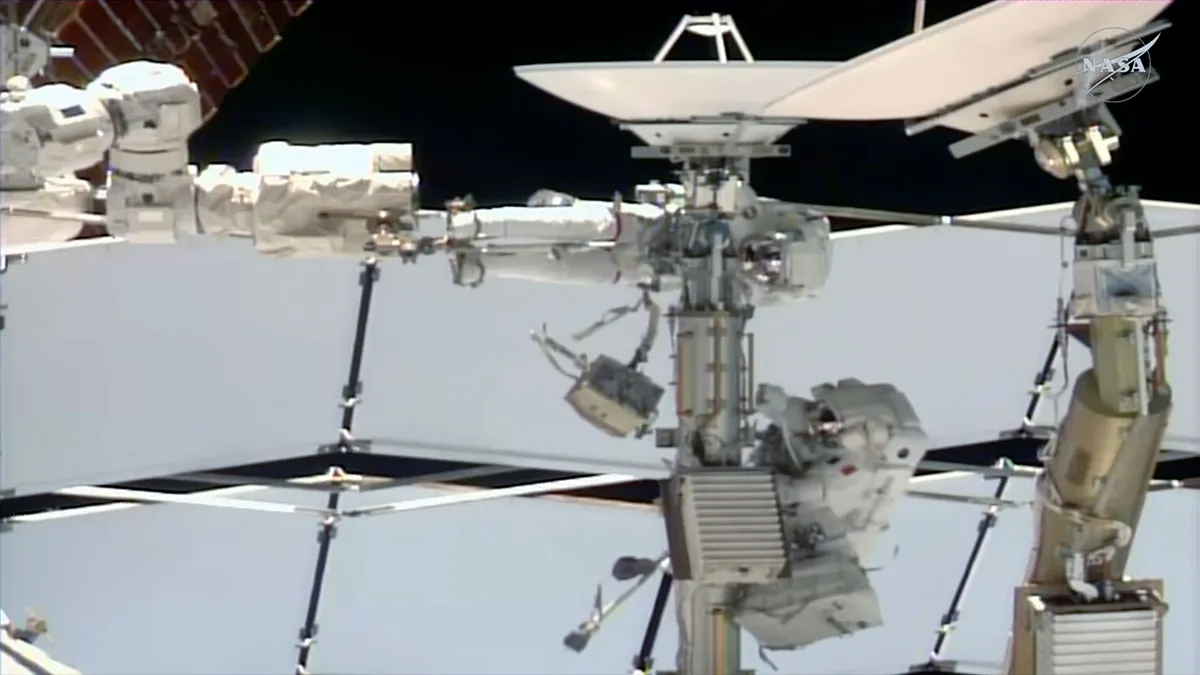
Read what Lara Kearney has to say about NASA's Artemis spacesuit, built by Axiom Space, at

Friday, May 22, 2026

AASWomen Newsletter for May 22, 2026

AAS Committee on the Status of Women
Issue of May 22, 2026
eds: Jeremy Bailin, Sethanne Howard, Ferah Munshi, Stella Kafka, and Ben Keller

[We hope you all are taking care of yourselves and each other. --eds.]

This week's issues:

1. Call for Applications: Education Mini-Grant Proposals Due 9 June
2. AIP Offers New Resources for International Physicists and Astronomers
3. AAS 248 Special Session: What Astronomers Can Do About Climate Change: Infrastructure, Education, and Communication
4. Crosspost: A step-by-step guide to nailing your tenure promotion package
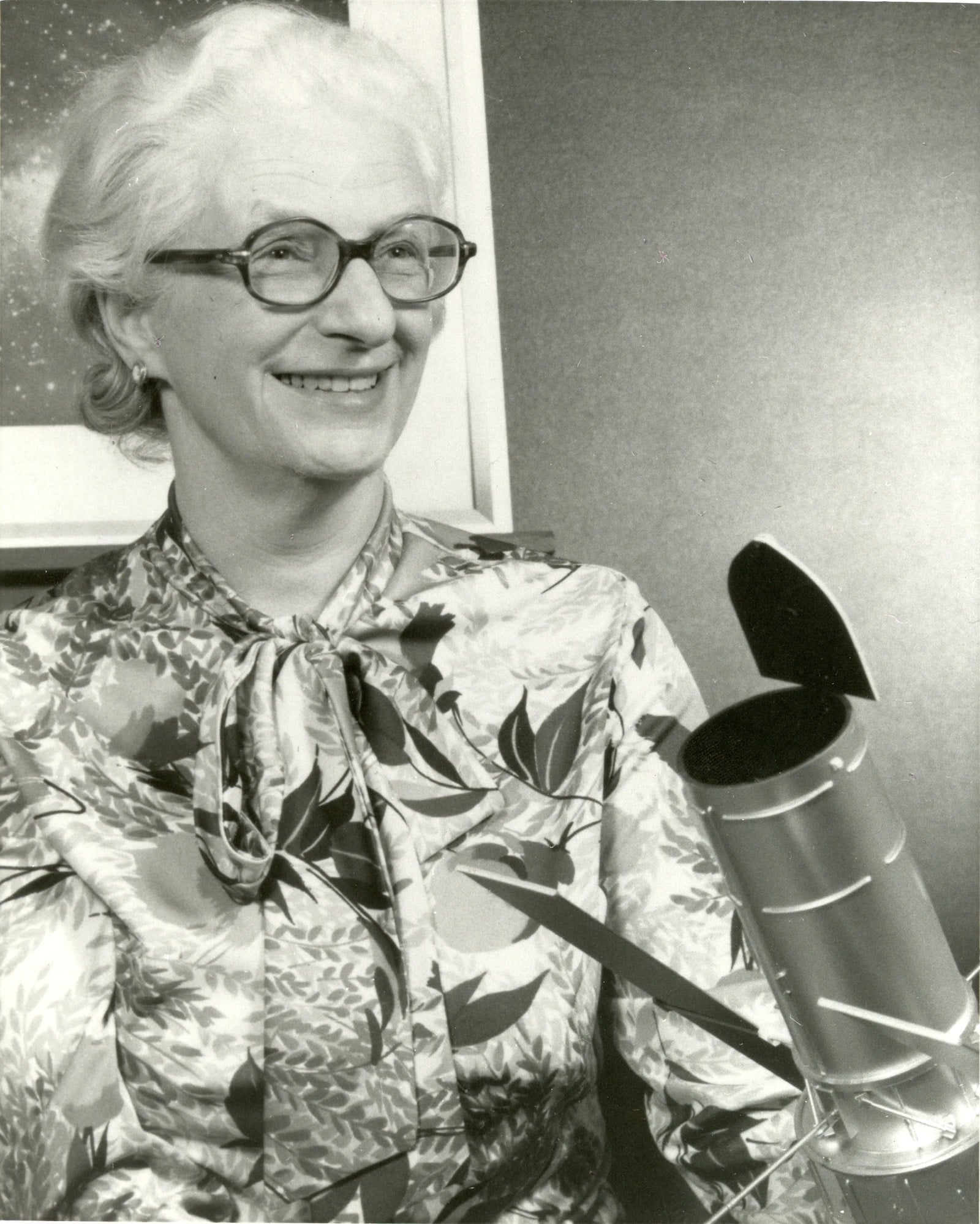
5. Today in the history of astronomy: The birth of Nancy Grace Roman
6. Annual report of the IAU Women in Astronomy Working Group
7. Call for volunteers from the SEA-Change in Physics & Astronomy Committee
8. Why I Did Not Appreciate My Ph.D. Adviser—Until I Became a PI
9. 2026 Caroline Herschel Medal presented to Professor Heike Rauer
10. 2026 Call for Proposals from the Women and Girls in Astronomy Program
11. Woman Astronomers Day 2026
12. How to Submit to the AASWOMEN newsletter
13. How to Subscribe or Unsubscribe to the AASWOMEN newsletter
14. Access to Past Issues

An online version of this newsletter will be available at http://womeninastronomy.blogspot.com/ at 3:00 PM ET every Friday.

Career Interview Series: How Stories and Stars Led Lauren Albin to Astronomy

The AAS Committee on the Status of Women in Astronomy has compiled dozens of interviews highlighting the diversity of career trajectories available to astronomers, planetary scientists, and enthusiasts. These interviews share advice and lessons learned from individuals who have navigated both traditional and non-traditional paths in the field.

As a child, Lauren Albin was immersed in star lore. Her father worked at a planetarium as a planetary geologist, and she spent many days inside the dome gazing at the night sky. Albin got to know the staff well, too. She hung out with Judy, the technician, and observed the staff, absorbing how these different people came together to tell stories about the stars.


Lauren and her father.

Her father also included Lauren in his hobbies and interests, from building telescopes in the garage to rock collecting and meteorite hunting. At the same time, Lauren’s mother taught language arts in the local school system, and she shared her love of reading and literature with her daughter. These two loves—story and stars—drew Albin into poetry writing. She pursued English literature and creative writing at Agnes Scott College. 


“I just loved the complexity of poetry and talking about it, reading it. I was just eating, breathing, reading poetry the whole time,” Albin said of her experience. Once she graduated, she pursued an MFA in poetry from Arizona State University, which happened to be her father’s alma mater for his master's in planetary geology. 


Albin became interested in Korean poetry, in particular, and decided to learn Korean to understand the poems in their original language. This led to translation classes in addition to poetry. “Korean poetry is interesting, too, because there are always stars or, you know, astronomy mentioned in it. So I enjoyed that. I like astronomical poetry,” Albin said.


The astronomical Korean poetry is what began to lead Albin back to her love for the stars. She returned to Agnes Scott College to teach creative writing, but also decided to get a master’s degree in space studies with an emphasis in astronomy remotely from American Public University. Her father was running the program and pitched the idea, asking for Albin’s feedback as she worked through the degree. Albin did so during the pandemic. The coursework focused on space flight and crewed missions to Mars, and Albin discovered an interest in women’s health in space. 


“I realized there's been so few women astronauts that we don't fully know how microgravity affects the female body. And I also am a big proponent of sending a full woman crew to Mars.”


With her master’s degree, Albin could teach astronomy and a spot opened up at the Fernbank Science Center in Druid Hills, Georgia, where her father had actually worked when Albin was a child. Then she applied to be the planetarium director at Young Harris College in North Georgia and landed the job. Now Albin teaches astronomy classes and directs the planetarium and observatory. While she enjoys the position, Albin is the only person in the astronomy department. 


Albin at work at the O. Wayne Rollins Planetarium
“I feel like I’m the technician, I’m maintenance, I’m director and creative director. All of these things fall under my purview. I’ve been trying to build a big network outside of my job of people that would have support and help because I'm also in a really rural area.” 


One of the ways Albin has connected is through ASTRO ACCEL Global Network of Networks, which focuses on connecting practitioners of astronomy education around the world. Albin has worked on a project through Astro Accel’s seed funding measuring joy, wonder, and awe in astronomy for over two years now. She created a survey and disseminated it, and the project continues to grow. 


Another project involves developing astronomy education curriculum and exploring partnerships with other observatories. “It's been really cool to see these partnerships all of a sudden sort of crop up that hook my institution with other institutions around not just the US but around the globe. So that's been really life changing for me. And through Astro Accel, I also met a lot of cool people,” Albin said. 


“It just really expanded my world and gave me a support system beyond what I have at home. I feel like that's been the way that I've been surviving, just meeting people and finding networks outside of my own, and that's made me more confident in talking to other people. I think I'm kind of a shy person. That's why I like the planetarium. I'm like a voice in the dark, like no one's looking at me, but it's sort of made it more comfortable to make connections for me.” Albin has also attended a couple of AAS conferences and found connecting with other planetarium directors there a valuable experience.


When Albin became more interested in a career in astronomy, she didn’t leave poetry completely behind. “It feels, the longer that I'm in the astronomy field…like those two worlds suddenly began to collide. When I first switched fields, I was kind of having an existential crisis..Like, I feel like I had two different phases of my life, but now I see more and more how storytelling is a part of the reason why I wanted to go into astronomy.”


Lauren Albin is the director of the O. Wayne Rollins Planetarium and Observatory at Young Harris College in Young Harris, Georgia.


Thursday, May 14, 2026

Crosspost: A step-by-step guide to nailing your tenure promotion package

Image by Tumisu at Pixabay
Today's crosspost is from Nature.com, originally published April 20, 2026, and written by Amanda Heidt. 

Heidt writes:

To convince their peers that they deserve a tenured position—often viewed as the pinnacle of the academic career path—academics must gather enough evidence of their productivity in research, teaching and service to their institution and colleagues. The process can be fraught and stressful and is often unclear.

Read "A step-by-step guide to nailing your tenure promotion package" at 

Thursday, May 7, 2026

Crosspost: Assessing the status of women in physics in the 1970s

Today's crosspost is by Anna Doel from the American Institute of Physics, posted on aip.org on May 1, 2026.

Vera Kistiakowsky, at right, at a public hearing on nuclear weapons and disarmament organized by the World Council of Churches in 1981. 

Rob Bogaerts / Anefo, National Archives of the Netherlands. CC-BY-SA.


In August 1971, the American Physical Society issued a call for “names, addresses, comments, and recommendations” that was published in Physics Today, Spectrum, and Science. The goal was to begin to collect data for the newly formed Committee on Women in Physics. Responses to this questionnaire became the basis for the committee’s work to address challenges women physicists experienced at all stages of career, from first-year college students to well-established researchers.

The latter group knew a lot about the then-status of women in American science. They were of the generation whose career options, if any, were largely limited to three main categories: choose the profession, choose a scientist partner, or luck into being born to the right family.

Read Doel's full article "Assessing the status of women in physics in the 1970s" at


The AAS convened a Special Committee in 1972 to review the status of women in astronomy. This committee published a report in 1973 recommending the formation of the Committee on the Status of Women in Astronomy, which was formalized in 1979. Read about the history of the CSWA at

Thursday, April 30, 2026

P/A SEA Change in Motion: From Early Vision to Lasting Impact

P/A SEA Change in Motion: From Early Vision to Lasting Impact
(by Stella Kafka)


The Physics and Astronomy SEA Change program, led by the American Association of Physics Teachers in collaboration with the American Association for the Advancement of Science, was launched to address a persistent, field-wide challenge: how to move beyond isolated initiatives and enable sustained, systemic transformation across academic departments.
Building on the broader SEA Change framework developed by AAAS, the program was intentionally adapted for Physics and Astronomy, recognizing the department as the critical unit of change, where culture, policies, and daily experiences intersect and ultimately shape outcomes. Since welcoming its first cohort in 2021, the program has matured into a structured, data-informed model that guides departments through rigorous self-assessment, root-cause analysis, and multi-year action planning. This work is reinforced by peer review and a growing community of practice committed to continuous improvement. The impact is already evident. As participation continues to expand, the framework has gained national recognition as a standard for accountability and progress, and, most importantly, departments are beginning to see meaningful shifts in culture and practice that strengthen both student and faculty experiences.
I have had the privilege of contributing to this effort since 2020, when I joined the committee as the American Astronomical Society’s representative. We navigated the complexities of launching and piloting the program amid the unprecedented challenges of the COVID era. In close partnership with a dedicated committee representing ten scientific societies, we defined the program’s vision, refined its structure, and positioned it for long-term sustainability.
In today’s conversation, I invite Alexis Knaub, Director of P/A SEA Change, to reflect on those early days, what it took to move from concept to implementation, and to share insights into how the program has evolved, the impact it is having today, and where it is headed next.
Alexis Knaub (right) at AAS 245. Photo: 
© CorporateEventImages/Todd Buchanan 2025
What was the original gap or need in the physics and astronomy community that led to the creation of SEA Change, and how did you translate that into a programmatic model at the departmental level?

The program started because of a need to do continuous systems change work in physics/astronomy. Many programs are fantastic but only concentrate on a particular population (e.g., graduate students). We have had decades of programs that are making progress to improve the discipline—otherwise, many of us wouldn’t have our careers—AND we can do better to leverage our work.


AAAS started SEA Change at the institutional level. Institutions govern a lot of policies that do impact everyone at the institutions. From what I know (this was before my time), Shirley Malcom from AAAS approached Beth Cunningham (CEO of AAPT) regarding starting the disciplinary equivalent for physics and astronomy. Departments and their equivalent are where people in postsecondary education experience much of the discipline. Faculty make decisions on how courses are taught (and what’s in them), the social interactions among all people, etc. Our program resembles much of the AAAS program. The participants in the cohort are looking at policies, practices, culture, climate, and outcomes. The big difference is the smaller grain size and the opportunities/challenges that accompany that.


I do want to make a quick correction—with our fifth cohort, we have branched out to piloting with some community college physics programs! We were initially approached by one and have a few others who have joined our 5th cohort, broadening our focus. We are working to modify the program a bit for this context, and we have some terrific volunteers who have taught or are teaching physics in community colleges.
Since the first cohort launched in 2021, what are the most important lessons learned about what works, and what is harder than expected, when supporting departments through systemic change?
We have weathered A LOT and continue to do weather the storms and seasons of doing this work. I am unsure we learned this lesson, but the work has reinforced the importance of broad coalitions. For the former, given the diversity of subfields, having 11 different professional societies has been important to ensure the program maintains its quality and considering various contexts. P/A SEA Change is working on ensuring our shared future is better than our current realities of unnecessary barriers that impede success; the program cannot fulfill its mission without the true partnership of these professional societies.

Our broad coalition of professional societies is important to different audiences. I am not an astronomer. I’ve been grateful to the AAS’ support of this program, along with our participants who have helped with recruiting. 

The hardest aspect has been the cuts to science funding, the attacks on inclusivity and equity work, and the uncertainty of everything. There is a lot to keep track of and understand. The SEA Change family of programs, including ours, has been law-attentive from the beginning. We have worked and continue to work with departments where there are a lot of restrictions, either legally or through chilled climates. We continue to seek guidance and support the participants as they care deeply about doing better. 

What has eased a lot of these challenges is so many people have shown up to support this work. Our NSF funding was terminated last year. I’m grateful to AAPT for financially supporting my salary through last year and now AIP and the Luce Foundation for providing financial support this year. Our volunteers—representatives for the collaborating societies, subcommittee members, and reviewers—continued the work. Of course, our participating departments kept doing the work. All of these different entities have been vital to supporting departments through systemic change in this program. 

The work was hard as is, and it has been even more challenging than I expected. But showing up and working together, in different but important roles, has allowed us to continue.

From your perspective, where has SEA Change delivered the most meaningful value to participating departments, whether in culture, student outcomes, or faculty experience?

I think of SEA Change as addressing the root causes that have long hindered STEMM. For us, we’re focused on addressing the physics and astronomy culture. Several things come to mind:

  • At the programmatic level, the number of professional societies working together symbolizes how each one has a role in shaping our disciplines. Science is a group effort and so is changing our cultures. Having these societies work together is important to the departments, whose faculty, students, and staff often see at least one of these societies as their professional home and an influence on what their department should be doing.
  • The program has centered the contextual elements of the department and seeks to address the systemic issues at play; the individual details in the context—the people, the structures, etc.—matter when trying to enact change. SEA Change is flexible enough to meet the departments and community college physics programs where they are, honoring their realities while ensuring they are addressing the issue through the reflective emphasis on the SEA Change process. The reflective process prioritizes better understanding why things are the way they are, realizing what can and cannot be done at this time, etc. While reflection is non-trivial, this kind of work provides a better foundation than applying a generic approach that may not be applicable to one’s current context.
  • The focus on students, faculty, and staff, rather than just one population, allows for deeper understanding of how each population can impact the others. Departments are complex systems, and treating them as such can yield creative solutions.
  • Lastly, we aim to have a supportive environment. Although the program does allow for programs and departments to receive recognition (Bronze, Silver, or Gold), we are not limited in the number of awards. Our participants are learning from one another on how to address issues and providing advice and support.
The program emphasizes data-informed self-assessment and 5-year action plans. How are you thinking about success over time, both at the departmental level and across the broader physics and astronomy ecosystem?
At the departmental level, seeing individuals have more positive experiences with the departments or programs. Because change is a rather slow process, the number of individuals in physics or astronomy likely will not go up quickly. However, we can work to ensure that everyone has a positive experience. 

Across the broader physics and astronomy ecosystem, having departments and programs in all sorts of contexts dedicate their time to continual assessment and improvement would be our success metric. There are always ways to do better, and what works today may not work a few years from now. Success would be seeing the adoption/adaption of practices that work and that the data demonstrate better experiences. Harmful policies and practices are eliminated, and we see the climate and culture being supportive. Similar to departments, the demographics may not change fast, but the conditions that allow for changes to demographics can be addressed relatively quickly.

Looking ahead, what is your vision for the next phase of SEA Change, particularly in terms of scaling impact, deepening engagement across institutions, or evolving the recognition framework
The long term vision is that whenever anyone encounters a physics or astronomy space, they have a great experience. For those who pursue careers in physics or astronomy, we want to ensure people have positive experiences no matter what career level, subfield, or work environment. 


Part of this is considering new-to-us contexts. Physics and astronomy learning happens in lots of places, which in turn impacts the discipline; in particular, we are considering national labs and research centers. 


We are in the midst of creating Silver criteria, which will require deeper engagement from participating departments and programs. We’ll do something similar when we start working on Gold criteria. I anticipate the Silver and Gold awardees will be working more expansively across the ecosystem.


Bio: Alexis Knaub earned her doctorate in physics education at Boston University. Her research and evaluation spans sustained change efforts in postsecondary STEMM education, inclusivity and equity, and culture/climate of STEMM disciplines. She frequently volunteers in a variety of professional contexts. She currently is the Education Officer for the National Society of Hispanic Physicists (NSHP).

Thursday, April 23, 2026

Crosspost: 14 Things Our PhD Supervisors Got Right and Why It Mattered


Today's crosspost is the fifth in a series from Nature's 2025 PhD survey. The article presents the positive support mentors provided their PhD students. 

Image from This is Engineering at Pixabay.com

14 Things Our PhD Supervisors Got Right and Why It Mattered


by Linda Nordling

When someone talks about doing a PhD, the stories that surface are usually about what went wrong: the overbearing adviser, the chaotic laboratory experiments, the loneliness and the stress. But the experience is rarely only that. Amid challenges such as funding uncertainty, competition for positions, pressure to publish and disruptions caused by global conflicts and crises, many supervisors quietly do things that change a student’s trajectory for the better.

Thursday, April 16, 2026

Career Interview Series: Meredith Rawls, Researcher with Vera C. Rubin Observatory

The AAS Committee on the Status of Women in Astronomy has compiled dozens of interviews highlighting the diversity of career trajectories available to astronomers, planetary scientists, and enthusiasts. These interviews share advice and lessons learned from individuals who have navigated both traditional and non-traditional paths in the field.

Meredith Rawls grew up under the dark skies of Eastern Washington, where she loved to stargaze as a child. She thought her state could do more to protect the night from light pollution, though, and wanted to do something about it. As a Girl Scout, she focused her project for the Girl Scout Gold Award on diminishing light pollution at her local summer camp. Through fundraising, she was able to purchase shields to install on the street lights closest to the camp, allowing campers to have a better view of the night sky.

Photo: Anita Nowacka
Rawls carried her love of the night sky with her when she attended Harvey Mudd College. She enjoyed many STEM subjects, but she knew she had to narrow down to one major. At the time, Harvey Mudd offered six choices: math, computer science, physics, biology, chemistry, and engineering.
 
“I liked math more as a means than as an end in itself….Chemistry kind of drove me nuts…And then computer science felt similar to math to me.” That left biology, physics and engineering.  “Honestly, if biology hadn't been quite so chemistry forward in the beginning, I might have gone biology, but it was a lot of chemistry, and I don't like chemistry that much.” Rawls had a choice between physics and engineering, and she found engineering more demanding on her time, and she wanted to take some classes outside of STEM. “One of Mudd’s things is being an interdisciplinary world person, which I think is amazing and great. All colleges should do that to some degree, if possible.” So Rawls chose physics as her major so she could have time to also pursue other interests, music in particular. 
Then she proceeded to nearly fail her first physics class. 
I had an exceptional crisis—The bad freshman year, second semester, you know. I squeaked by with a D in physics…I don’t know what it is, but any kind of test environment is just challenging… If I hadn't passed that class, then I wouldn't have been able to major in physics. And I don't know what I would have done with my life, but it wouldn't be this. 
Rawls did manage to pass, and then she realized astronomy is like a subset of physics, and it was a subject she had always enjoyed. She studied physics with a focus on astronomy, and soon realized she wanted to continue to study in the field, but first she needed to pass another test, the physics GRE. Rawls struggled again with the test environment and had to settle for a score that got her waitlisted at several schools. While other friends made plans around her during their senior year at Harvey Mudd, Rawls had to admit she was waitlisted and wasn’t sure what her future held. 
So she ran away to summer camp—the same camp she had attended as a child and raised money to install light pollution shields on the street lamps. Rawls had also purchased a telescope for the camp with some leftover funds from her Girl Scout project. While working at the camp she loved so much, where she could simply look up and see the Milky Way each night, she knew she had to figure out a way for astronomy to be in her life, even if she didn’t get into grad school.
In July, Rawls got a call from San Diego State University. They had an opening. She took it and did her master’s in two years. When it was time to apply for a PhD program, she faced the same challenge as before. Her GRE score was too low to earn a spot with being waitlisted. This time, though, she didn’t have to wait until July. By April, New Mexico State offered Rawls a spot in their program and she headed south. As Rawls finished up her PhD, she and her husband were juggling academic life with his engineering career. They both wanted to return to the Pacific Northwest, and he found a job in Portland. Rawls actually finished her last year of the program remotely. She describes how difficult it was to manage the transitions from each program as a married couple, where her husband often had to stay behind to finish work while she moved to the next location. “I give him so much credit for being willing to be dragged around and through all of this. I don't know how I would have done it if he'd also been in academia.”
Rawls applied to several different postdoc positions close enough to Portland to make it work. She was offered a three-year postdoc supporting the upcoming Vera C. Rubin Observatory at the University of Washington. Rawls finished the postdoc, while her husband made one more move to Seattle. She explored the idea of becoming a research scientist at UW and decided to apply and was accepted. 
Rawls wears two hats as a research scientist at Rubin Observatory. “One hat is data validation and verification, so making sure that the data that we're getting off the telescope is basically correct and not full of trash, that we don't have bugs in our processing algorithms so when we say there's a variable source here, it's actually a variable source.” 
Initially, Rawls was helping build the software to produce data sets from Rubin. A second part of her job emerged from a growing problem in astronomy — satellite constellation mitigation. “There’s this huge increase of Starlink and so many others… like now a million orbital data centers like, what are we doing? This has been a huge change in the last six, seven years, and just completely a fundamental change in Earth orbital environment that's obviously directly affecting ground based and low Earth orbit based astronomy.” 
In 2022, Rawls and some of her colleagues formed SatHub, within the International Astronomical Union, to analyze the problem and find solutions for the astronomy community and beyond. This venture is taking up more of Rawls’ time as the use of small sats increases. “It's a constant balance of remembering…Rubin is the thing that anchors my job, but then, in reality, there’s the chaos of new stuff interfering with astronomy.”
One of the challenges Rawls has faced is the fact that being a research scientist outside of academia has made her feel a little invisible. “Sometimes I feel like I'm not sufficiently legitimate career wise to be invited to certain tables, but I have just as much experience in certain areas, and more in some cases, than some faculty that I work with. And a few years ago, it started being weird to me that people who had gotten their PhD after me were getting faculty jobs…Now I've kind of made peace with that. And I'm fine not being faculty, because I'm fine not facing tenure and moving around more. I love living in Seattle. I'm very glad to be here. I have something close to my dream job.” 
While Rawls was on the path to Rubin, she also started a family. She had her first child when she was a postdoc, and her second as a research scientist. While trying to finish school and start her career, she agonized over the best time to have children, like many in the field. “There’s no good time. That became apparent. I’m glad I didn’t have them in grad school because that would have made my PhD six years long. The best advice I have came from the department head of UW. She told me, ‘Careers are long, and being a new parent is short…take the maximum leave available to you. Your career will be here when you come back.’ That’s not true for everybody. That’s a privilege in and of itself, but that was the gist of it.” 
Photo: Courtesy of Meredith Rawls
Rawls also feels fortunate to be able to have a hybrid work schedule that puts her at Rubin a couple days a week, making it easier to be available as a parent, although she didn’t have this arrangement with her first child. It wasn’t until the Covid-19 pandemic forced the staff into remote work that she was able to work remotely at first, and then agree to the hybrid arrangement. She’s also found that having other parents working at Rubin has created a more supportive environment. Rawls also admits that having a partner with a successful engineering career and living close to her parents has made childcare much easier for her research career. “If you have the opportunity to live near in-laws or grandparents who you get along with and trust…do that,” she says with a laugh. 

Meredith Rawls is a research scientist at Vera C. Rubin Observatory working on the Legacy Survey of Space and Time (LSST) Data Management group to develop software for astronomical images. She also devotes time to SatHub-IAU to bring together the astronomical and wider community to increase and disseminate scientific understanding of the impacts of satellite constellations on astronomy, identify ways they can be mitigated, and publicly share expertise and tools that enable this.