Issue of September 4, 2026
eds: Jeremy Bailin, Ferah Munshi, Stella Kafka, and Ben Keller
[We hope you all are taking care of yourselves and each other. --eds.]
This week's issues:
1. Meet the Women Behind the Nancy Grace Roman Telescope
2. Crosspost: Stemming the leaky pipeline-completing a PhD with a hidden disability
3. Many articles about Nancy Grace Roman
4. History: The ERA controversy at the American Astronomical Society
5. NASA's Roman Space Telescope is just one of a few missions named after real-life women
6. NSF Forward Community Input Form
7. Only 19% Make It: The Hidden Barriers Women Face in Science Today
8. Job Opportunities
9. How to Submit to the AASWOMEN newsletter
10. How to Subscribe or Unsubscribe to the AASWOMEN newsletter
11. Access to Past Issues
An online version of this newsletter will be available at http://womeninastronomy.blogspot.com/ at 3:00 PM ET every Friday.
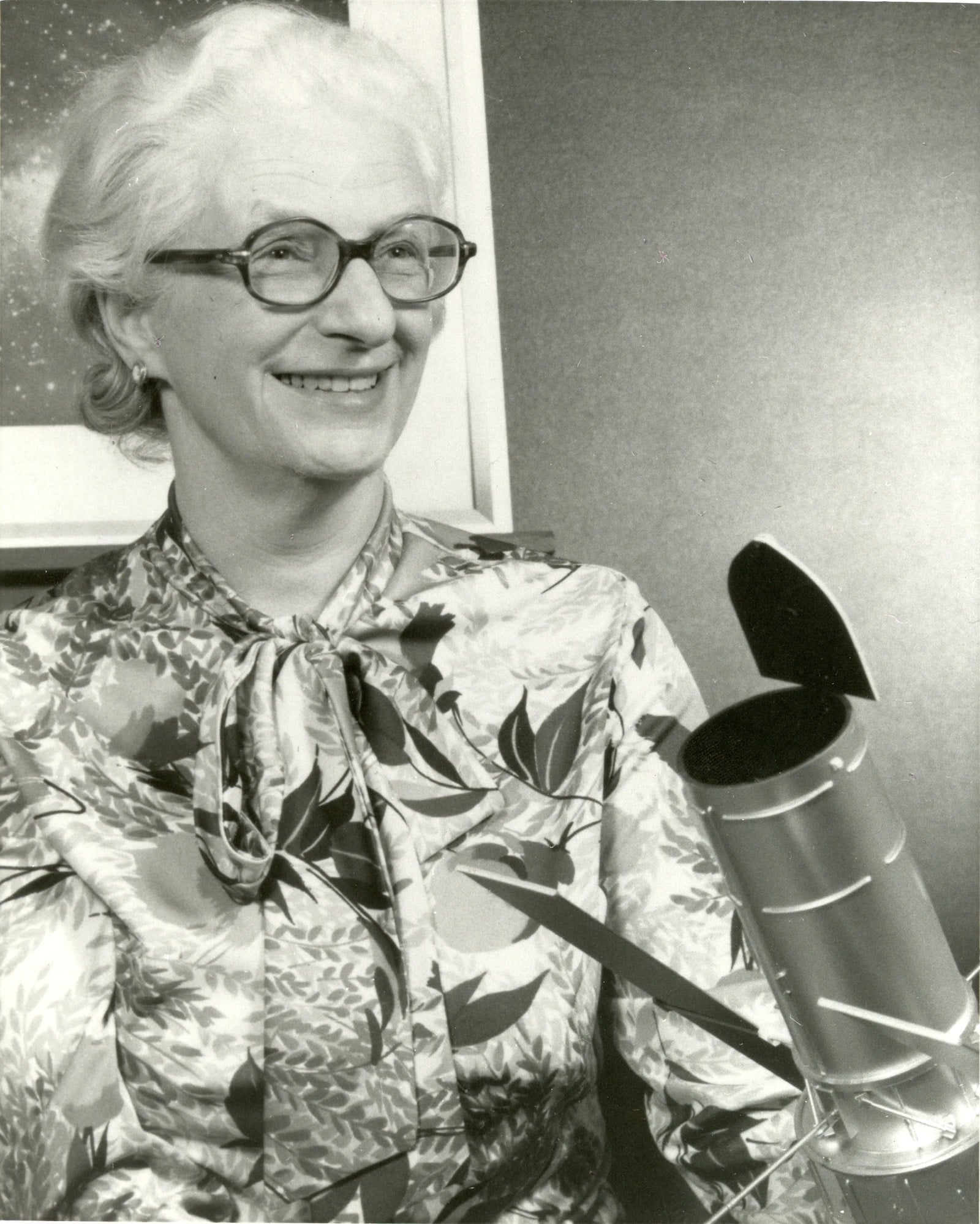
This week the Nancy Grace Roman Telescope launched perfectly and is now on its journey to Lagrange Point 2 (L2). A million miles from Earth, the telescope will begin its mission to map the universe in a wide-angle, infrared view. Named for Nancy Grace Roman, NASA's first chief of astronomy and first woman executive, the telescope celebrates one of the most famous female astronomers to date. As part of that legacy, many of those involved in building and operating Roman are women.
Read more at
https://womeninastronomy.blogspot.com/2026/09/meet-women-behind-nancy-grace-roman.html
Today's crosspost from Lancaster University spotlights the challenges of completing a PhD with a hidden disability in an academic culture of constant productivity.
Read more at
https://womeninastronomy.blogspot.com/2026/08/crosspost-stemming-leaky-pipeline.html
In celebration of the successful launch of the Nancy Grace Roman Space Telescope, there have been a multitude of articles published this week about Roman the person, her life, and her legacy. We have collected many great ones here, each of which brings up something interesting and unique.
https://phys.org/news/2026-08-nasa-telescope-honors-nancy-grace.html
https://www.jezebel.com/nancy-grace-roman-telescope
https://abcnews.com/US/told-women-scientists-now-nasa-space-telescope-bears/story?id=135971086
https://spacedaily.com/t-nancy-grace-roman-first-chief-astronomer-mother-hubble/
By Amelie Heying, AIP
On a morning in January 1978, in Austin, Texas, American Astronomical Society President Margaret Burbidge took the stage at the society’s 151st meeting. Following her state-of-the-society address and before turning the proceedings over to the AAS Pierce Prize lecture, she reported on actions the society’s council had just taken. Among these was that the society would not hold future meetings in states that had not ratified the Equal Rights Amendment.
“This was raised in a way that I never thought would create such a furor as it did,” Burbidge told historian David DeVorkin just six months later, during an oral history interview. She explained, “I knew that many societies were going on record as not meeting, and some had actually cancelled meetings in states that hadn’t ratified the ERA. Of course, we are a small society and it would be purely moral support, rather than a financial impact on a convention city.”
Burbidge had invited members to write to her with their views and had by then received a maelstrom of correspondence both supporting and opposing it. These letters were later preserved in AAS’s records at AIP’s Niels Bohr Library & Archives, which has allowed me to piece together a rough picture of what transpired.
Read more at
https://www.aip.org/history/era-controversy-at-aas
[ed: As noted in the piece, there is a line between these events and the creation of the AAS Committee for the Status of Women in Astronomy]
By Elizabeth Howell
NASA's next big space telescope is not only meant to unlock some of the mysteries of dark energy. It also is a pioneer in the naming of missions.
Scientific American recently said that the observatory, which launched on Aug. 30, is the first ever space telescope ever named after a real-life woman: American astronomer Nancy Grace Roman, who supported development of the iconic Hubble Space Telescope and was NASA's first head of astronomy in the 1960s.
The story is very different when it comes to men. For example, NASA's "Great Observatories," which launched between 1990 and 2003, were all named after famous U.S. male astronomers or physicists: the Hubble Space Telescope (Edwin Hubble), the Compton Gamma-Ray Observatory (Arthur Compton), the Chandra X-ray Observatory (Subrahmanyan Chandrasekhar) and the Spitzer Space Telescope (Lyman Spitzer).
Indeed, relatively few spacecraft of any kind have borne female names over the years — and most of the ones that did were not honoring actual, real-life people.
Read more at
Since its founding more than 75 years ago, the National Science Foundation (NSF) has served as a bedrock of American discovery and innovation. As the scientific landscape evolves, the agency faces increasing challenges that raise important questions about how NSF can best support the nation's research enterprise for decades to come.
To help answer those questions, the American Physical Society (APS), in collaboration with strategic partners, launched NSF Forward — an initiative to develop bold, actionable recommendations that will help position the NSF to meet the evolving needs of the nation, its citizens, and science.
As part of this effort, we invite members of the U.S. scientific enterprise to share their ideas for strengthening the NSF. We are seeking input from researchers, educators, students, administrators, industry and policy professionals, and others across our scientific ecosystem who understand best how NSF programs support discovery, where challenges exist, and where opportunities for improvement can have the greatest impact.
We welcome ideas both large and small, with short- or long-term impact, that improve existing programs and processes or explore bold new approaches for how the NSF supports research and innovation.
The form is at
https://aas.org/form/nsf-forward-community-survey
By Futura Team
Let’s rewind to 1867, when women first arrived at university lecture halls. Instead of applause, they were greeted by a storm—literally. Baked apples thrown, misogynistic heckling echoing in the corridors, and courses deliberately sabotaged by peers. Every dirty trick was used to discourage and discredit them. But as these women steadily proved their academic excellence, the critics started falling silent. Still, one question lingers: How did these trailblazers change mindsets in a hostile environment?
Read more at
For those interested in increasing excellence and diversity in their organizations, a list of resources and advice is here:
https://aas.org/comms/cswa/resources/Diversity#howtoincrease
- Ph.D. opportunity in star-planet interaction, Max-Planck Institue for Solar System Research, Göttingen, Germany
https://www.mps.mpg.de/phd/star-planet-interactions
To submit an item to the AASWOMEN newsletter, including replies to topics, send email to aaswomen_at_lists.aas.org .
All material will be posted unless you tell us otherwise, including your email address.
When submitting a job posting for inclusion in the newsletter, please include a one-line description and a link to the full job posting.
Please remember to replace "_at_" in the e-mail address above.
Join AAS Women List through the online portal:
To Subscribe, go to https://aas.simplelists.com/aaswlist/subscribe/ and enter your name and email address, and click Subscribe. You will be sent an email with a link to click to confirm subscription.
To unsubscribe from AAS Women by email:
Go to https://aas.simplelists.com, in the "My account and unsubscriptions", type your email address. You will receive an email with a link to access your account, from there you can click the unsubscribe link for this mailing list.

No comments :
Post a Comment