Thursday, April 30, 2026

P/A SEA Change in Motion: From Early Vision to Lasting Impact

P/A SEA Change in Motion: From Early Vision to Lasting Impact
(by Stella Kafka)


The Physics and Astronomy SEA Change program, led by the American Association of Physics Teachers in collaboration with the American Association for the Advancement of Science, was launched to address a persistent, field-wide challenge: how to move beyond isolated initiatives and enable sustained, systemic transformation across academic departments.
Building on the broader SEA Change framework developed by AAAS, the program was intentionally adapted for Physics and Astronomy, recognizing the department as the critical unit of change, where culture, policies, and daily experiences intersect and ultimately shape outcomes. Since welcoming its first cohort in 2021, the program has matured into a structured, data-informed model that guides departments through rigorous self-assessment, root-cause analysis, and multi-year action planning. This work is reinforced by peer review and a growing community of practice committed to continuous improvement. The impact is already evident. As participation continues to expand, the framework has gained national recognition as a standard for accountability and progress, and, most importantly, departments are beginning to see meaningful shifts in culture and practice that strengthen both student and faculty experiences.
I have had the privilege of contributing to this effort since 2020, when I joined the committee as the American Astronomical Society’s representative. We navigated the complexities of launching and piloting the program amid the unprecedented challenges of the COVID era. In close partnership with a dedicated committee representing ten scientific societies, we defined the program’s vision, refined its structure, and positioned it for long-term sustainability.
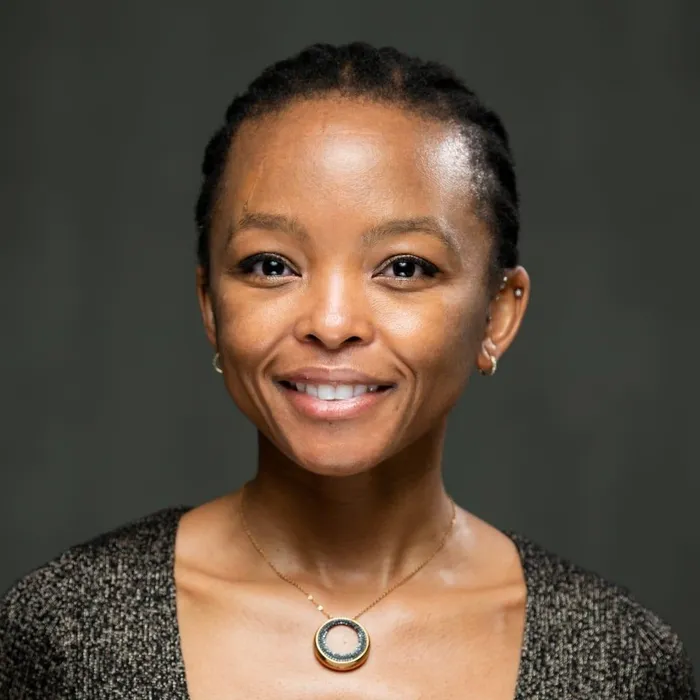
In today’s conversation, I invite Alexis Knaub, Director of P/A SEA Change, to reflect on those early days, what it took to move from concept to implementation, and to share insights into how the program has evolved, the impact it is having today, and where it is headed next.

What was the original gap or need in the physics and astronomy community that led to the creation of SEA Change, and how did you translate that into a programmatic model at the departmental level?

The program started because of a need to do continuous systems change work in physics/astronomy. Many programs are fantastic but only concentrate on a particular population (e.g., graduate students). We have had decades of programs that are making progress to improve the discipline—otherwise, many of us wouldn’t have our careers—AND we can do better to leverage our work.


AAAS started SEA Change at the institutional level. Institutions govern a lot of policies that do impact everyone at the institutions. From what I know (this was before my time), Shirley Malcom from AAAS approached Beth Cunningham (CEO of AAPT) regarding starting the disciplinary equivalent for physics and astronomy. Departments and their equivalent are where people in postsecondary education experience much of the discipline. Faculty make decisions on how courses are taught (and what’s in them), the social interactions among all people, etc. Our program resembles much of the AAAS program. The participants in the cohort are looking at policies, practices, culture, climate, and outcomes. The big difference is the smaller grain size and the opportunities/challenges that accompany that.


I do want to make a quick correction—with our fifth cohort, we have branched out to piloting with some community college physics programs! We were initially approached by one and have a few others who have joined our 5th cohort, broadening our focus. We are working to modify the program a bit for this context, and we have some terrific volunteers who have taught or are teaching physics in community colleges.
Since the first cohort launched in 2021, what are the most important lessons learned about what works, and what is harder than expected, when supporting departments through systemic change?
We have weathered A LOT and continue to do weather the storms and seasons of doing this work. I am unsure we learned this lesson, but the work has reinforced the importance of broad coalitions. For the former, given the diversity of subfields, having 11 different professional societies has been important to ensure the program maintains its quality and considering various contexts. P/A SEA Change is working on ensuring our shared future is better than our current realities of unnecessary barriers that impede success; the program cannot fulfill its mission without the true partnership of these professional societies.

Our broad coalition of professional societies is important to different audiences. I am not an astronomer. I’ve been grateful to the AAS’ support of this program, along with our participants who have helped with recruiting. 

The hardest aspect has been the cuts to science funding, the attacks on inclusivity and equity work, and the uncertainty of everything. There is a lot to keep track of and understand. The SEA Change family of programs, including ours, has been law-attentive from the beginning. We have worked and continue to work with departments where there are a lot of restrictions, either legally or through chilled climates. We continue to seek guidance and support the participants as they care deeply about doing better. 

What has eased a lot of these challenges is so many people have shown up to support this work. Our NSF funding was terminated last year. I’m grateful to AAPT for financially supporting my salary through last year and now AIP and the Luce Foundation for providing financial support this year. Our volunteers—representatives for the collaborating societies, subcommittee members, and reviewers—continued the work. Of course, our participating departments kept doing the work. All of these different entities have been vital to supporting departments through systemic change in this program. 

The work was hard as is, and it has been even more challenging than I expected. But showing up and working together, in different but important roles, has allowed us to continue.

From your perspective, where has SEA Change delivered the most meaningful value to participating departments, whether in culture, student outcomes, or faculty experience?

I think of SEA Change as addressing the root causes that have long hindered STEMM. For us, we’re focused on addressing the physics and astronomy culture. Several things come to mind:

  • At the programmatic level, the number of professional societies working together symbolizes how each one has a role in shaping our disciplines. Science is a group effort and so is changing our cultures. Having these societies work together is important to the departments, whose faculty, students, and staff often see at least one of these societies as their professional home and an influence on what their department should be doing.
  • The program has centered the contextual elements of the department and seeks to address the systemic issues at play; the individual details in the context—the people, the structures, etc.—matter when trying to enact change. SEA Change is flexible enough to meet the departments and community college physics programs where they are, honoring their realities while ensuring they are addressing the issue through the reflective emphasis on the SEA Change process. The reflective process prioritizes better understanding why things are the way they are, realizing what can and cannot be done at this time, etc. While reflection is non-trivial, this kind of work provides a better foundation than applying a generic approach that may not be applicable to one’s current context.
  • The focus on students, faculty, and staff, rather than just one population, allows for deeper understanding of how each population can impact the others. Departments are complex systems, and treating them as such can yield creative solutions.
  • Lastly, we aim to have a supportive environment. Although the program does allow for programs and departments to receive recognition (Bronze, Silver, or Gold), we are not limited in the number of awards. Our participants are learning from one another on how to address issues and providing advice and support.
The program emphasizes data-informed self-assessment and 5-year action plans. How are you thinking about success over time, both at the departmental level and across the broader physics and astronomy ecosystem?
At the departmental level, seeing individuals have more positive experiences with the departments or programs. Because change is a rather slow process, the number of individuals in physics or astronomy likely will not go up quickly. However, we can work to ensure that everyone has a positive experience. 

Across the broader physics and astronomy ecosystem, having departments and programs in all sorts of contexts dedicate their time to continual assessment and improvement would be our success metric. There are always ways to do better, and what works today may not work a few years from now. Success would be seeing the adoption/adaption of practices that work and that the data demonstrate better experiences. Harmful policies and practices are eliminated, and we see the climate and culture being supportive. Similar to departments, the demographics may not change fast, but the conditions that allow for changes to demographics can be addressed relatively quickly.

Looking ahead, what is your vision for the next phase of SEA Change, particularly in terms of scaling impact, deepening engagement across institutions, or evolving the recognition framework
The long term vision is that whenever anyone encounters a physics or astronomy space, they have a great experience. For those who pursue careers in physics or astronomy, we want to ensure people have positive experiences no matter what career level, subfield, or work environment. 


Part of this is considering new-to-us contexts. Physics and astronomy learning happens in lots of places, which in turn impacts the discipline; in particular, we are considering national labs and research centers. 


We are in the midst of creating Silver criteria, which will require deeper engagement from participating departments and programs. We’ll do something similar when we start working on Gold criteria. I anticipate the Silver and Gold awardees will be working more expansively across the ecosystem.


Bio: Alexis Knaub earned her doctorate in physics education at Boston University. Her research and evaluation spans sustained change efforts in postsecondary STEMM education, inclusivity and equity, and culture/climate of STEMM disciplines. She frequently volunteers in a variety of professional contexts. She currently is the Education Officer for the National Society of Hispanic Physicists (NSHP).

Thursday, April 23, 2026

Crosspost: 14 Things Our PhD Supervisors Got Right and Why It Mattered


Today's crosspost is the fifth in a series from Nature's 2025 PhD survey. The article presents the positive support mentors provided their PhD students. 

Image from This is Engineering at Pixabay.com

14 Things Our PhD Supervisors Got Right and Why It Mattered


by Linda Nordling

When someone talks about doing a PhD, the stories that surface are usually about what went wrong: the overbearing adviser, the chaotic laboratory experiments, the loneliness and the stress. But the experience is rarely only that. Amid challenges such as funding uncertainty, competition for positions, pressure to publish and disruptions caused by global conflicts and crises, many supervisors quietly do things that change a student’s trajectory for the better.

Thursday, April 16, 2026

Career Interview Series: Meredith Rawls, Researcher with Vera C. Rubin Observatory

The AAS Committee on the Status of Women in Astronomy has compiled dozens of interviews highlighting the diversity of career trajectories available to astronomers, planetary scientists, and enthusiasts. These interviews share advice and lessons learned from individuals who have navigated both traditional and non-traditional paths in the field.

Meredith Rawls grew up under the dark skies of Eastern Washington, where she loved to stargaze as a child. She thought her state could do more to protect the night from light pollution, though, and wanted to do something about it. As a Girl Scout, she focused her project for the Girl Scout Gold Award on diminishing light pollution at her local summer camp. Through fundraising, she was able to purchase shields to install on the street lights closest to the camp, allowing campers to have a better view of the night sky.

Photo: Anita Nowacka
Rawls carried her love of the night sky with her when she attended Harvey Mudd College. She enjoyed many STEM subjects, but she knew she had to narrow down to one major. At the time, Harvey Mudd offered six choices: math, computer science, physics, biology, chemistry, and engineering.
 
“I liked math more as a means than as an end in itself….Chemistry kind of drove me nuts…And then computer science felt similar to math to me.” That left biology, physics and engineering.  “Honestly, if biology hadn't been quite so chemistry forward in the beginning, I might have gone biology, but it was a lot of chemistry, and I don't like chemistry that much.” Rawls had a choice between physics and engineering, and she found engineering more demanding on her time, and she wanted to take some classes outside of STEM. “One of Mudd’s things is being an interdisciplinary world person, which I think is amazing and great. All colleges should do that to some degree, if possible.” So Rawls chose physics as her major so she could have time to also pursue other interests, music in particular. 
Then she proceeded to nearly fail her first physics class. 
I had an exceptional crisis—The bad freshman year, second semester, you know. I squeaked by with a D in physics…I don’t know what it is, but any kind of test environment is just challenging… If I hadn't passed that class, then I wouldn't have been able to major in physics. And I don't know what I would have done with my life, but it wouldn't be this. 
Rawls did manage to pass, and then she realized astronomy is like a subset of physics, and it was a subject she had always enjoyed. She studied physics with a focus on astronomy, and soon realized she wanted to continue to study in the field, but first she needed to pass another test, the physics GRE. Rawls struggled again with the test environment and had to settle for a score that got her waitlisted at several schools. While other friends made plans around her during their senior year at Harvey Mudd, Rawls had to admit she was waitlisted and wasn’t sure what her future held. 
So she ran away to summer camp—the same camp she had attended as a child and raised money to install light pollution shields on the street lamps. Rawls had also purchased a telescope for the camp with some leftover funds from her Girl Scout project. While working at the camp she loved so much, where she could simply look up and see the Milky Way each night, she knew she had to figure out a way for astronomy to be in her life, even if she didn’t get into grad school.
In July, Rawls got a call from San Diego State University. They had an opening. She took it and did her master’s in two years. When it was time to apply for a PhD program, she faced the same challenge as before. Her GRE score was too low to earn a spot with being waitlisted. This time, though, she didn’t have to wait until July. By April, New Mexico State offered Rawls a spot in their program and she headed south. As Rawls finished up her PhD, she and her husband were juggling academic life with his engineering career. They both wanted to return to the Pacific Northwest, and he found a job in Portland. Rawls actually finished her last year of the program remotely. She describes how difficult it was to manage the transitions from each program as a married couple, where her husband often had to stay behind to finish work while she moved to the next location. “I give him so much credit for being willing to be dragged around and through all of this. I don't know how I would have done it if he'd also been in academia.”
Rawls applied to several different postdoc positions close enough to Portland to make it work. She was offered a three-year postdoc supporting the upcoming Vera C. Rubin Observatory at the University of Washington. Rawls finished the postdoc, while her husband made one more move to Seattle. She explored the idea of becoming a research scientist at UW and decided to apply and was accepted. 
Rawls wears two hats as a research scientist at Rubin Observatory. “One hat is data validation and verification, so making sure that the data that we're getting off the telescope is basically correct and not full of trash, that we don't have bugs in our processing algorithms so when we say there's a variable source here, it's actually a variable source.” 
Initially, Rawls was helping build the software to produce data sets from Rubin. A second part of her job emerged from a growing problem in astronomy — satellite constellation mitigation. “There’s this huge increase of Starlink and so many others… like now a million orbital data centers like, what are we doing? This has been a huge change in the last six, seven years, and just completely a fundamental change in Earth orbital environment that's obviously directly affecting ground based and low Earth orbit based astronomy.” 
In 2022, Rawls and some of her colleagues formed SatHub, within the International Astronomical Union, to analyze the problem and find solutions for the astronomy community and beyond. This venture is taking up more of Rawls’ time as the use of small sats increases. “It's a constant balance of remembering…Rubin is the thing that anchors my job, but then, in reality, there’s the chaos of new stuff interfering with astronomy.”
One of the challenges Rawls has faced is the fact that being a research scientist outside of academia has made her feel a little invisible. “Sometimes I feel like I'm not sufficiently legitimate career wise to be invited to certain tables, but I have just as much experience in certain areas, and more in some cases, than some faculty that I work with. And a few years ago, it started being weird to me that people who had gotten their PhD after me were getting faculty jobs…Now I've kind of made peace with that. And I'm fine not being faculty, because I'm fine not facing tenure and moving around more. I love living in Seattle. I'm very glad to be here. I have something close to my dream job.” 
While Rawls was on the path to Rubin, she also started a family. She had her first child when she was a postdoc, and her second as a research scientist. While trying to finish school and start her career, she agonized over the best time to have children, like many in the field. “There’s no good time. That became apparent. I’m glad I didn’t have them in grad school because that would have made my PhD six years long. The best advice I have came from the department head of UW. She told me, ‘Careers are long, and being a new parent is short…take the maximum leave available to you. Your career will be here when you come back.’ That’s not true for everybody. That’s a privilege in and of itself, but that was the gist of it.” 
Photo: Courtesy of Meredith Rawls
Rawls also feels fortunate to be able to have a hybrid work schedule that puts her at Rubin a couple days a week, making it easier to be available as a parent, although she didn’t have this arrangement with her first child. It wasn’t until the Covid-19 pandemic forced the staff into remote work that she was able to work remotely at first, and then agree to the hybrid arrangement. She’s also found that having other parents working at Rubin has created a more supportive environment. Rawls also admits that having a partner with a successful engineering career and living close to her parents has made childcare much easier for her research career. “If you have the opportunity to live near in-laws or grandparents who you get along with and trust…do that,” she says with a laugh. 

Meredith Rawls is a research scientist at Vera C. Rubin Observatory working on the Legacy Survey of Space and Time (LSST) Data Management group to develop software for astronomical images. She also devotes time to SatHub-IAU to bring together the astronomical and wider community to increase and disseminate scientific understanding of the impacts of satellite constellations on astronomy, identify ways they can be mitigated, and publicly share expertise and tools that enable this.


Thursday, April 9, 2026

Support Science Funding (Again): A Call to Action

This week, as Artemis II circled the Moon and took humans farther from Earth than ever before, the Office of Management and Budget (OMB) released its 2027 budget. That budget looks eerily similar to the budget released in 2025 that sought to gut support for NASA as well as funding for other agencies involved in science and research. This proposed budget, if passed, would cut $5.6 billion from NASA science, despite overwhelming support for NASA from Congress.

In the Planetary Society's article "What is the skinny budget, and what does it mean for NASA?" Ari Koeppel wonders if the proposal may be a strategic move "to normalize deep reductions to government programs."

Photo: The Planetary Society
Jared Isaacman, who was sworn in as NASA administrator on December 18, 2025, released a letter to NASA employees this week in response to the budget, essentially supporting the cuts by emphasizing his commitment to efficiency and that the budget is sufficient. Despite Isaacman's statement, many in the greater science community are alarmed by this nearly identical attempt to once again shrink the resources allocated to science.

In AAS's statement on the proposed budget this week, Roohi Dalal writes, "Congress holds the 'power of the purse' and will ultimately make the decision about how much federal funding is appropriated to these and other agencies. We urge you to take action next week and, thereafter, to remind Congress of the importance of federal funding for the sciences."

The AAS is holding a Week of Action beginning Monday, April 13. Take action each day to show Congress you support a fully funded science budget and not the "skinny" budget released by the OMB. Find all the steps on the AAS website. Anyone who completes three steps will be recognized as an advocacy hero at the next AAS meeting.

The Planetary Society had already marked April 19 and 20 as their annual Day of Action, where members advocate for science face-to-face with members of Congress in Washington, D.C. That day will take on extra meaning. 

This week, take some time to participate in AAS's Week of Action and show Congress how much Americans support funding NASA and science in general. 
 
The Moon with Earth setting in the background
Earth sets at 6:41 p.m. EDT, April 6, 2026, over the Moon’s curved limb in this photo captured by the Artemis II crew during their journey around the far side of the Moon. Photo: NASA


Thursday, April 2, 2026

Christina Koch's Path to the Moon

Yesterday, history was made. For the first time since 1972, a rocket launched to the Moon—the first time for many of us to witness such an event. Christina Koch (pronounced cook), the only woman in the four-person crew, is also making history as the first woman to travel so far into space. 

Image Credit: NASA/Kim Shiflett
Koch was born in 1979, seven years after Apollo 17, the last mission to the Moon. She doesn't remember a time when she didn't want to be an astronaut. "I loved things that made me feel small. I loved looking at the night sky. I love the ocean—I grew up in coastal North Carolina. And I just love contemplating the vastness of the universe and our place in it," Koch said in an interview with Brilliant Star magazine.

She enjoyed science and math and excelled at those subjects, helped along her path by attending North Carolina School of Science and Mathematics. Koch studied electrical engineering and physics at North Carolina State University, earning both a Bachelor of Science and a Master's degree in electrical engineering. She set her sights on NASA early by graduating from the NASA Academy Program at Goddard Space Flight Center in 2001.

Before her ventures into space, Koch focused on extreme environments on Earth. She was a research associate in the United States Antarctic Program, which took her to both the North and South Poles. She did a winter-over season at Amundsen-Scott South Pole Station, where she learned how to adapt to the challenges of living far from family in a harsh climate with the same people—skills that readily translate to space travel.

Koch also used her engineering skills in the Space Department of the Applied Physics Lab at John Hopkins University, where she built instruments to measure radiation particles on NASA missions. She has also worked as a field engineer and a station chief for NOAA. 

Koch's depth of experience, along with her childhood dream, eventually led her to apply to NASA's astronaut program. She was named as one of eight members of NASA's 21st astronaut class in 2013 and completed her training in 2015. Four years later, she headed to the International Space Station, where she made history twice. First, she participated in the first all-female spacewalk on October 18, 2019. When her mission was extended until February 2020, she took the record from Peggy Whitson for the longest single continuous stay in space for a woman at 328 days.

Koch was named as part of Artemis II's crew in 2023 in a history-making move. Yesterday, April 1, 2026, she launched into space with fellow NASA astronauts Mission Commander Reid Wiseman and Pilot Victor Glover and Mission Specialist 2 and CSA astronaut Jeremy Hansen. While the other three astronauts come from military backgrounds, Koch joins the crew as an expert electrical engineer and Mission Specialist 1. Her role includes overseeing hatch systems and operations on Orion. Mission specialists are trained in all roles in the event of an emergency. 

Koch and the Artemis II crew will reach lunar orbit April 6, fly around the Moon, and return to Earth April 10. When she does, Koch will emerge from the Orion capsule as the first woman, but surely not the last, to travel beyond low Earth orbit as humanity bids to go to the Moon once again.

Image Credit: Mark Sowa - NASA - JSC


Thursday, March 26, 2026

Career Interview Series: Deborah Skapik Leans Into Research Skills With Her Students

The AAS Committee on the Status of Women in Astronomy has compiled dozens of interviews highlighting the diversity of career trajectories available to astronomers, planetary scientists, and enthusiasts. These interviews share advice and lessons learned from individuals who have navigated both traditional and non-traditional paths in the field.

Deborah Skapik traces her interest in space back to 1977, when a partial eclipse captured her interest. She built a shoebox diorama of the event on her own initiative. “I remember cutting out a circle on the side to put a flashlight. I even remember the color of the flashlight was this red plastic flashlight that my parents had, and putting that in the side of the box and hanging a styrofoam ball and making a shadow and just the visualization in three dimensions of what was going on.” 

Deborah Skapik

This wasn’t the only astronomy project Skapik tackled as a child interested in space. She also glued pastina—pasta shaped like stars—onto black construction paper and recreated the cosmos for herself. When Carl Sagan’s series Cosmos released in 1980, Skapik was mesmerized. She naturally gravitated to space and science, and felt fortunate to be in a public school system that encouraged STEM for all pupils. Her seventh grade science teacher allowed her the space to explore what it means to be a scientist as he led the class through multiple dissections that year. Skapik vividly remembers dissecting sharks outside and the smell as they dug into the process. “I didn't love that part of it, but the fact that we were so hands-on…he allowed me to explore and really do what felt like research science in seventh grade and use the tools of a scientist.” That same teacher assigned research papers, and Skapik enjoyed learning the scientific process of research as she looked up information in encyclopedias.

That encouragement came at just the right time. Instead of falling away from STEM, like so many can in middle school and junior high, Skapik pursued science and math. By the time she was a senior, she had taken every science and math course she could and headed to Swarthmore College with the idea of pursuing particle physics. Her first week on campus, Skapik needed to find a part-time job, and she hoped to find one related to astronomy. She knocked on the door of Sproul Observatory to ask if anything was available. A professor in a white lab coat opened the door. “He looked like Doc from Back to the Future,” Skapik recalls. 

“Can I help you?" he asked her, speaking with a German accent. Skapik asked for a job, and the professor immediately ushered her inside. “Yes, you will be working with this.”

He took her inside the dome where a 24-inch refractor telescope stood. Skapik was stunned. She had only used backyard telescopes to this point. The professor, Dr. Wolf Heinz, wanted her to observe binary stars using the telescope’s photographic plateholder. It was 1987. Skapik loaded glass plates into the plate holder to capture images. Skapik held this job throughout her college years, spending many nights in the observatory learning how to operate the 36-foot-long telescope, built in 1911. 

The next semester, when she met with the assigned class advisor, she said, “I want to do astrophysics.”

“No, you don’t,” he replied. “You want to be a physics major.”


“I don’t want to study physics,” Skapik replied.

“Yes, you do. Minor in astrophysics,” he advised her. “That was an incredibly wise piece of advice,” Skapic says. The advisor understood physics would give Skapik more flexibility and ground her well. 


While at Swarthmore, Skapik landed an REU opportunity at Kitt Peak in Arizona. “I was in love with the telescopes. I spent a lot of time at the summit, living up there, working on the 0.9-meter, doing a research project on quasar photometry, making some contacts, meeting some people, and meeting other people my age who were going into the field, but it really anchored me in knowing what I wanted to study.”

Skapik did her graduate degree in astronomy at the University of Hawaii Institute for Astronomy. She’d moved away from high energy astrophysics to quasar photometry. She also did another REU at NRAO in Green Bank, West Virginia, which taught her that she didn’t like radio astronomy. 

In Hawaii, she ran across the idea of colliding galaxies and became a research assistant studying the Butcher-Oemler Effect. While she was in the middle of this research, Skapik was also teaching and realized how much she enjoyed explaining these complicated theories to her students. At the same time, she observed how busy the professors were writing proposals to search for funding for their research and doing a lot of administrative work as well. It dawned on Skapik that she didn’t want to devote her career to that. 

She decided to take a job as an observatory supervisor, which included mentoring teaching assistants, at Williams College in Massachusetts. Skapik continued her PhD at the University of Hawaii by spending a lot of time on the phone with the telescope operator and flying out to Hawaii. Then she went to the University of Pennsylvania to help develop an astronomy education program, as well as running two observatories. She also had three children and decided she wanted to pursue education more than astronomy. Instead of finishing her PhD, she got certified to teach. She interviewed for a teaching position at Friends’ Central School and was hired to teach AP Physics, the same subject she didn’t think she wanted to pursue in college.

“Twenty-five years later, almost, here I am… I love doing research with my students. I am a researcher. I understand the tools, I understand the techniques, and I can teach them how to do it at the high school level.” Skapik’s students are currently looking at images taken on Haleakala to try to re-image an asteroid field to see if the object they previously found was actually a new asteroid. She is hopeful they can publish the data. 

Skapik’s advice on teaching, and on career paths in general, is simple: “Follow your heart and do what you love, because if you don't love what you're doing, you're not going to enjoy your life. And I know what I love doing; like I said, I get really excited doing the research. But it's not just doing the research alone—it's doing it with the students because they have so much energy. They're fifteen years old, and they're getting excited about a movement on a screen. They come back here, and they're excited to tell me about their paths that they've followed.” 

Skapik has former students at NASA and remembers one who told her how important it was to have a female role model like Skapik, even though she didn’t realize it at the time. “So I do think it's really important for women to be in these higher positions, but I think contact with students on a day-to-day basis is also really important, and showing confidence and competence, and not minimizing what astronomy educators do, or physics educators, for that matter." It’s hard, but to have a research background is so valuable because I can say, "These are the tools. This is what you have to do later. It's not all academic.’” 

Deborah Skapik currently teaches at Friends Central School and also teaches astronomy at St. Joseph’s University and Delaware County Community College. 

Skapik at UPenn in 2002.


Friday, March 20, 2026

AASWomen Newsletter for March 20, 2026

AASWomen Newsletter for March 20, 2026 HTML newsletter written to 20260320.html Text newsletter written to 20260320.txt (base) l22-n04135-pla@MacBook-Pro Documents % more 20260320.html

AAS Committee on the Status of Women
Issue of March 20, 2026
eds: Jeremy Bailin, Sethanne Howard, Ferah Munshi, Stella Kafka, and Ben Keller

[We hope you all are taking care of yourselves and each other. --eds.]

This week's issues:

1. Crosspost: Celebrating Women in the Physical Sciences
2. Highlighting Achievements and Challenges for Women in the Physical Sciences Community
3. Unbounded
4. Deaf women fought for the right to vote
5. Job Opportunities
6. How to Submit to the AASWOMEN newsletter
7. How to Subscribe or Unsubscribe to the AASWOMEN newsletter
8. Access to Past Issues

An online version of this newsletter will be available at http://womeninastronomy.blogspot.com/ at 3:00 PM ET every Friday.

Thursday, March 19, 2026

Crosspost: Celebrating Women in the Physical Sciences

This month AIP is highlighting achievements and challenges for women in the physical sciences community at aip.org. Today we're crossposting these articles to draw more attention to women in science for Women's History Month.


"Zoe Adams, a graduate student at the University of Maryland and 2025 intern at the 
Niels Bohr Library & Archives, is on a mission to ensure the contributions of women in science are never lost. In the video below, Zoe discusses her work processing the papers of Gloria Lubkin, a pioneering physicist and longtime editor of Physics Today, and why making these historical materials accessible is vital for the future of science. 

Young women conducting an experiment in the Physics Laboratory, Wellesley College. Photo: AIP Archives, Emilio Segre Visual Archives General Collection.

AIP is also featuring stories from its site celebrating women scientists, like this 2024 post "Women Leaders in Astronomy" and this 2025 one, "How AIP Is Giving A Name To Mrs. Scientist." Find more posts like these for Women's History Month at aip.org/womens-history-month.


Thursday, March 12, 2026

I Changed Astronomy Forever - Jocelyn Bell in Her Own Words

Today we're featuring Jocelyn Bell Burnell's short documentary "I Changed Astronomy Forever. He Won the Nobel Prize For It."
Jocelyn Bell Burnett at AAS in 1987.
Jocelyn Bell Burnell attends the American Astronomical Society (AAS) meeting at Pasadena, California, January 5, 1987. Photo: American Institute of Physics (AIP) via Wikimedia.

In this short documentary by Ben Proudfoot, Bell Burnell tells her story about being raised as a Quaker, her struggle being the only woman in the room in STEM, and how hard it was to pursue that path against the attitude that women were to be in the home. Bell discovered pulsars as a PhD graduate student at Cambridge University, but Proudfoot's documentary reveals why she was not credited at the time.

Of course, Jocelyn Bell Burnell is both famous and deserving of recognition for her discovery and her career.

YouTube: New York Times Opinion 'Almost Famous' by Op-Docs. "I Changed Astronomy Forever. He Won The Nobel Prize For It.