Friday, October 9, 2026

Crosspost: Anna Quider advises the STEM community on federal policy

Today's crosspost comes from Physics Today and was originally posted July 30, 2026 and written by senior editor Toni Feder.

Q&A: Anna Quider advises the STEM community on federal policy

By Toni Feder

A love of science and ease in communicating led her to start a consulting firm that aims to broaden opportunities in science and technology.

While working on her PhD in astronomy at the University of Cambridge, Anna Quider realized that although she loved knowing and promoting science, discovering something like a new stellar population wasn’t motivating for her; she would be happy to be “the champion for the person who is making those discoveries.” She earned her PhD in 2011, ditched her plans to pursue an academic career, and pivoted to science policy.

In 2023, she launched her consultancy, the Quider Group, through which she advises research and higher-education organizations on science policy, congressional and agency engagement, grantsmanship, and advocacy.

Read the full Q&A with Anna Quider at Physics Today.

Anna Quider
Photo: Anna Quider (via Physics Today)


Friday, October 2, 2026

AASWomen Newsletter for October 2, 2026

AAS Committee on the Status of Women
Issue of October 2, 2026
eds: Jeremy Bailin, Sethanne Howard, Ferah Munshi, Stella Kafka, and Ben Keller

[We hope you all are taking care of yourselves and each other. --eds.]

This week's issues:

1. Call for Nominations for the 2027 Gruber Cosmology Prize
2. Spotlight on Astronomer Laurie Rousseau-Nepton
3. First Samoan astrophysicist encourages Pasifika students to reach for the stars
4. The young women guiding tourists through India's night sky
5. From Asteroid Research to Asteroid Alyankovic: Spotlight on Dr. Allison McGraw
6. Astrophysicist France A. Córdova Named 2026 Nierenberg Prize Recipient
7. Women astronauts use social media to reframe science and femininity together
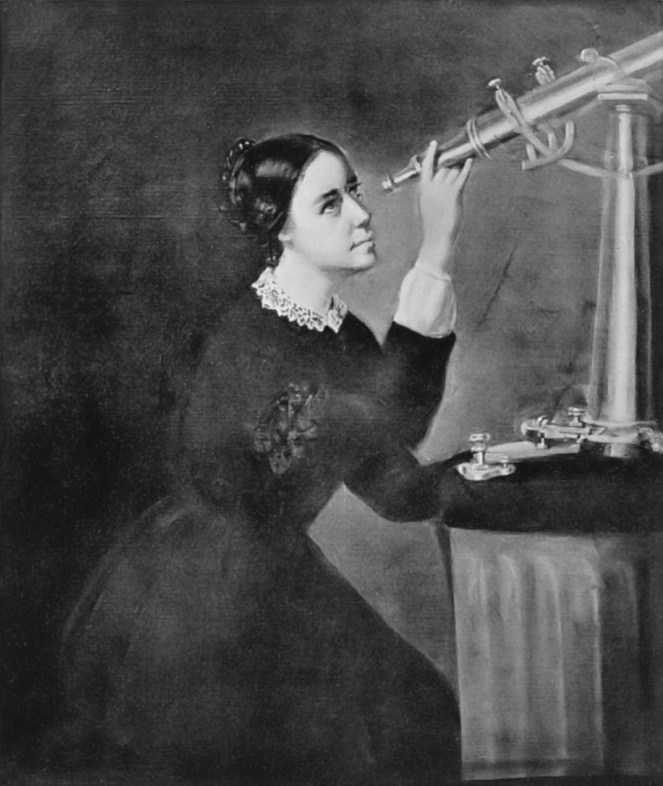
8. October 1, 1847, Maria Mitchell discovered comet C/1847 T1, later known as “Miss Mitchell’s Comet.
9. Funding opportunities for Gender Equality & Women’s Empowerment
10. Virginia Woolf’s Night and Day: A Woman’s Pursuit of Astronomy and Independence
11. How to Submit to the AASWOMEN newsletter
12. How to Subscribe or Unsubscribe to the AASWOMEN newsletter
13. Access to Past Issues

An online version of this newsletter will be available at http://womeninastronomy.blogspot.com/ at 3:00 PM ET every Friday.

Thursday, October 1, 2026

Spotlight on Astronomer Laurie Rousseau-Nepton

Dr. Laurie Rousseau-Nepton made history when she became the first Indigenous woman in Canada to obtain her PhD in astrophysics. Since Rousseau-Nepton finished her doctoral dissertation and graduated from Université Laval in 2017, she has forged her own path as an astronomer and a science communicator.

Rousseau-Nepton worked as a Resident Astronomer at the Canada-France-Hawaii Telescope for six years. Her work as the principal investigator of SIGNALS (Star Formation, Ionized Gas, and Nebular Abundance Legacy Survey) drew enough attention that the National Film Board of Canada made a short five episode docuseries of Rousseau-Nepton's life and work on the project.

Since then, Rousseau-Nepton joined the Dunlap Institute for Astronomy and Astrophysics at the University of Toronto, where she continues to explore the universe, teach, and find ways to communicate science to the community.

She received the Qilak Award in 2023 from the Canadian Astronomical Society for her outstanding contributions to astronomy education and outreach. One of Rousseau-Nepton's favorite topics is how her research aligns with Innu traditions, which says that humans originate from and return to the stars.

In September 2026, the University of Toronto announced Rousseau-Nepton was one of eight recipients of the Connaught Community Partnership Research Program Awards. With the award money, Rousseau-Nepton will continue her current research into how ancient Indigenous peoples observed, understood, and tracked celestial events using stone circle alignments.

On October 16, 2026, Rousseau-Nepton and a team of astronomy students will present Aurora Ancestors & Teachings of the North at Calgary's Telus Spark Science Center. The science center is hosting Stones, Stories, & Stars: Experience Astronomy from the Stone Ancestors. This evening of astronomy and explorations into indigenous oral storytelling takes place from 5 p.m. to 11 p.m. 

Learn more about Laurie Rousseau-Nepton's career through her Let's Talk Science Career Profile.

Watch Rousseau-Nepton's interview with Spotlight with Scientists in School, where Rousseau-Nepton speaks about her work and her outreach encouraging kids to stay in STEM. 

Friday, September 25, 2026

AASWomen Newsletter for September 25, 2026

AAS Committee on the Status of Women
Issue of September 25, 2026
eds: Jeremy Bailin, Ferah Munshi, Stella Kafka, and Ben Keller

[We hope you all are taking care of yourselves and each other. --eds.]

This week's issues:

1. Science grant funding continues to fall in 2026
2. Crosspost: We All Share the Same Sky (as told by Amina Helmi)
3. The Physics and Astronomy SEA Change is looking for application reviewers
4. Share your story with the AAS Employment Committee
5. Ladakh Hanle Dark Sky Reserve: How Women Lead India’s Astro-Tourism Revolution
6. Henrietta Swan Leavitt: The Woman Who Measured the Universe
7. Job Opportunities
8. How to Submit to the AASWOMEN newsletter
9. How to Subscribe or Unsubscribe to the AASWOMEN newsletter
10. Access to Past Issues

An online version of this newsletter will be available at http://womeninastronomy.blogspot.com/ at 3:00 PM ET every Friday.

Science grant funding continues to fall in 2026

Grant funding across the sciences continues to fall in 2026, as noted by several in the scientific community.

On August 31, AAS reported "a 57% reduction in the number of awards between FY25 and FY26. This reduction in awards in the astronomical sciences is even more severe than the overall 30% decrease in FY26 awards at NSF reported by Nature."

Photo: AAS

The NSF did publish five new NSF MPS funding opportunities for core research programs, initiating a new rolling admission period, ending the third Monday in November. A full description of these funding opportunities can be found at https://www.nsf.gov/mps/updates/new-nsf-mps-funding-opportunities-core-research-programs.

Casey Dreier, Chief of Space Policy at The Planetary Society, wrote this week that NASA "is on track to award the fewest scientific grants in 15 years. With only two weeks to go in the U.S. government’s fiscal year, NASA has awarded ​​1,188 new grants for basic scientific research. That’s roughly 15% fewer than the historic baseline, and almost exactly equal to 2025."

Read Dreier's full letter in the September edition of The Space Advocate at https://www.planetary.org/space-advocate/space-advocate-september-2026-2.

The AAS policy team encourages all members to "contact your members of Congress today and urge them to exercise their oversight authority and support robust funding levels for NSF, in addition to the NASA Science Mission Directorate and the US Department of Energy (DOE) Office of Science."

Thursday, September 17, 2026

Crosspost: Dara Norman to Receive 2026 Arthur B.C. Walker II Award

Today's crosspost is from the AAS and announces Dara Norman's selection as the 2026 Arthur B.C. Walker II award winner.

Dara Norman served as the AAS president from 2024 until June of this year. She is also the Deputy Director of the NoirLab Community Science and Data Center. Her research focuses on AGN environmental triggers and galactic evolution, while she has also been a leader and advocate for science. The award honors African-Americans or scientists of African descent for their outstanding dual contributions to science and to their efforts towards advocacy and inclusion in STEM. It is given by the Astronomical Society of the Pacific. Dr. Arthur B.C. Walker was a solar physicist and longtime Stanford professor who mentored many students, with a focus on mentoring female and minority students. 

AAS President Dara Norman opens AAS 248 in June in Pasadena, CA.
Photo: AAS.org
"The Arthur B.C. Walker Award honors an African American scientist whose research has substantially contributed to astronomy or related fields, and who has demonstrated a substantial commitment to promoting diversity and inclusion in STEM. The 2026 recipient of the Arthur B.C. Walker II Award is Dr. Dara J. Norman, Director of the Community Science & Data Center (CSDC) at the National Science Foundation’s National Optical-Infrared Astronomy Research Laboratory (NOIRLab), for her scientific contributions, visionary leadership, and commitment to broadening participation in astronomy and related sciences."

Read the full post at https://aas.org/posts/news/2026/09/dara-j-norman-receive-2026-arthur-bc-walker-ii-award.