Thursday, March 31, 2022

Celebrating the Pioneering Women of Astronomy and Space Exploration

By Nicolle Zellner, co-Chair of the CSWA

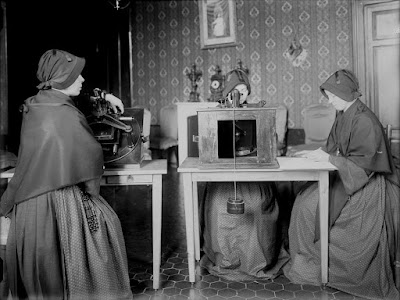
We stand on the shoulders of giants! March is Women's History Month, and this blog has honored women in science with multiple posts. It's hard to forget the pioneering work of those early female astronomers who worked as computers at the turn of the 20th Century, whether in the United States at Harvard or abroad at the Vatican. 

Sisters Emilia Ponzoni, Regina Colombo, Concetta Finardi and Luigia Panceri mapped
the positions and brightness of 481,215 stars for the Vatican. Photo Credit: On Being (Flickr)

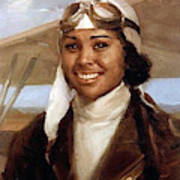
Other women tested the limits of aviation and space flight. Bessie Coleman, Jackie Cochran, Valentina Tereshkova, Sally Ride, Mae Jamison, Ellen Ochoa, and Eileen Collins flew fast, long, and high—breaking the air and space ceilings for all of us. Wally Funk, an original First Lady Astronaut Trainee, became the oldest woman to fly in space in July 2021. The next people on the Moon will include the first woman and the first person of color. Perhaps the final frontier really will be for everyone.

Bessie Coleman "dared to dream".
Photo credit: Alamy

But if it weren't for the calculations (and just plain physics!), humans wouldn't travel safely into space and home again. On her experience working as a 'human computer' at NASA's Jet Propulsion Laboratory, Macie Roberts commented, "you have to look like a girl, act like a lady, think like a man, and work like a dog." Katherine Johnson, Dorothy Vaughan, and Mary Jackson were just some of the brain power behind those early NASA spaceflights.  

Generations later, these women continue to inspire those of us who are reading their stories today. Those stories have been told in a variety of media, including The Glass Universe (review), Hidden Figures, Silent Sky, The Mercury 13, Right Stuff, Wrong Sex, and Rise of the Rocket Girls. Do you know of others? Post them in the comments section.

We should continue to support and recognize women and the work we all do. Helen Ling, a software engineer at the Jet Propulsion Laboratory in the 1950s and 1960s, once said "...if you hire [men] under you, they're uncomfortable, you're uncomfortable. So I just hired women just out of college. I thought that if you didn't give them a chance, they'll never get a chance."

The same could be said when standing on the shoulders of giants. Thanks, pioneers, for giving us all a chance.


Read more about pioneering women at

4000 Years of Women in Science

First Lady Astronaut Trainees (blog post, support for a Congressional Gold Medal, video)

Women in Astronomy, A Resource Guide (Astronomical Society of the Pacific)

Friday, March 25, 2022

AASWomen Newsletter for March 25, 2022

AAS Committee on the Status of Women
Issue of March 25, 2022
eds: Heather Flewelling, Nicolle Zellner, Alessandra Aloisi, Jeremy Bailin and Sethanne Howard

[We hope you all are taking care of yourselves and each other. --eds.]

This week's issues:

1. Expanding Space in Astrophysics: A Wikipedia Edit-a-thon  
2. New Graduate-Student Mentoring Program with NHFP Fellows
3. Out in Astronomy — A Panel Discussion  
4. The rise of citational justice: how scholars are making references fairer 

5. Gender Differences in Self-Estimated Intelligence: Exploring the Male Hubris, Female Humility Problem
6. Seattle-area high school senior awarded $250,000 for gravitational wave research
7. Job Opportunities
8. How to Submit to the AASWomen Newsletter
9. How to Subscribe or Unsubscribe to the AASWomen Newsletter
10. Access to Past Issues of the AASWomen Newsletter

An online version of this newsletter will be available at http://womeninastronomy.blogspot.com/ at 3:00 PM ET every Friday.

-------------------------------------------------------------------------------

1. Expanding Space in Astrophysics: A Wikipedia Edit-a-thon
From: Bryne Hadnott via womeninastronomy.blogspot.com

Join APS and Physical Review D for a special event held in conjunction with the APS April Meeting 2022—Expanding Space in Astrophysics: A Wikipedia Edit-a-thon.

This virtual event will be held on Sunday, April 10, 12:00 p.m to 3:00 p.m. ET, where we will create Wikipedia pages about inspiring women and historically marginalized groups in astrophysics. Sound fun? Please RSVP by April 7, using this registration link (https://april.aps.org/events/wiki-edit-a-thon). Please note: You do not need to be a registered attendee of the April Meeting to attend.

Read more at

http://womeninastronomy.blogspot.com/2022/03/expanding-space-in-astrophysics.html

-------------------------------------------------------------------------------

2. New Graduate-Student Mentoring Program with NHFP Fellows
From: Jane Huang and David Jones via AAS News Digest

A group of postdoctoral fellows from the NASA Hubble Fellowship Program (NHFP) is initiating a virtual mentorship program designed to provide professional and academic advice to PhD students who are conducting astronomy-related research and planning to apply for postdoctoral positions in the near future. The goals of this mentorship program are to 1) make the process of launching a scientific career more transparent and equitable and 2) to foster the kinds of cross-institutional interactions that many students have been lacking during the COVID-19 pandemic. 

Read more at

https://aas.org/posts/news/2022/03/new-graduate-student-mentoring-program-nhfp-fellows

-------------------------------------------------------------------------------

3. Out in Astronomy — A Panel Discussion
From: Yuzhe Robert Song via AAS News Digest

The College of Science at the University of Utah (UU) and the AAS Committee for Sexual-Orientation and Gender Minorities in Astronomy (SGMA) are hosting a panel discussion of LGBTIQ astronomers, moderated by UU Physics & Astronomy faculty Ramón Barthelemy.

SGMA members will discuss a broad perspective of being Out in Astronomy, Science, and Technology. Panelists will also address student questions...

Learn more and register for the event at

https://aas.org/posts/news/2022/03/out-astronomy-panel-discussion 

-------------------------------------------------------------------------------

4. The rise of citational justice: how scholars are making references fairer
From: Nicolle Zellner [nzellner_at_albion.edu]

By Diana Kwon

An emerging movement aims to push researchers to pay more heed to inequities in scholarly citations.

... studies in bibliometrics have revealed persistent biases in citation patterns — women and people of colour, for instance, garner citations at lower rates than men do. An increasing number of researchers are calling on academics to acknowledge the inequities in citational practices — and, by paying more heed to work from groups that are typically under-cited, take action to reduce them. Some are referring to this idea as ‘citational ethics’ or ‘citational justice’.

Read more at 

https://www.nature.com/articles/d41586-022-00793-1? 

-------------------------------------------------------------------------------

5. Gender Differences in Self-Estimated Intelligence: Exploring the Male Hubris, Female Humility Problem
From: Nicolle Zellner [nzellner_at_albion.edu]

David Reilly (Griffith University, Australia) and colleagues conducted a study that asked participants to estimate their IQ after briefing them on how intelligence is scored. Men overestimated their IQs while women underestimated them.  This assessment of "intellectual self-image" is often a self-fulfilling prophecy; if you think you can’t, you won’t. As a result, it may play a part in explaining the gender gap in wages and bargaining power with employers.

Read a general summary at

https://theconversation.com/men-think-theyre-brighter-than-they-are-and-women-underestimate-their-iq-why-178645

Read the scientific article at

https://www.frontiersin.org/articles/10.3389/fpsyg.2022.812483/full

-------------------------------------------------------------------------------

6.  Seattle-area high school senior awarded $250,000 for gravitational wave research
From:  Sethanne Howard [sethanneh_at_msn.com]

By Alan Boyle

Christine Ye, a senior at Eastlake High School in Sammamish, Wash., has won the top award in the nation’s oldest and most prestigious competitions for science students, thanks to her research into the mysteries of black holes and neutron stars.  

For more read

https://finance.yahoo.com/news/seattle-area-high-school-senior-233614314.html

-------------------------------------------------------------------------------

7. Job Opportunities

For those interested in increasing excellence and diversity in their organizations, a list of resources and advice is here: https://aas.org/comms/cswa/resources/Diversity 

-  Outreach and Diversity, Equity, and Inclusion Activities Coordinator
   https://recruit.apo.ucla.edu/JPF07304 

-------------------------------------------------------------------------------

8. How to Submit to the AASWOMEN newsletter

To submit an item to the AASWOMEN newsletter, including replies to topics, send email to aaswomen_at_lists.aas.org .

All material will be posted unless you tell us otherwise, including your email address.

When submitting a job posting for inclusion in the newsletter, please include a one-line description and a link to the full job posting.

Please remember to replace "_at_" in the e-mail address above.

--------------------------------------------------------------------------------

9. How to Subscribe or Unsubscribe to the AASWOMEN newsletter

Join AAS Women List through the online portal:

To Subscribe, go to https://aas.simplelists.com, and in the "Subscribe" area, add in your name, email address, select "The AASWomen Weekly Newsletter", and click subscribe.  You will be sent an email with a link to click to confirm subscription.

To unsubscribe from AAS Women by email:

Go to https://aas.simplelists.com, in the "My account and unsubscriptions", type your email address. You will receive an email with a link to access your account, from there you can click the unsubscribe link for this mailing list.

--------------------------------------------------------------------------------

10. Access to Past Issues

https://aas.org/comms/cswa/AASWOMEN

Each annual summary includes an index of topics covered.
Thursday, March 24, 2022

Expanding Space in Astrophysics: A Wikipedia Edit-a-thon

Written by Alexandra Lau

Join APS and Physical Review D for a special event held in conjunction with the APS April Meeting 2022—Expanding Space in Astrophysics: A Wikipedia Edit-a-thon.

This virtual event will be held on Sunday, April 10, 12:00 p.m to 3:00 p.m. ET, where we will create Wikipedia pages about inspiring women and historically marginalized groups in astrophysics. Sound fun? Please RSVP by April 7, using this registration link (https://april.aps.org/events/wiki-edit-a-thon). Please note: You do not need to be a registered attendee of the April Meeting to attend.

Wikipedia is the fifth most popular website in the world, with more than 32 million views a day. Despite this, according to the Wikimedia Foundation, as of 2020 fewer than 20% of its English-language biographies are about women. The statistics for historically marginalized groups are no better.

During the virtual event, we’ll work together to create and improve Wikipedia pages that highlight the accomplishments of women and other historically marginalized groups in astrophysics.

After you register, you will receive instructions on April 8th about how to join the event that weekend. Everyone is welcome, regardless of Wikipedia editing experience. 

We ask participants to do a couple of things after you register and before the event on April 10:
2. Got suggestions for pages to create? Let us know via the RSVP form or Tweet us at #apsaprilwiki.
3. See this tutorial to learn how to edit a Wikipedia page. This is optional since you'll learn how during the event.

We hope to see you all there!

Friday, March 18, 2022

Aaswomen-Newsletter-for-March-18-2022

AAS Committee on the Status of Women AAS Committee on the Status of Women
Issue of March 18, 2022
eds: Heather Flewelling, Nicolle Zellner, Alessandra Aloisi, Jeremy Bailin, and Sethanne Howard

[We hope you all are taking care of yourselves and each other. Be well! --eds.]

This week's issues:

1. Cross-Post - Women are creating a new culture for astronomy

2. Cross-post: 120 3D-Printed Statues of Women Redefine What Scientists Look Like

3. Review of the NASA Hubble Fellowship Program

4. Impact of Satellite Swarms and member survey � deadline extended

5. Lisa Kewley named director of the Center for Astrophysics, effective July 1, 2022!

6. NASA criticized.

7. Canadian women making an impact in astronomy and physics

8. Conference demographics and footprint changed by virtual platforms

9. Conversation with women at the NRAO

10. Virtual poster session on Galaxy Evolution

11. How to Submit to the AASWOMEN newsletter

12. How to Subscribe or Unsubscribe to the AASWOMEN newsletter

13. Access to Past Issues

An online version of this newsletter will be available at http://womeninastronomy.blogspot.com/at 3:00 PM ET every Friday.

AAS Committee on the Status of Women AAS Committee on the Status of Women
Issue of March 18, 2022
eds: Heather Flewelling, Nicolle Zellner, Alessandra Aloisi, Jeremy Bailin, and Sethanne Howard

[We hope you all are taking care of yourselves and each other. Be well! --eds.]
From item 9 - artist impression

This week's issues:

1. Cross-Post - Women are creating a new culture for astronomy

2. Cross-post: 120 3D-Printed Statues of Women Redefine What Scientists Look Like

3. Review of the NASA Hubble Fellowship Program

4. Impact of Satellite Swarms and member survey � deadline extended

5. Lisa Kewley named director of the Center for Astrophysics, effective July 1, 2022!

6. NASA criticized.

7. Canadian women making an impact in astronomy and physics

8. Conference demographics and footprint changed by virtual platforms

9. Conversation with women at the NRAO

10. Virtual poster session on Galaxy Evolution

11. How to Submit to the AASWOMEN newsletter

12. How to Subscribe or Unsubscribe to the AASWOMEN newsletter

13. Access to Past Issues

An online version of this newsletter will be available at http://womeninastronomy.blogspot.com/at 3:00 PM ET every Friday.

Thursday, March 17, 2022

Crosspost: 120 3D-Printed Statues of Women Redefine What Scientists Look Like

Written by Jack Tamisiea for Smithsonian Magazine
For Women's History Month, the Smithsonian teamed up with Light Hill Partners to create the "#IfThenSheCan" exhibit, a series of 120 orange statues featuring prominent women in STEM. Credit: WTOP News.

Some of the brightest minds in science and technology are visiting the Smithsonian this month. But instead of a one-night lecture circuit, these scientists, who do everything from design rockets to create shark sanctuaries, will be stationed around the National Mall in the form of life-sized, 3D-printed sculptures.

Featuring 120 bright orange statues of contemporary female scientists, “#IfThenSheCan – The Exhibit” is the largest collection of statues of women ever assembled at a single location at one time. To celebrate the Smithsonian’s Women’s Futures Month, the statues will be displayed in the Smithsonian Gardens and in several Smithsonian museums between March 5 and 27.

The exhibit is part of Lyda Hill Philanthropies’ IF/THEN initiative that aims to inspire middle school age girls to pursue STEM careers. The statues portray researchers from all facets of science, technology and engineering. For the advancement of their fields, these women crawl into bear dens in Alaska, excavate artifacts from swamps and scour the desert for cryptic lizards.

Read the rest of the article at: https://www.smithsonianmag.com/blogs/national-museum-of-natural-history/2022/03/08/120-3d-printed-statues-of-women-redefine-what-scientists-look-like/ 

And if you're on the East Coast, be sure to check out the exhibit outside of the Smithsonian Castle at the National Mall!

Crosspost: Women Are Creating a New Culture for Astronomy

Ekta Patel, a Miller postdoctoral fellow at UC Berkeley, wants other women in the field to know that they can be themselves and be great scientists. 
Some years ago I made up a list of things I was tired of reading in profiles of women scientists: how she was the first woman to be hired, say, or to lead a group, or to win some important prize. I had just been assigned a profile of a splendid woman astronomer, and her “firsts” said nothing about the woman and everything about the culture of astronomy: a hierarchy in which the highest ranks have historically included only scientists who are male, white and protective of their prerogatives. My list evolved into the “Finkbeiner test,” and to abide by it, I pretended we had suddenly leaped into a new world in which gender was irrelevant and could be ignored. I would treat the person I was interviewing like she was just an astronomer.

Later, working on another story, I started hearing about a cohort of young women astronomers who were the ones to call if I wanted to talk to the field’s best. If the top of the scientific hierarchy now included large numbers of women, I wondered whether they might live in a post–Finkbeiner test world—that is, whether they were just astronomers, not “women astronomers.” I turned out to be 180 degrees wrong. True, they are at the top, but they are outspokenly women astronomers, and they are remaking astronomy.

Check out the rest of the article at the link below and learn more about the next generation of women astronomers creating a culture of inclusivity and belonging. And look out for a quote from CSWA chair, Nicolle Zellner!